Table of Content
- Why Owner-Operators Lose Money Between Loads: The Economics Most Don’t Track
- The Weekly Math Most Owner-Operators Don’t Model
- The Real Cost of Empty Miles and Reload Gaps in Trucking
- Why Negotiating Better Rates Doesn’t Fix Income Instability
- How Reload Timing Quietly Determines Weekly Gross
- The Structural Reason Owner-Operators Lose Money Between Loads
- In Practical Terms
- What Actually Stabilizes Weekly Income
- Why do owner-operators lose money between loads?
- How much can a reload gap cost an owner-operator?
- Are empty miles the biggest profit drain?
- What stabilizes weekly income in trucking?
- Bottom Line
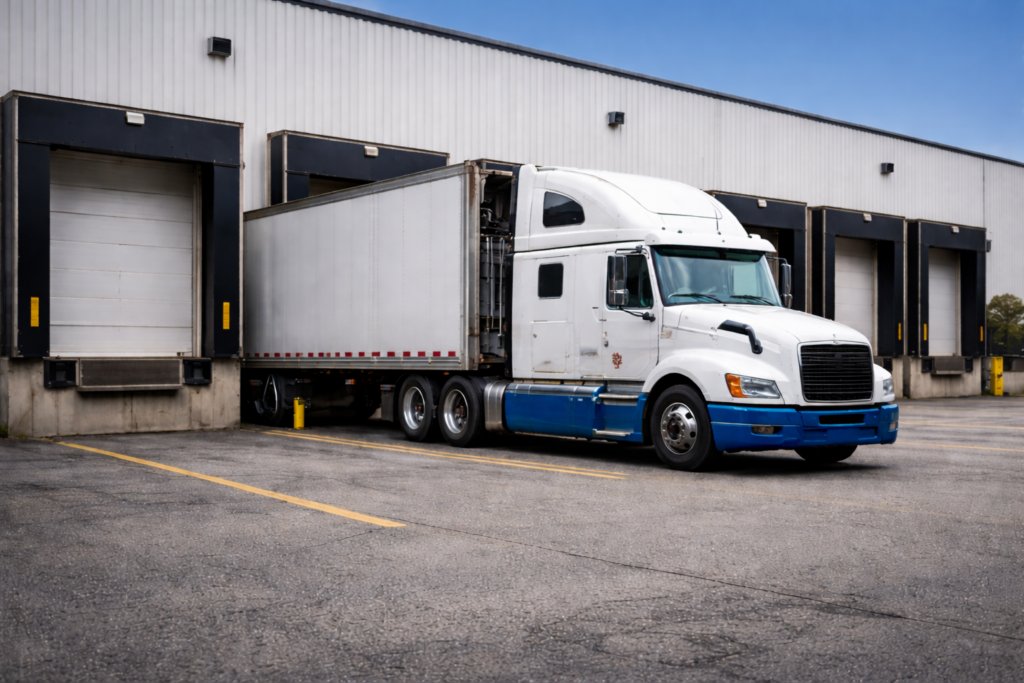
Why owner-operators lose money between loads rarely comes down to a single bad decision.
The rate was fair. The broker paid on time. The delivery went smoothly.
Yet the week still feels weaker than expected.
That’s because profit in trucking is not decided only on loaded miles. It’s decided in the quiet space between loads – where downtime, empty miles, and timing misalignment quietly erode margin.
Most operators assume the solution is simply to stay loaded at all times. But staying loaded and staying structured are not the same thing. Professional dispatching, when treated as a weekly planning function rather than a load-finding shortcut, exists to reduce volatility between loads.
Why Owner-Operators Lose Money Between Loads: The Economics Most Don’t Track
When a truck is not under revenue, the cost structure does not pause.
Insurance accrues daily. Equipment payments remain fixed. Compliance costs continue whether the wheels are turning or not. Fuel used to reposition for the next opportunity is rarely reimbursed.
Industry reporting from FreightWaves has consistently highlighted the pressure spot-market volatility places on small carriers. Meanwhile, operational cost studies from American Transportation Research Institute regularly estimate average operating costs near or above $1.80 per mile for many owner-operators, depending on fuel and equipment type.
Those costs apply whether the truck is loaded or sitting.
A 24-hour reload gap may feel like a normal pause. But when repeated across multiple weeks, those pauses accumulate into real financial drag. One delayed reload becomes two lost revenue days. Two lost days compress the weekly gross. Compressed weeks create income volatility.
This is one of the primary reasons why owner-operators lose money between loads – not because they booked poorly, but because downtime compounds quietly.
The Weekly Math Most Owner-Operators Don’t Model
Let’s put structure to the problem. Assume:
- Fixed weekly overhead: $4,200
- Target loaded miles per week: 2,500
- Average rate: $2.80 per mile
- Target gross: $7,000
Now introduce two 36-hour reload gaps in one week. That removes roughly 1.5 revenue days.
If your average daily gross target is $1,000–$1,200, that’s:
$1,500–$1,800 in lost revenue opportunity.
Add 400 repositioning (deadhead) miles at $1.80 operating cost:
$720 in unrecovered cost exposure.
Modeled Weekly Impact
| Scenario | Structured Week | Week with Gaps |
|---|---|---|
| Loaded Miles | 2,500 | 2,050 |
| Deadhead Miles | 300 | 700 |
| Gross Revenue | $7,000 | $5,740 |
| Operating Cost Exposure | Controlled | Elevated |
| Net Stability | Predictable | Volatile |
Nothing dramatic happened. But the week weakened. This is how strong loads still produce weak weeks.
And this is how many owner-operators lose money between loads without realizing it.
The Real Cost of Empty Miles and Reload Gaps in Trucking
Deadhead is often accepted as part of the business. And to some extent, it is.
But when empty miles consistently exceed 15-20% of weekly distance, the effect on net income becomes significant. Not dramatic. Not explosive. Just steady erosion.
Consider a strong outbound load paying $3.00+ per mile into a secondary market. The rate looks attractive. But if that delivery places the truck into a weak freight area requiring 400 unpaid repositioning miles and a 30-hour wait for a reload, the week weakens.
Nothing went “wrong.”
But the sequence broke.
The outbound rate did not compensate for what followed.
This is how strong loads still produce weak weeks. The issue isn’t the load itself – it’s how loads connect. When sequencing is reactive instead of structured, volatility expands.
Why Negotiating Better Rates Doesn’t Fix Income Instability
When revenue fluctuates, the natural reaction is to negotiate harder.
Push brokers. Demand higher RPM. Refuse marginal freight.
Negotiation matters. But it is not the stabilizer most operators think it is.
Even a $0.20 improvement in rate per mile cannot offset a 36-hour reload delay. It cannot erase 350 empty miles driven under time pressure. It cannot repair a broken weekly rhythm.
Income instability typically stems from structural exposure between loads:
Delivering into thin markets without follow-up freight.
Reloading late in the week and triggering weekend idle time.
Booking reactively under pressure rather than strategically within a planned framework.
If you want a deeper breakdown of how sequencing changes financial outcomes, see How Weekly Planning Beats “Good Load” Thinking Every Time – where we explain why structure, not aggression, stabilizes weekly gross.
The operators who achieve consistent weekly income in trucking rarely win by negotiating harder. They win by positioning loads within a controlled weekly sequence.
How Reload Timing Quietly Determines Weekly Gross
Reload timing is one of the least discussed – and most influential – variables in owner-operator economics.
The difference between reloading same-day versus next morning can determine whether a week closes with momentum or stalls into exposure. Delivering Thursday versus Friday can shift leverage dramatically. Entering a high-volume freight corridor versus a low-density lane changes how quickly the next opportunity appears.
When reload timing is unmanaged, weekend idle time increases. Decision pressure rises. Brokers gain leverage. Operators accept freight they would normally reject simply to avoid another gap.
This pattern is not a work ethic problem.
It is a planning problem.
Reducing freight volatility requires understanding that weekly income is built in transitions – not just transactions.
The Structural Reason Owner-Operators Lose Money Between Loads
The trucking market will always fluctuate. Spot rates shift with capacity. Fuel prices move. Regional demand rotates seasonally.
But volatility becomes financially damaging when there is no weekly framework guiding decisions.
Without structure, each load is treated as an isolated event. There is no continuity between lanes. Revenue swings widen. Stress increases.
This is why many owner-operators lose money between loads even while staying busy. Movement does not equal margin.
Professional operations think in weeks.
Reactive operations think in loads.
That distinction often determines whether income stabilizes or oscillates.
In Practical Terms
Owner-operators lose money between loads because downtime, empty miles, and reload delays quietly erode margin – even when individual loads pay well.
The pattern typically includes:
- Gaps of 24–48 hours between deliveries
- Elevated deadhead percentages
- Late-week reload exposure
- Booking decisions made under time pressure
None of these look catastrophic individually.
Together, they create volatility.
And volatility, more than low rates, destabilizes small carrier economics.
What Actually Stabilizes Weekly Income
Weekly income stabilizes when the space between loads is protected.
That means sequencing lanes intentionally, compressing reload gaps where possible, limiting unnecessary deadhead, and treating the week as a financial unit rather than a string of isolated transactions.
Many operators focus primarily on how to get loads for trucks. Volume matters. But volume without continuity often amplifies instability. Structure reduces exposure.
Planning reduces volatility. And continuity – not negotiation intensity – builds predictable weekly gross.
Dispatch planning exists to protect the space between loads.
That space is where profit either compounds quietly – or leaks quietly.
Frequently Asked Questions
Why do owner-operators lose money between loads?
Owner-operators lose money between loads because operating costs continue while revenue pauses. Reload gaps, excessive deadhead, and poor sequencing reduce weekly gross stability even when individual loads pay well.
How much can a reload gap cost an owner-operator?
A 36-hour reload gap can remove one to two full revenue days. Depending on weekly targets, that may represent $1,000–$2,000 in lost opportunity, not including repositioning costs.
Are empty miles the biggest profit drain?
Empty miles become a major margin drain when they consistently exceed 15–20% of total weekly miles, especially when combined with reload delays.
What stabilizes weekly income in trucking?
Weekly income stabilizes when reload timing, lane sequencing, and deadhead exposure are controlled within a structured weekly plan.
Bottom Line
If you’ve experienced:
- Strong loads but weak weeks
- Good RPM but inconsistent net income
- Constant pressure to “find the next load”
You’re not necessarily booking wrong.
Why owner-operators lose money between loads is usually structural – not personal.
Dispatch planning exists to protect the space between loads.
And that space is where consistent weekly income is built.