Table of Content
- “More trucks just means more fee, same workflow” is the assumption that costs the most
- The numbers that flip between truck three and truck seven
- The break-even point on hiring an in-house dispatcher
- Where the service still wins past five trucks
- The conversation to have with your current desk before you change anything
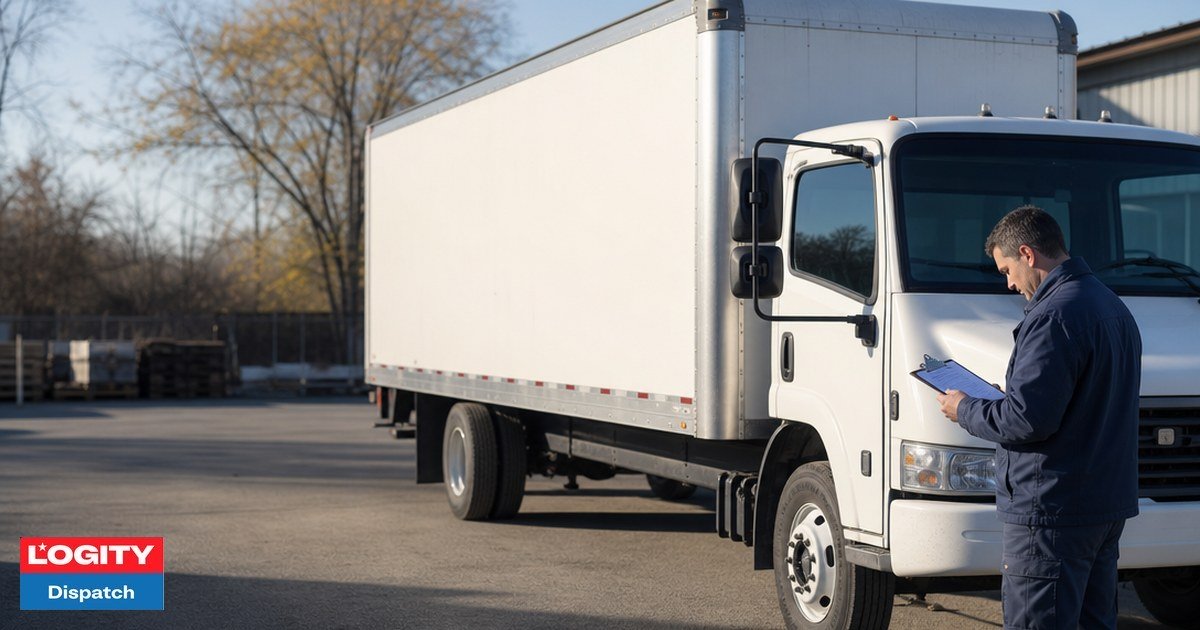
The fee scales linearly with trucks. The value doesn’t. Somewhere between five and seven trucks, the math quietly inverts.
One truck, a dispatch service is leverage: the fee buys workflow you don’t have time to run. Three trucks, the math still mostly works — the desk coordinates reload across a small fleet at a per-truck cost in line with what it returns. A truck dispatching service earns its fee when it runs that workflow for you.
By truck five, something drifts. By seven, the fee taxes margin without producing the return it produced on truck one. The math doesn’t fail loudly. It fails on a settlement spreadsheet over a quarter, three thousand dollars at a time.
“More trucks just means more fee, same workflow” is the assumption that costs the most
A desk handling one truck has bandwidth to know your lanes, reload preferences, broker book, detention pattern. That knowledge is what the fee bought, and the first truck’s percentage is reasonable because the desk is engaged.
| Fleet size | Outsourced dispatch | In-house dispatch |
|---|---|---|
| 1-2 trucks | Usually cheaper | Too much overhead |
| 3-5 trucks | Breakeven zone | Approaches viable |
| 6+ trucks | Begins to lose leverage | Often more efficient |
By truck four or five, that same desk is splitting attention across drivers who don’t run the same lanes, don’t reload from the same shippers, and don’t have the same detention profile. The broker relationships dilute. The reload-before-delivery rhythm gets harder to coordinate. The fee doesn’t drop. The return does.
The hidden cost is not the fee column. It is that the standing built around your first truck’s lanes doesn’t transfer to your fourth truck’s run profile. You pay full freight on every truck while one or two extract full value.
The numbers that flip between truck three and truck seven
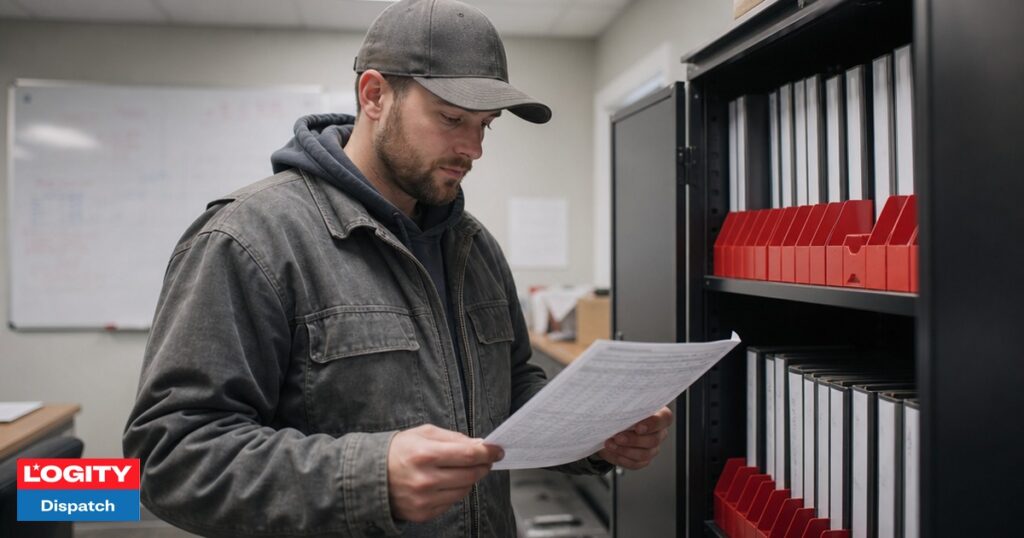
Pull last quarter’s audit lines, broken out per truck. The five single-truck P&L numbers still apply, but at fleet scale the gaps between trucks tell the story.
- Gross per truck. If truck one grosses $32k a month and truck five $24k on the same equipment, the desk is not running both.
- Deadhead spread. The best truck sits at 7%, the worst at 14%. The desk is positioning some trucks and not others.
- Loaded RPM against ATRI’s $2.27 marginal cost. Trucks running below that line consistently are being booked, not dispatched.
- Detention collected per truck. If the desk recovers $2,400 a quarter for one truck and $400 for another, attention is uneven, not detention behavior.
- Fee paid per truck against gross. A 5% fee on a $24k truck is the same percentage as on a $32k truck. The return isn’t.
That spread is the diagnostic. A desk that runs your fleet evenly produces tighter spreads; one coasting on truck one produces wide ones.
The break-even point on hiring an in-house dispatcher
An in-house dispatcher costs roughly $55,000-$72,000 a year fully loaded: salary, payroll tax, software, board subscriptions. That’s $4,600-$6,000 a month. Against a 5% fee on five trucks averaging $30k gross, the service costs $7,500 a month. The numbers cross around five trucks.
The in-house dispatcher pays for themselves on fee math alone at six trucks. The harder calculation is the return. Will an in-house desk hold the same reload discipline the service did at one truck? If yes, the savings stay savings. If no, the dispatcher is cheaper but produces a smaller fleet net.
Hiring discipline matters. A dispatcher pulled from a freight broker background often defaults to volume booking and forgets the reload positioning that made the service worth it. One pulled from an owner-operator background usually understands reload but undersells your truck on rate.
If you’re past four trucks and the spread between best and worst is widening, run per-truck P&L against what an in-house desk would cost. The math stops being obvious around that size, so it’s worth weighing outsourced dispatch at scale with a second set of eyes.
Where the service still wins past five trucks
Outsourced dispatch does not stop being useful at five trucks. It stops being useful as the only layer. Past that point the fit is usually hybrid: an in-house dispatcher running the spine of the fleet, with a service desk taking spillover during peaks or covering specialized lanes.
The other place a service desk holds value is back-office and accessorial recovery. Detention claims, TONUs, layover billing, OS&D documentation, the work of getting paid for what already happened. A specialist desk can recover $4,000-$8,000 a quarter on a five-truck fleet that an in-house dispatcher can’t get to between booking calls.
The choice is not binary. Most multi-truck operators who scale cleanly run both layers, with the boundaries written down so neither thinks the other is doing the work.
The conversation to have with your current desk before you change anything
Before firing a service desk over fleet-scale math, walk the per-truck audit through with them. A working desk will name which trucks they’re under-serving and why: usually lane diversity beyond their book, or driver pickup-window discipline that breaks reload positioning.
If the desk acknowledges the spread and proposes a structural fix, moving truck five to a different dispatcher inside the shop, sub-contracting a specialty lane, dropping fee on the under-served trucks, they might be worth keeping at smaller scope. If they deny the spread or treat the audit as adversarial, the relationship is already over.
The other option worth raising is moving from percentage to flat-fee per truck once the fleet crosses five. Flat fees often win at scale because percentage punishes high-grossing trucks without rewarding the desk where its work matters more. The dispatch rate breakdown walks through where the structures cross over and what flat-fee per truck signals about the relationship.
The standard at five-plus trucks is per-truck visibility on every audit line, a desk that names which trucks are under-served and why, and a fee structure that doesn’t penalize the trucks needing the most work. Anything below that is a workflow scaling problem the fee column is hiding.