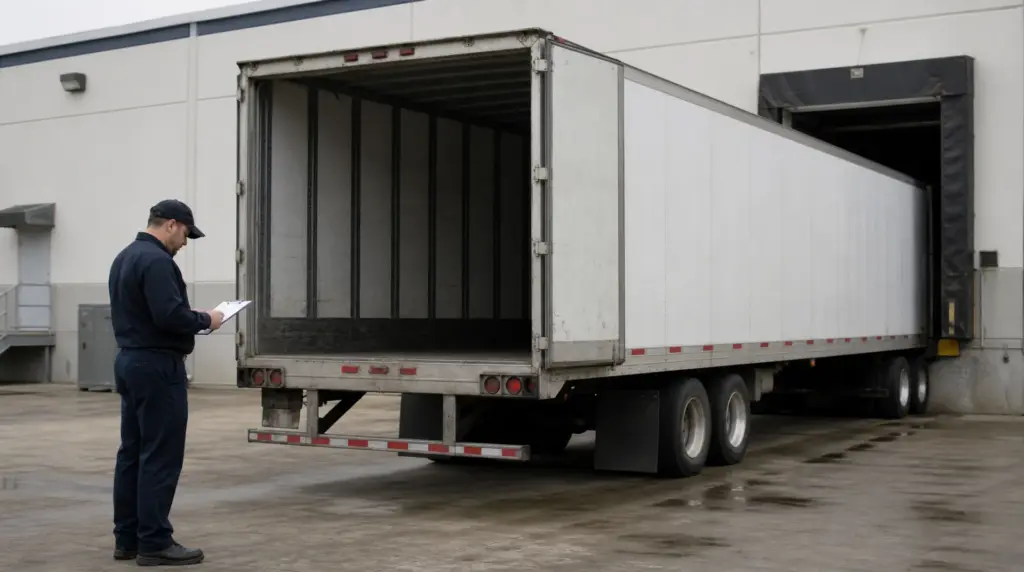
Dry van feels like the safe lane. There’s always a load, always a board full of them, so owner-operators run dry van and never sit empty. That’s exactly the trap. When freight is always available, the easy move is to take whatever’s next, and the truck stays busy at a rate that quietly slides. A full week isn’t a good week. A dry-van owner-operator doesn’t lose on empty miles. He loses on cheap ones he took because they were there.
Always-Available Freight Is the Problem, Not the Comfort
The dry-van board never runs dry. There’s a load to every market, every day, at some rate. That sounds like safety. It’s the reason the rate drifts.
When the next load is always one click away, saying yes is easier than holding out. So the owner-operator books to stay loaded, not to stay paid, and the average rate sinks one acceptable load at a time. The freight that’s always there is the freight that trains you to take less.
Picture a week that looks perfect on paper: seven loads, no empty days, the truck never parked. But three of them were cheap loads grabbed because they were next on the board, two of those dropped into soft markets, and the reload out paid even less. The truck ran hard all week. The settlement came in below a week with two fewer, better loads. Busy hid a falling rate right up until payday.
Why a Full Truck Can Still Run a Thin Week
Utilization feels like the goal. Keep the truck moving, keep the miles up. But a dry van loaded every day can still lose to a truck that ran fewer, better loads.
The difference is which loads got taken and which got passed. A cheap load into a dead market doesn’t just pay little. It strands you where the next load pays little too, and the week compounds downward. Busy hides that. The settlement doesn’t. It’s the market-read discipline groups like the Owner-Operator Independent Drivers Association keep pushing owner-operators toward: the average rate, not the mile count, is what pays the truck.
Where Dry-Van Operators Lose the Rate
- Taking the next available load instead of the next profitable one.
- Booking into soft markets with no plan to get back out paid.
- Chasing utilization, so a full truck masks a falling average rate.
- Skipping the market read because freight is always there to grab.
- Never comparing the week’s average rate against the month before.
None of those are driving mistakes. All of them are selection failures that an always-full board makes easy to repeat.
Two Ways to Run Dry Van
| Utilization-first (the trap) | Rate-first (selective) | |
|---|---|---|
| Next load | Whatever is next on the board | The next one that pays and reloads |
| Market read | Skipped, freight is always there | Checked before booking in |
| The metric | Miles and hours the truck ran | Average rate for the week |
| Result | Full truck, drifting rate | Fewer loads, stronger settlement |
The board rewards the busy truck with the illusion of safety. The settlement rewards the owner-operator who books for the average rate, not the mile count.
What Selectivity Looks Like on Dry Van
Selectivity isn’t sitting idle waiting for a unicorn. It’s reading the lane behind every load, so the truck stays where freight reloads paid instead of just paid once.
It means knowing which markets pay back out before booking in, not after. It means passing the cheap load into a dead zone even when it’s right there. It means measuring the week by average freight rate, not by how few hours the truck sat. That’s the discipline an always-available board erodes, and it’s routine work a desk handling your week should run on every load. The same logic runs under dry van dispatch services, where the next load is chosen, not just grabbed.
For an owner-operator watching the board alone, that read is hard to hold load after load. It’s the real case for owner-operator dispatch: a desk checking the market behind each load so the truck books to stay paid, not just to stay loaded.
Dry Van Rate Questions Operators Actually Ask
Isn’t a full truck always better than a parked one? Not if the loads keeping it full pay below cost or strand it in dead markets. A truck that runs six strong loads can out-earn one that runs eight cheap ones. Measure the week by average rate, not by hours moved.
How do I stay selective when the board is always full? Read the reload market before you book in, and set a floor you won’t drop under. The always-available board is what erodes that floor, so the discipline has to be deliberate, not reactive.
How do I do the market read when I’m the one driving? You usually can’t, load to load, from the cab. That’s the case for a desk reading lanes ahead of you, the same thing full truck dispatch services handle, so you book the profitable load instead of the nearest one.
How do I know if I’m chasing utilization? Sort last month’s loads by rate per mile and look at the bottom third. If most were taken because they were there, not because they paid, the full board has been setting your rate for you.
The Number to Check on Your Last Month
Take your last month of dry-van loads and sort them by rate per mile. Look at the bottom third. Ask how many you took because they were profitable, and how many because they were simply there. That second number is what the always-full board has been costing you, and it’s margin you recover by choosing the load instead of grabbing it.