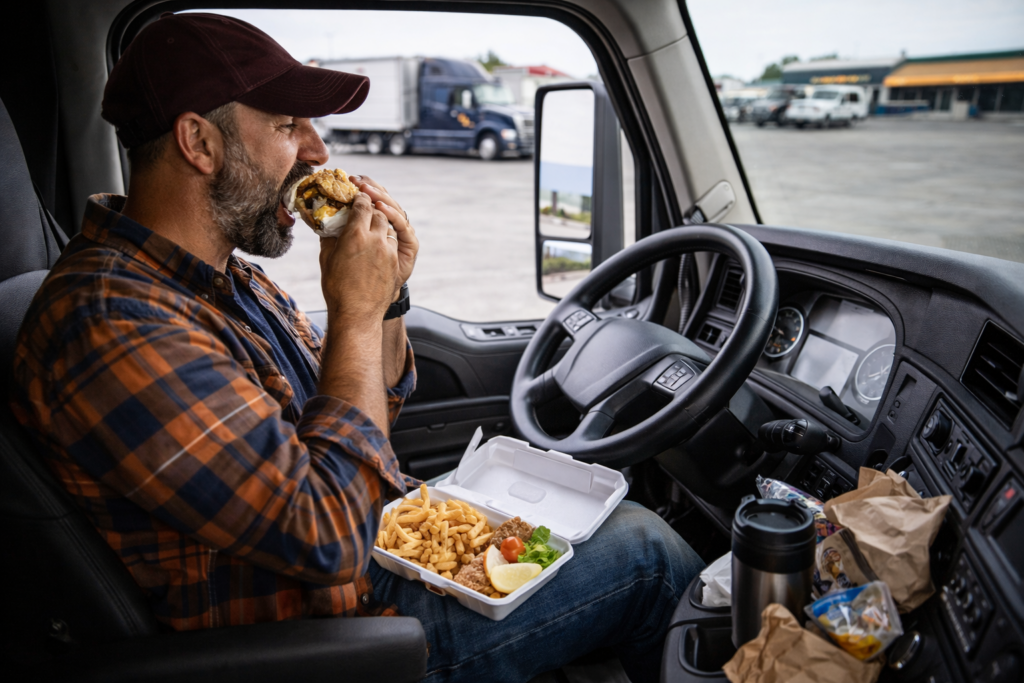
Truck drivers eat a lot of food that probably is not good for them (or their health). Eating while on the road is challenging for many reasons, least of all because of a lack of space for storing and preparing healthful meals. Even if you choose what appears to be the healthiest items on the menu in a restaurant or truck stop eatery, dishes can be chock-full of fats and calories from the preparation process.
Nutrition isn’t just about weight or comfort – it directly affects focus, reaction time, fatigue levels, and long-term driving performance. For long-haul drivers, what you eat influences safety, compliance, and consistency on the road.
How to Eat Cheap as a Truck Driver
Truck drivers earn a decent salary. That does not mean they want to spend the bulk of their earnings on meals during their trips. Sure, some trucking companies reimburse all or a portion of your expenses – including meals – during your trips. Independent owner-operators can claim food costs on their taxes each year. It still is not a reason to eat a $24 steak. Sometimes you want to grab something quick, cheap, and (relatively) healthy so you can get to your destination with minimal interruption.
Here are some tips on how to eat cheap as a truck driver:
- No-prep foods are a go-to for many truck drivers who want to cut down on the number of stops they make during their trips. Fresh fruits and veggies are always included in this category. If you are short on time, buying pre-made bagged salads is a helpful solution. Deli foods like lean lunch meats, cheeses, and pre-made heat-and-eat meals also are excellent choices. Some delis offer things like picnic chicken that already is cooked and can be eaten cold if you do not have the means to heat it up first. Make sure you grab some fresh bread or wraps for making sandwiches with your deli meats and cheeses.
- Hit the drive-through of your favorite fast-food place. This is arguably the quickest, easiest, and most cost-effective way to get your meals on the road. It also can be one of the unhealthiest choices. Even if you eat at places where grilled foods and salads are offered, they often are chock-full of preservatives and prepared with grease and other cooking methods that make them high in calories and fat. If you do this, limit the number of times each week you rely on fast food to preserve your health.
- Use a slow cooker in your rig to simmer food all day long. There are plenty of slow cooker recipes available that use minimal ingredients to make cooking on the road easy yet tasty. Slow cooking is one of those things you really cannot goof up. Toss anything in there and let it cook long enough and you will have yourself a tasty meal. This method is known as a “dump dinner.”
What Can You Eat While Driving a Truck?
Eating while driving trucks is a fine art. Some experienced truck drivers have figured out handy tricks of the trade, while others struggle to eat well while on the job. What you choose to eat while driving a truck depends on your food goals. Some truckers are trying to lose excess pounds or maintain a healthy weight. Others want quick options that do not require long or frequent breaks.
The most important thing you can do when deciding what to eat while on the road is to establish a routine with your meals. The same principle applies to freight planning – operators who rely on last-minute decisions often create unnecessary pressure throughout the week. Understanding why good loads still turn into bad weeks can help drivers build more consistent schedules and reduce avoidable stress.
Foods a Truck Driver Should Eat Every Day
A truck driver eats a lot of high-calorie, convenience foods sometimes, especially when in the middle of a long haul. That kind of eating can lead to health problems like diabetes, heart disease, high blood pressure, and cholesterol.
Here are some of the healthiest foods to include in your daily diet:
- Fresh fruits are an excellent source of essential vitamins and minerals. As a bonus, they are high in fiber. You easily can store a bag of apples, oranges, or pears in your truck, along with a bunch of bananas.
- Nuts and berries are not just for the wildlife you see along the roadways. Both are loaded with antioxidants and healthy fats that help improve your health. Nuts and berries are easy and quick snacks to enjoy. You can even toss in a few M&Ms to make your own trail mix with a lively twist. Just be careful not to overdo the chocolate.
- Lean protein is ideal for every meal you eat during the day. Whether it is animal or plant-based makes no difference. Just include about 4 ounces of protein with every meal. It never hurts to sneak in some protein with your snacks, too. Protein bars, nuts, and anything with peanut butter in it is an excellent (and healthy) choice.
Mastering the Art of Truck Driving Eating
What you eat on the road isn’t just a lifestyle choice — it’s an operational decision.
Energy crashes, poor hydration, and inconsistent meal timing directly affect focus, reaction speed, patience, and fatigue management. Over time, those small decisions compound into larger outcomes: missed appointment windows, slower reload cycles, increased stress, and even preventable safety risks.
Disciplined drivers treat nutrition the same way they treat route planning and load sequencing — with structure. Building consistent habits off the road supports consistency on the road.
If you’re serious about reducing unnecessary weekly volatility, it’s worth understanding how structured planning improves outcomes in every part of the business.
The same principle applies to workload. When you’re constantly juggling paperwork, negotiating, searching for loads, and trying to drive safely, stress multiplies. Knowing when an owner-operator should hire a dispatch service becomes part of protecting both performance and long-term sustainability.
At Logity Dispatch, we focus on operational structure – load planning, negotiation, and consistency – so drivers can focus on driving well, staying sharp, and building stable weekly revenue.
Because performance on the road starts long before the engine turns over.