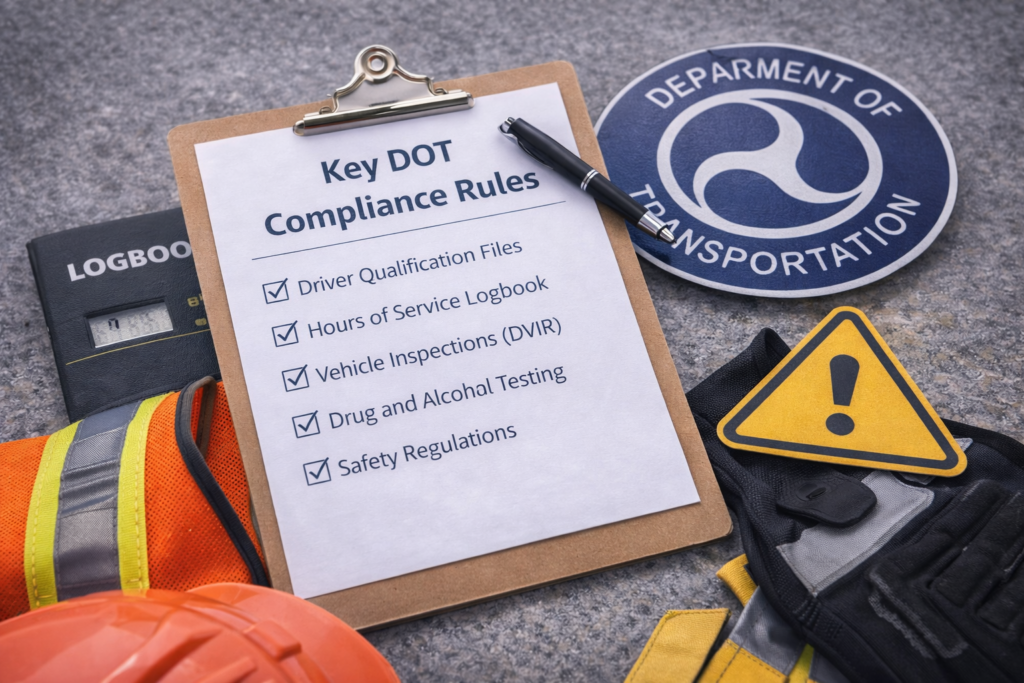
Compliance with the road safety standards set by the US Department of Transportation (DOT) is a vital part for efficient and legal operations in the logistics sector. Still, it can present challenges, from regulations understanding to maintaining records. We seek to help you handle the common challenges and provide practical solutions to reduce possible risks linked to regulations.
What is DOT compliance?
DOT compliance refers to fulfilling the regulations of the US DOT that are aimed at ensuring safe traveling and trucking. It also reduces risks associated with logistics operations. DOT compliance covers a range of standards such as driver qualifications, hours of service, vehicle maintenance, and hazardous materials shipping.
Being DOT compliant means reduced risk of accidents and legal liabilities and smoother operations of the transportation sector. It’s a critical aspect of transportation safety and reliability.
Why is DOT Compliance Important?
DOT compliant means that a company or an individual meets all requirements of the sector. Adherence is important for legality and safety. Non-compliance may lead to penalties, suspension of operations, and increased control from authorities.
Ensuring safety
The primary importance of the DOT is ensuring road safety. It requires strict standards of driver qualifications, vehicle maintenance, and hours of service.
Legal and financial consequences
Non-compliance with DOT safety regulations may lead to legal and financial penalties, including fines, legal actions, and increased insurance costs. It also results in suspension of operating licenses, and worsening of the company’s reputation.
Operational efficiency
DOT compliance provides efficient operations of the transportation and logistics sector. In particular, regular maintenance and observance of the HOS rule hep prevent breakdowns., reduce idle time and enhance overall productivity.
Key DOT Regulations
DOT Compliance includes several vital regulations that ensure the safety and efficiency of road operations. The rules cover various aspects that companies and individuals must adhere to.
Driver qualifications
Drug & alcohol compliance: Carriers must follow DOT drug and alcohol testing requirements (including pre-employment and random testing where applicable).
Commercial Driver’s License (CDL): Drivers must hold the correct class of CDL for the vehicle they operate, plus any required endorsements.
Medical qualification: Drivers must maintain a valid DOT medical certificate and meet physical qualification standards.
Hours of Service (HOS)
- Driving limits: Most property-carrying drivers can drive up to 11 hours after 10 consecutive hours off duty.
- 14-hour window: Drivers cannot drive after the 14-hour on-duty window begins, even if they still have available driving time.
- Breaks: A 30-minute break is required after 8 hours of driving time.
- Weekly limits: Drivers cannot exceed 60/70 hours on duty in 7/8 consecutive days. A 34-hour reset can restart the cycle.
- ELDs: Many carriers must use Electronic Logging Devices (ELDs) to track HOS compliance.
Vehicle maintenance
- Regular inspections: Carriers must inspect vehicles to prevent safety issues and breakdowns.
- Maintenance records: Keep clear records of inspections, repairs, and maintenance in case of audits.
Hazardous materials (Hazmat) shipping
- Training: Hazmat employees must complete required training and stay current on safety procedures.
- Packaging and labeling: Hazmat loads must meet strict packaging, labeling, and placarding rules.
- Documentation: Drivers must carry required shipping papers and follow hazmat handling procedures.
Steps to Achieving DOT Compliance
Staying DOT compliant is easier when you treat it like a system, not a one-time task:
- Understand which rules apply to your operation (equipment type, lanes, cargo, and driver status).
- Create a compliance process for driver qualification, HOS, maintenance, and recordkeeping.
- Train drivers and staff on safety expectations and required documentation.
- Use ELDs and scheduling discipline to prevent HOS violations.
- Maintain vehicles proactively and document inspections and repairs.
- Prepare for audits by keeping records organized and accessible.
- Stay updated on regulation changes and adjust processes when needed.
If you want a deeper breakdown, read our guide to DOT Hours of Service (HOS) rules and how they affect real-world scheduling.
Common DOT Compliance Challenges and Solutions
Establish regular reviews of emergency response to handle any possible incidents.
- Understanding and keeping up with regulations. DOT regulations are extensive and regularly updated, so companies can find it challenging to stay current. Solutions for these issues include regular training to keep employees informed about new regulations. The other step is subscribing to industry newsletters and joining associations to stay informed. You can join Logity Dispatch to receive a monthly digest and keep updated with the industry’s insights.
- Managing hour of service compliance. Sometimes, market demand requires tight delivery schedules and long hauls, which can complicate compliance with HOS regulations amid busy schedules for drivers. As we reviewed above, ELDs help record and track driving hours and ensure compliance with regulations. For their safety, keep your drivers informed about HOS regulations. In addition, it’s essential to plan routes with rest breaks without compromising delivery timelines.
- Maintain regular and accurate records. Although keeping records of driver logs, vehicle maintenance, and compliance activities can be a burden, it’s essential to ensure compliance with regulations. Digital systems can facilitate record-keeping and ensure easy access to documentation during audits. You can use compliance management software to automate record-keeping and reporting.
- Vehicle maintenance and inspections. Ensuring regular inspections and maintenance is challenging for businesses, especially for large fleets. You can schedule all maintenance activities for all your vehicles and use management software to track inspections and results.
- Hazardous materials shipping. Handling these cargo types requires strict adherence to safety regulations and proper training. Ensure all drivers and employees have the necessary certifications and understand the requirements for hazardous materials shipment. Establish regular reviews of emergency response to handle any possible incidents.
Conclusion
Staying DOT compliant comes down to consistency: trained drivers, clean records, safe equipment, and schedules that don’t force violations. If you want help planning loads and lanes in a way that protects your time and keeps your week running smoothly, Logity Dispatch can support your operation with smarter weekly planning and dispatch coordination.