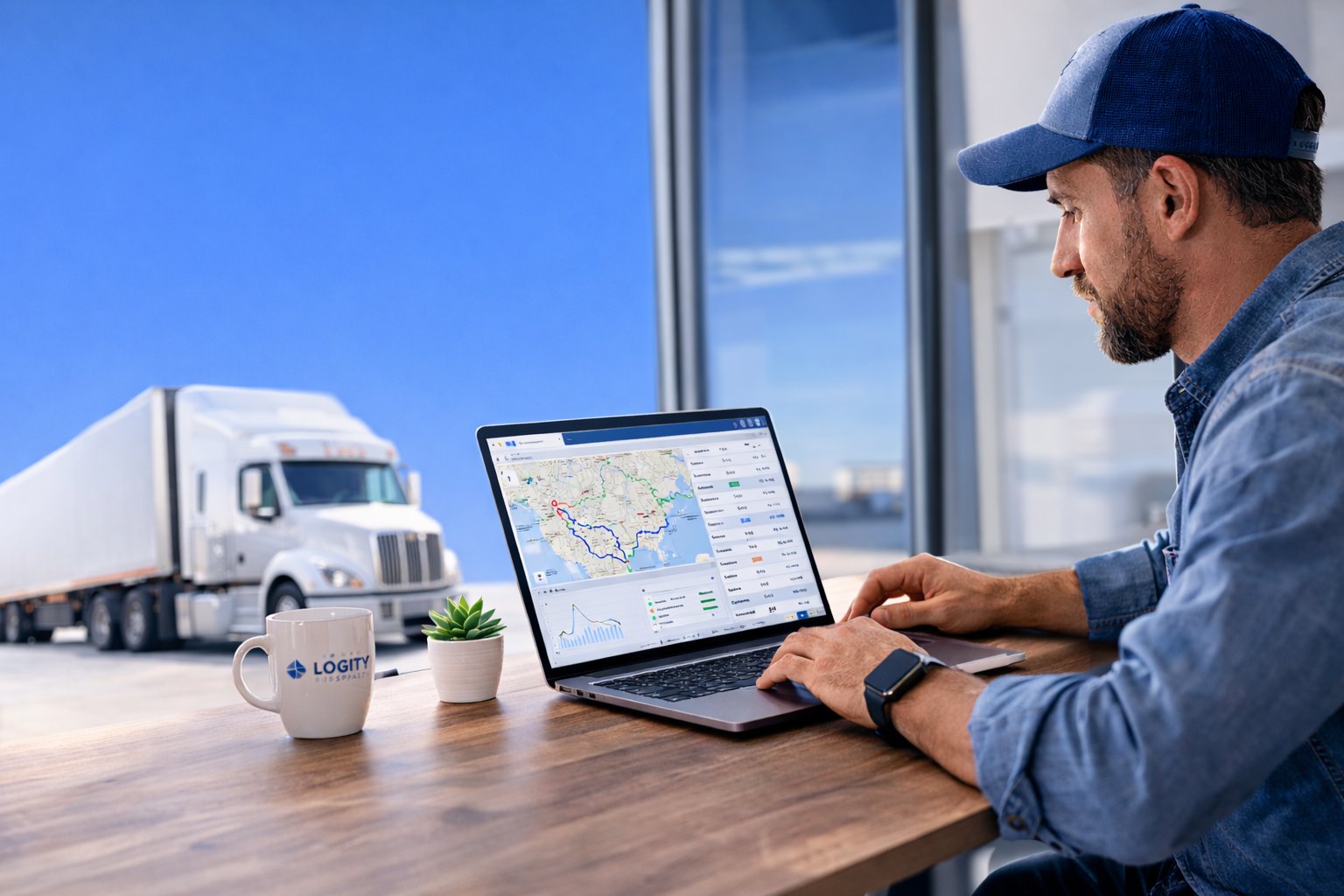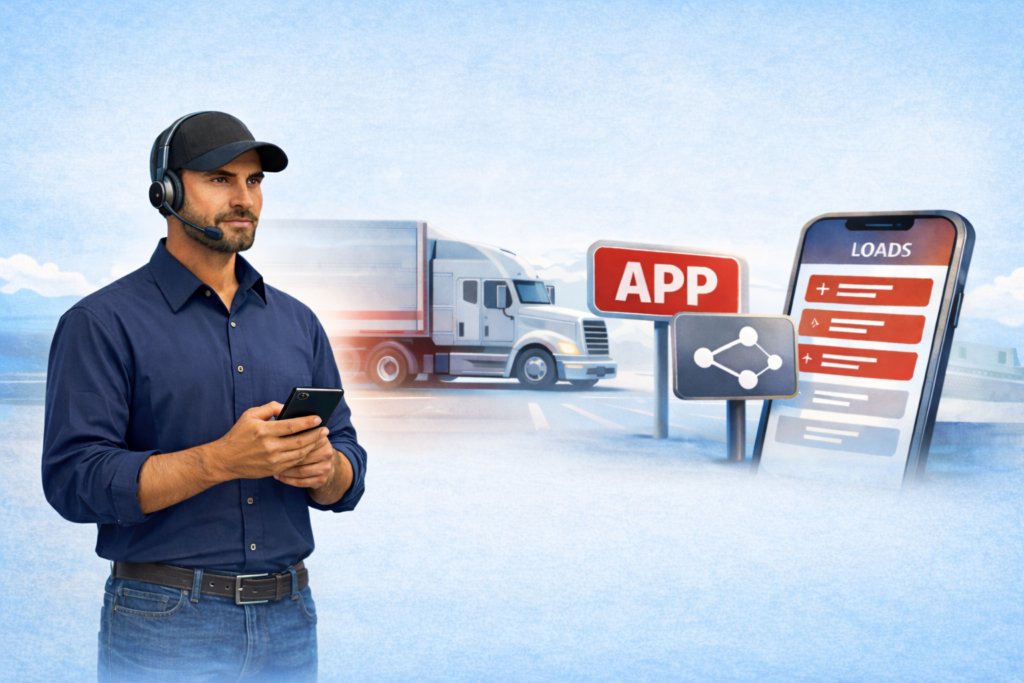
Load-matching algorithms, powered by artificial intelligence, were to become the future of dispatch – offering real-time matching, reduced search times, and data-driven optimization. Yet, as the trucking market enters 2025, a countertrend is emerging. Data and industry feedback indicate a growing preference among owner-operators and small fleets for human dispatchers over fully automated dispatch services. This shift is not a rejection of technology, but a strategic response to the limitations of algorithms in navigating the complex, relational, and volatile nature of freight logistics.
For owner-operators evaluating dispatch services in 2026, the choice between algorithmic load apps and human dispatch support directly impacts weekly revenue, detention risk, and deadhead miles.
It’s a strategic choice for anyone tired of leaving money on the table and wanting a partner from a professional dispatch service who fights for your rates and plans your miles.
The Efficiency Paradox: Data vs. Context
Automated load-matching platforms operate on structured data: origin, destination, equipment type, rate, and timing. Their primary function is to optimize for speed and volume. According to a 2024 report from the Transportation Intermediaries Association (TIA), digital freight matching has reduced load search time by an average of 34% for users. However, the same report notes that user satisfaction declines when factors beyond basic matching – such as detention risk, broker reliability, or lane familiarity – come into play.
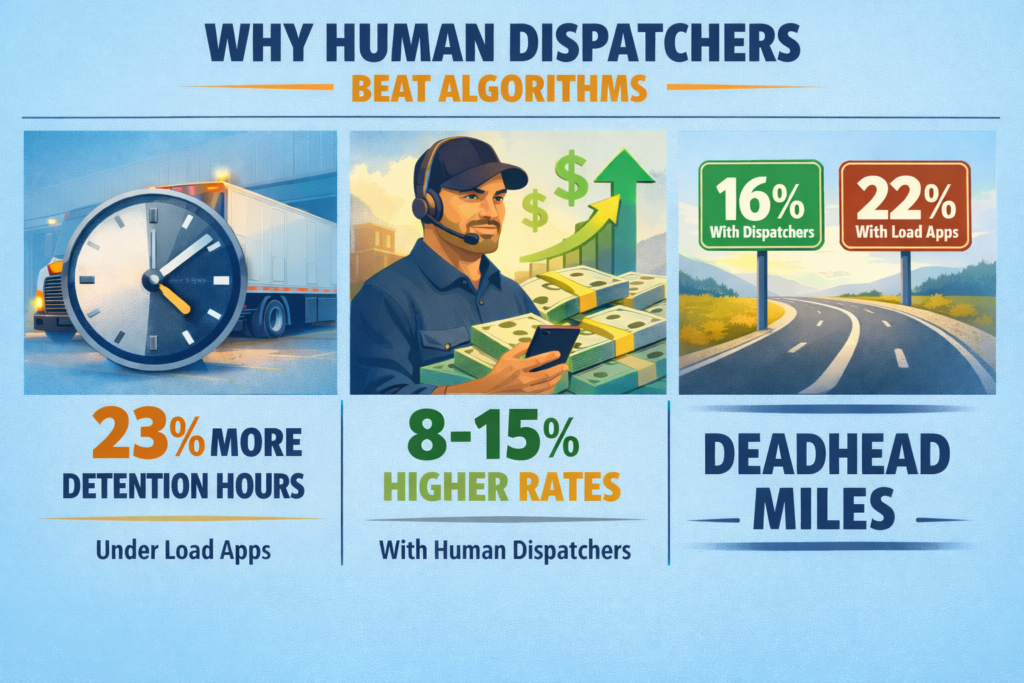
The limitation is one of context. Algorithms lack the industry immersion necessary to interpret unstructured variables. For example, a study published in the Journal of Transportation Management (Fall 2024) found that carriers using algorithmic dispatch experienced 23% more unexpected detention hours than those using human-dispatched services, citing the system’s inability to screen for shipper behavior history. Human dispatchers leverage deep lane knowledge and professional networks to avoid costly delays, directly contributing to higher asset utilization and reduced operational risk.
Negotiation and Rate Integrity: The Human Advantage
Rate negotiation remains a fundamentally relational process. While algorithms can match a carrier to a posted rate, they cannot engage in the dynamic push-and-pull that defines freight pricing. Data from DAT Freight & Analytics for Q4 2024 shows that loads booked through human-dispatched services secured an average of 8-15% higher line-haul rates than identical lanes booked via automated spot market platforms.
This discrepancy stems from the human capacity for advocacy and relationship management. A dispatcher can leverage long-standing broker relationships, reference past performance, and negotiate accessorials based on real-time conditions. This human layer of verification and negotiation is a primary defense against freight broker scams.
In contrast, algorithmic systems often treat rates as fixed inputs, prioritizing match speed over rate optimization.
For owner-operators, this difference directly impacts profitability. As noted in the 2025 Owner-Operator Profitability Report by the American Trucking Associations’ Independent Contractor Committee, consistent rate negotiation was the second most cited factor (after fuel costs) in achieving sustainable income, with human-dispatched carriers reporting greater rate stability.
Crisis Management and Adaptive Logic
The freight industry is defined by unpredictability: mechanical breakdowns, weather disruptions, regulatory changes, and sudden market shifts. Algorithms operate on predefined logic paths and struggle with true anomaly management. For instance, the Federal Motor Carrier Safety Administration (FMCSA) documented a 17% increase in weather-related disruptions in 2024. In such cases, algorithmic systems often lack the procedural flexibility to renegotiate schedules or reroute loads proactively.
Human dispatchers excel in adaptive problem-solving. They function as real-time crisis managers, communicating with brokers, rearranging schedules, and minimizing downstream disruptions. This capability not only protects revenue but also preserves carrier-broker relationships. According to a 2025 survey by Commercial Carrier Journal, 89% of small fleet owners stated that having a human point of contact during a logistical crisis was “critical” or “very important” to their business continuity.
Strategic Routing and Deadhead Reduction
One of the most quantifiable benefits of human dispatch is in strategic routing and deadhead reduction. Algorithms typically optimize for single-load efficiency, not multi-leg continuity. The 2025 National Private Truck Council Benchmarking Report found that carriers relying solely on load boards averaged 22% deadhead miles, while those using dedicated dispatchers averaged 16%.
Human dispatchers employ continuous trip planning, building round trips and multi-load sequences that keep trucks revenue-generating. This approach requires an understanding of seasonal freight flows, regional economic activity, and capacity trends – knowledge built through experience, not data scraping. By minimizing empty miles, dispatchers directly address one of the largest controllable costs in trucking, directly enhancing the carrier’s bottom line.
This is why many owner-operators who start with load-matching apps eventually move to structured dispatch services designed around profitability, lane planning, and broker screening — not just fast load matching.
The Partnership Model: Beyond Transactional Efficiency
Perhaps the most significant distinction lies in the operational model. Algorithmic platforms offer transactional efficiency: a load-for-a-fee exchange. Human dispatchers often function as strategic partners, aligning their success with the carrier’s long-term growth. They learn carrier preferences, home time needs, and financial goals, creating a customized operational plan.
This partnership fosters business stability. It’s the kind of relationship that allows an owner-operator to thrive, as one driver proved when he transformed his one-truck business. Data from a 2025 FreightWaves case study analysis showed that owner-operators in multi-year relationships with dispatchers reported 31% higher year-over-year revenue retention compared to those frequently switching between digital platforms. The relational continuity translates into better load consistency, stronger broker rapport, and more predictable cash flow. The broader question isn’t just human vs. algorithm – it’s when hiring a dispatch service improves margin stability.
FAQ: Data-Informed Answers
Is a dispatch service worth it financially?
Industry data suggests yes. The 2025 Owner-Operator Business Analysis by ATBS found that after accounting for dispatch fees, contracted owner-operators netted an average of 11% more annually than those self-dispatching via load boards, citing better rates and reduced administrative time.
How do dispatch fees compare to the value provided?
Fees typically range from 5-10% per load or a flat weekly rate. When evaluated against the combined value of rate premiums, deadhead reduction, and time reallocation, the return on investment is positive in most operational models. The key is transparent tracking of net revenue before and after engagement.
Can algorithms handle complex freight?
For standard dry van or reefer freight on major lanes, algorithms perform adequately. However, for specialized equipment, oversize loads, or lanes with accessorial complexities, human oversight remains essential. The TIA reports that72% of specialized freight moves in 2024 were coordinated via human dispatchers.
What’s the primary drawback of algorithmic dispatch?
The most cited limitation in carrier feedback is the lack of strategic oversight. Algorithms fill individual loads but do not build sustainable business models. They optimize for platform efficiency, not necessarily for carrier profitability.
Beyond the App
The future of dispatch is not a binary choice between human and algorithm, but an integrated model where technology handles administrative efficiency and humans provide strategic judgment. As the 2025 market contends with economic volatility, regulatory change, and capacity fluctuations, the value of experienced, relational dispatch is being reassessed and elevated.
For carriers prioritizing not just a load, but a profitable, sustainable business, the human element remains irreplaceable. It represents the difference between reacting to the market and strategically navigating it.
If you’re evaluating whether human dispatch makes sense for your operation, a short, no-obligation dispatch strategy review can help clarify the numbers for your lanes. Let’s Talk