Table of Content
- What box truck owners pay: the published medians
- Which policies a for-hire box truck actually needs
- 26ft Box Truck Dispatch With No Upfront Payments
- Why your quote can land far from the median
- Turn the premium into a cost you can price loads against
- What to have ready before you ask for quotes
- Frequently asked questions
Short answer
The one published figure we could trace to a stated method comes from Insureon, an online insurance agency: the median box truck business owner who applied for quotes through it paid $909 a month ($10,910 a year) for commercial auto insurance, $52 a month for general liability and $673 a month for workers’ compensation. Those are medians of one agency’s applicants, not a price list. Your quote moves with your record, truck, cargo, radius, state, limits and how long your authority has been active.
Box truck owners ask what insurance costs before they buy a truck, and most answers online are ranges with no source behind them. This guide does something narrower. It shows the one set of numbers we could find with a stated method, explains who is in that number and who is not, and walks through what moves your own quote above or below it. We are a dispatch company, not an insurer or an agency, so nothing here is a quote. The sources below were checked on November 9, 2026. If you are still planning the business, our step by step guide to starting a box truck business covers authority, the truck and the first loads.
What box truck owners pay: the published medians
Insureon publishes cost figures on its box truck insurance cost page, last updated June 27, 2025. It says the figures are “sourced from the median cost of policies for box truck business owners who apply for quotes with Insureon.” The page uses the word average in places, but the method it describes is a median, which leaves out the very high and very low premiums.
| Policy | Median per month | Per year, as published |
|---|---|---|
| Commercial auto | $909 | $10,910 |
| General liability | $52 | $621 |
| Workers’ compensation | $673 | $8,080 |
Read these numbers for what they are. They describe people who chose to shop through one agency, not every box truck in the country. The page does not split them by state, by truck size, by policy limits or by how old the authority is. It does say that a medium duty truck such as a 26 foot box truck costs more to insure than a light duty truck such as a 10 foot one, so a 26 foot owner should not assume the median is a ceiling.
One more caution: you cannot add the three medians and call the sum a typical bill. The median auto buyer and the median workers’ comp buyer are not the same business, and workers’ comp is mainly tied to having employees.
Which policies a for-hire box truck actually needs
The price only makes sense next to what you are required to carry. The federal floor is written down; everything above it comes from your customers and your own risk.
Commercial auto liability: the federal minimum
Under 49 CFR 387.9, a for-hire carrier hauling non-hazardous property in interstate commerce in a vehicle with a gross vehicle weight rating of 10,001 pounds or more needs at least $750,000 in public liability coverage. Check the GVWR on the label in your door jamb. A fleet made up only of vehicles under 10,001 pounds GVWR has a $300,000 minimum for its authority filing under 49 CFR 387.303T. Hazardous materials raise both numbers.
Cargo: not federal for general freight, but often asked for
The only cargo minimum in the federal authority rules is for household goods carriers. For general freight there is none. Insureon’s page still says your clients and shippers will likely require motor truck cargo coverage, and broker carrier packets can set their own limits. Our guide to the carrier profile fields brokers score covers how insurance limits show up when a broker vets you.
General liability, workers’ comp and the gaps between loads
- General liability covers third party injuries and property damage that are not auto accidents. Insureon’s example is a client tripping over a crate. It is the cheapest line in the table.
- Workers’ compensation is required by state law, and whether it applies depends on your state and whether you have employees. Insureon also recommends it for owner-operators as a safety net. If you hire a driver or a helper, check your state’s rules before the first shift.
- Non-trucking liability and bobtail are the two Insureon suggests box truck owners consider: non-trucking liability for off duty driving, bobtail for driving between loads.
- Physical damage pays to repair or replace your own truck after a collision, theft, vandalism or weather damage, as GEICO describes it. The federal tables do not require it, so if the truck is financed, check what your loan terms say.

Why your quote can land far from the median
Insurers price your risk, not the market average. GEICO’s guide to commercial truck insurance cost lists the rating factors insurers use, and Insureon’s page names similar ones:
- Driving record. Past accidents and violations raise the premium, even small ones.
- Cargo. High value or theft prone freight costs more to cover than low risk goods.
- Location. Rates vary by state and region, with heavy traffic and bad weather areas priced higher.
- Radius. Long haul routes usually cost more than local or regional work.
- Time in business. A new authority with no history is priced higher than an established one.
- Truck and limits. The truck’s size and value, the limits you choose and your deductible all move the number.
- Payment. Both sources say paying the full annual premium instead of monthly can lower the cost.
Some of these you control this year, some only over time. Our guide to what underwriters actually read goes through what they pull when they price a truck and which parts you can move.
Turn the premium into a cost you can price loads against
A monthly premium is easy to forget when you look at a load offer. Convert it to the same unit you use to judge loads:
- Per week: annual premium divided by 52. At Insureon’s published $10,910 commercial auto median, that is about $210 a week before cargo or any other policy.
- Per mile: annual premium divided by the loaded and empty miles you expect to run in a year. Use your own miles, not someone else’s.
Add every policy you actually buy, and put the total into your cost per mile next to fuel, truck payment and maintenance. Insurance is a fixed cost, so the fewer miles you run, the more of each mile’s revenue it takes.
What to have ready before you ask for quotes
- The truck’s VIN, year, value and GVWR from the door label.
- Your MC and USDOT numbers and the date the authority became active.
- Every driver’s license details and record.
- The freight you plan to haul and its typical value.
- Your operating radius and the states you expect to run.
- The limits the brokers and apps in your lanes ask for. Our box truck load board guide lists the insurance minimums Bungii and Frayt published for their drivers.
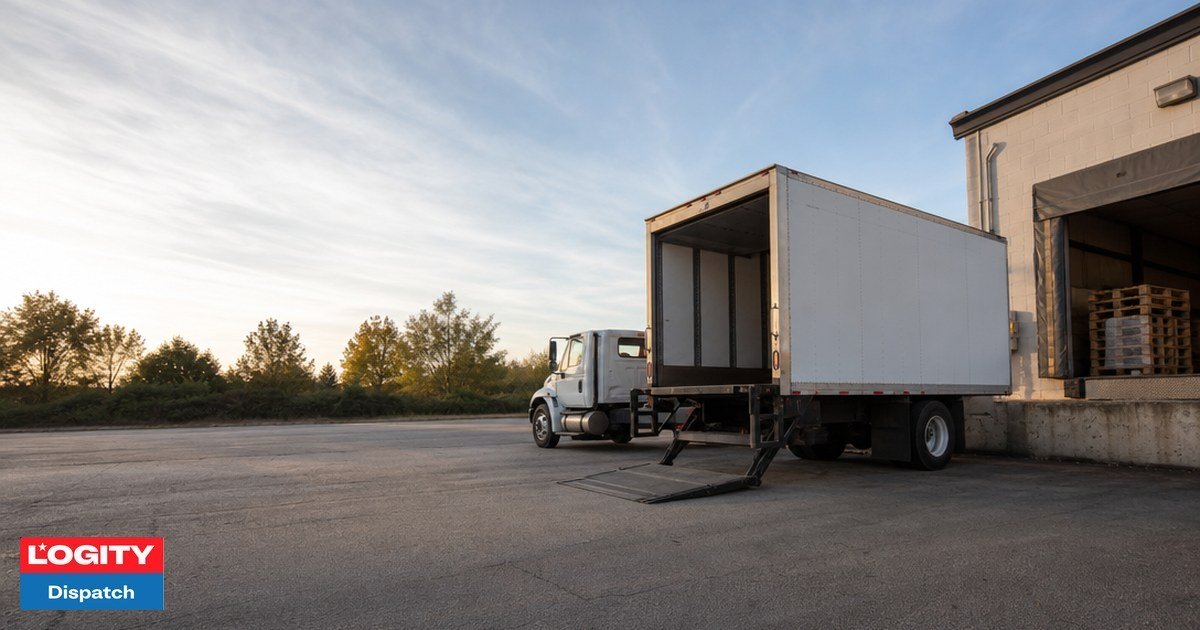
If you plan to work with a dispatcher, expect insurance to be part of the sign-up. For our 26 foot box truck dispatch we ask for an active MC authority, insurance and a W9, and the authority needs to have been active for at least a year. We do not handle cargo insurance directly; we connect drivers with partners for it.
Frequently asked questions
How much is box truck insurance per month?
Insureon reports a median of $909 a month for commercial auto insurance among box truck business owners who applied for quotes through it, with general liability at $52 and workers’ comp at $673. Your own quote can be higher or lower.
How much liability insurance does a box truck need?
For for-hire interstate general freight in a vehicle of 10,001 pounds GVWR or more, the federal minimum is $750,000 under 49 CFR 387.9. A fleet with only vehicles under 10,001 pounds GVWR has a $300,000 minimum under 387.303T.
Is cargo insurance required for a box truck?
Not by federal rule for general freight. The only federal cargo minimum is for household goods carriers. Brokers and shippers can still require cargo coverage before they give you a load.
Why is my box truck insurance quote so high?
The usual reasons are a new authority with no history, violations or accidents on your record, high value cargo, a long haul radius, an expensive region, higher limits or a low deductible. A 26 foot truck also costs more to insure than a smaller one.
Does a one truck owner-operator need workers’ comp?
It depends on your state and on whether you have employees. Insureon recommends it for owner-operators as a safety net. Once you hire a driver or helper, check your state’s workers’ compensation rules before they start.