As trucking operations become more digital, cybersecurity is no longer just an IT concern – it’s an operational risk. Dispatch platforms, load boards, rate confirmations, telematics, and document sharing now sit at the center of how freight is booked and executed. When those systems are compromised, the result isn’t just lost data – it’s stolen loads, misrouted trucks, delayed payments, and operational downtime.
For owner-operators and small fleets, even a minor breach can interrupt cash flow or expose them to fraud schemes that directly affect revenue and reputation.
Cyber Threats in the Trucking Industry
The trucking industry is experiencing an increasing number of cybersecurity attacks. As fleet operations become more digital, the number of potential dangers expands. Cyberattacks threats such as ransomware attacks, phishing attempts, and malicious software can impact large enterprises, smaller trucking companies, and owner-operators.
These attacks may target critical information, operational systems, or communications platforms, affecting the efficiency and security of the entire supply chain.
Phishing Attacks
One of the most common cybersecurity risks is phishing. In this type of attack, threat actors use malicious links or emails to trick employees into providing confidential information.
These emails often appear to come from trusted sources like colleagues, suppliers, or brokers, making them harder to detect. The success of phishing attempts can lead to unauthorized access to sensitive business data or allow cyber-enabled cargo theft, where goods and delivery schedules are stolen.
In 2025, the trucking industry may see increased efficiency and accuracy in phishing attempts. For example, an increased utilization of delayed phishing is projected. This scheme prevents detection by even the most advanced secure email gateways and other email security tools. Thus, the trucking industry should focus on improving detection and response tools and improving cybersecurity training for employees to ensure awareness of potential risks.
Ransomware Attacks
Another major cybersecurity threat facing the freight transportation industry is ransomware attacks. Criminals infect systems with malicious software, lock up critical files, and demand a ransom to restore access.
These attacks can disable fleet management systems, affect operations, and cause significant financial losses. For trucking businesses, this can result in delays, losses in logistics preparations, and long-term reputational damage.
Cyber-Enabled Cargo Theft
Cyber cargo theft is also a significant threat to transportation and logistics companies. Unlike traditional theft methods, this type involves hacking into telematics and vehicle systems or manipulating delivery schedules by infiltrating fleet management software.
Many modern cargo theft cases now begin as digital impersonation or system intrusion rather than physical theft.
Threat actors use techniques like phishing or exploiting weak points in existing systems to gain unauthorized access to critical information, such as the location, content, and schedules. Once obtained, this data allows criminals to intercept goods at their most vulnerable points, causing financial losses to trucking companies and interrupting the supply chain.
Key Industry Vulnerabilities
As transportation and logistics companies expand their use of technologies and web resources, they can expose their weak points and sensitive information.
Insecure Vehicle Systems and Telematics
Modern fleet systems and telematics solutions offer real-time information collection. At the same time, these technologies present risks.
Cybercriminals can attack vehicle systems to manipulate route information or take control of individual trucks. Without proper encryption or cybersecurity solutions, telematics and fleet management platforms can become easy entry points for malicious actors.
Lack of Employee Training
Cyber attacks often target employees within trucking companies. Employee training is essential to preventing these attacks. With proper cybersecurity best practices in place, workers can recognize phishing, malicious emails, and suspicious activity. Companies that overlook employee education are opening themselves up to potential attacks.
Regular training in secure sensitive data sharing, impersonation scams, and identifying known threat actors is essential for reducing risks and preventing vulnerabilities.
Existing Systems and Outdated Security Measures
Some trucking companies still rely on traditional detection methods and outdated software. This increases the risk of being targeted. Without regular updates, existing software may not be equipped to handle evolving cyber risks.
Cybersecurity solutions that incorporate the latest advancements are necessary to stay one step ahead of threat actors exploiting known weak points.
Impact of Cybersecurity Breaches on Trucking Operations
When a cybersecurity breach occurs in the trucking industry, the consequences extend far beyond financial losses. The impact on operations can be severe.
Financial risks and losses. One of the instant results of a cybersecurity incident is the financial burden. A ransomware attack or a data breach can lead to financial losses through ransom or recovery costs. Losses can also result from interrupted supply chain activities, delays in delivery, and halted logistics processes.
Safety and operational risks. A successful attack on fleet management tools can compromise the safety of drivers and customers. For example, trucks could be rerouted or brought to a halt. Furthermore, exposure to critical data, such as delivery information, can result in the loss of goods through cyber-enabled cargo theft.
Reputational damage. It can be caused by a cyber security breach in the transportation industry that is long-lasting. Consumers and businesses alike rely on trucking companies to ensure the safety of their shipments and data. A data breach or a ransomware attack that disrupts the timely and safe delivery of goods can damage trust, leading to losing long-standing contracts, clients, and future business prospects.
When dispatch systems or communications fail, trucks may still move – but without coordinated planning, leading to empty miles, missed reloads, or incorrect routing.
Best Practices for Trucking Cybersecurity
A comprehensive cybersecurity strategy is essential for protecting trucking fleets, assets, and sensitive data.
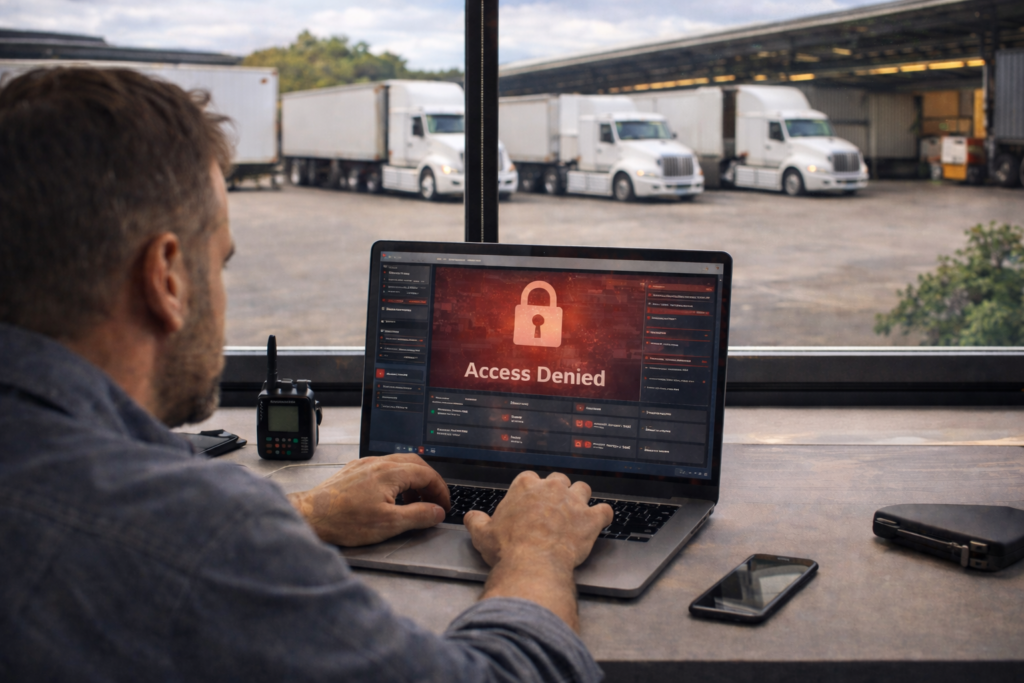
Multi-factor authentication (MFA). This is one of the easiest ways to protect against unauthorized access. Companies can prevent unauthorized personnel from accessing sensitive systems by requiring an additional verification step, like an SMS code or biometric scan.
Leverage Artificial Intelligence and machine learning. The use of AI in trucking cybersecurity can help to detect and respond to potential security incidents. Machine learning models can identify patterns and flag unathorized activities. This allows for a proactive response to cyber risks.
Zero trust architecture adoption. This system is becoming a pivotal strategy in securing sensitive information. With a Zero Trust model, access is granted based on strict verification of users, devices, and systems every time, regardless of internal or external origin.
Secure communication channels. Trucking companies should involve encryption to ensure all information transmission, whether within the fleet or between business partners, is secure. Secure communication tools should be used to protect sensitive information from being intercepted during data transfer.
Cybersecurity Trends and Innovations in Trucking
The trucking industry recognizes the importance of advancing its cybersecurity infrastructure. Emerging trends and innovative technologies include:
The growing participation of cybersecurity professionals. The presence of dedicated professionals is becoming more vital. They monitor systems, identify vulnerabilities, and assess cybersecurity risks within operations to maintain the highest level of security possible.
Advances in threat detection tools. New advanced tools for threat detection are providing enhanced visibility into potential cyber danger. These tools use machine learning, AI, and predictive algorithms to detect threats and respond in real time, improving response times and security posture.
Ongoing process of cybersecurity adaptation. As the digital landscape continuously evolves, cybersecurity must remain an ongoing process for trucking companies. Cybersecurity trends like AI-driven detection systems and zero-trust architecture are game changers, but continuous adaptation is needed to face new challenges head-on.
Why Small Carriers Are Increasingly Targeted
Large enterprise fleets invest heavily in cybersecurity, but smaller carriers often rely on basic email, shared documents, and multiple load board logins – making them easier targets for impersonation, credential theft, and payment diversion schemes.
In many cases, attackers don’t need to hack a truck. They only need to manipulate communication between brokers, carriers, and drivers.
Conclusion
The trucking industry’s digital transformation has created faster communication and better visibility – but also new exposure to operational disruption. Protecting credentials, verifying communications, and securing systems is now part of protecting freight itself.
Carriers that treat cybersecurity as an operational discipline – not just a technical feature – are better positioned to avoid fraud, maintain load integrity, and keep revenue moving without interruption.