Table of Content
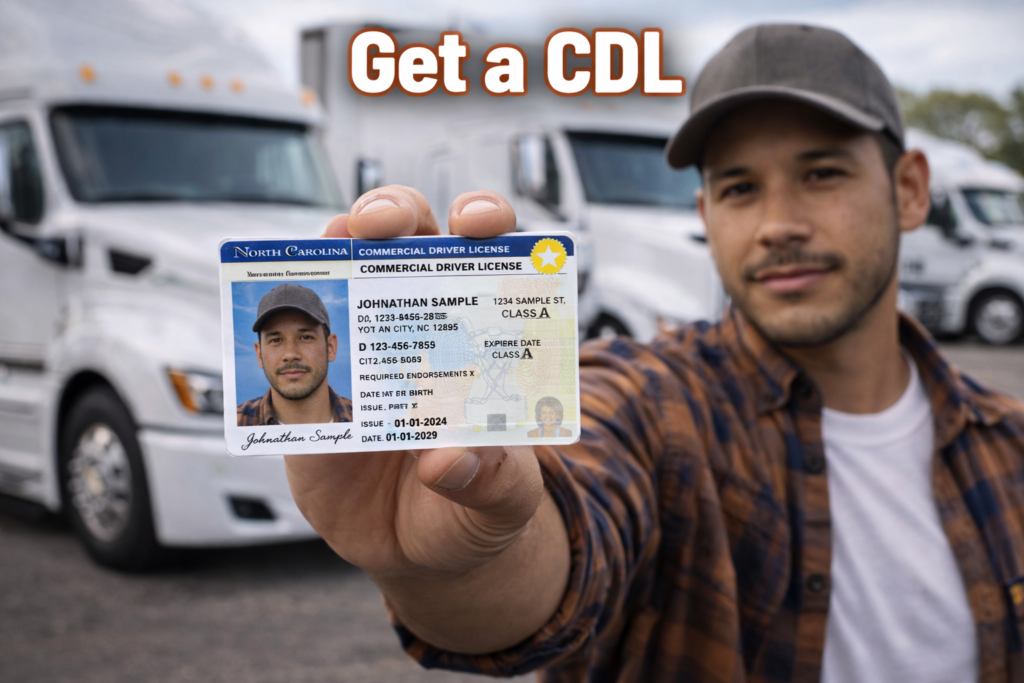
Depending on your state, training schedule, and test availability, getting a CDL can take anywhere from a few weeks to a few months. Most drivers complete the process in roughly 3–8 weeks, but timelines vary based on permit rules, school availability, and how quickly you can schedule your road test.
Typical CDL Timeline (Simple Breakdown)
- Week 1: Get your CDL permit (CLP) + medical exam
- Weeks 2–4: Training + practice (school schedule varies)
- Weeks 3–8: Schedule and pass the road test (timing depends on DMV availability)
- Extra time: Endorsements, retests, or part-time training can extend the process
What Type of CDL License Are You Getting?
A Class A CDL is required if you want to drive a flatbed, tractor-trailer, tank vehicle, or livestock carrier. Class B is required to drive a straight truck or certain box trucks (typically 26,001+ GVWR), dump trucks with a small trailer, and large passenger buses. Of the three CDL classes, Class A lets you drive a bigger variety of vehicles and tow bigger loads, so it tends to take longer to obtain.
If you’re considering your career options before or after getting a CDL, it also helps to explore fast-growing freight opportunities for non-CDL driver
Are You Planning to Earn Any Endorsements?
Endorsements are required to drive certain trucks and are achieved in addition to the CDL. For each endorsement, you need to pass certain tests. For example, in most states, driving a refuse truck will require an air brakes endorsement. Passenger or school buses might also require specific endorsements. For a Hazmat endorsement, you also need to be fingerprinted and pass a TSA (Transportation Security Administration) security threat assessment. Earning endorsements can open up great opportunities in your trucking career, but may add time to getting your CDL.
How Much Practice Driving Do You Need?
As part of the CDL process in some states, you are required to drive a certain number of practice hours with a licensed CDL driver. If your driving ability needs some work or mastering truck driving seems harder than you originally expected, you should definitely log in more practice hours, even if it means ultimately taking longer to get the CDL.
What Kind of Training Are You Taking?
Truck driving training programs are offered by community colleges and private driving schools — and some trucking companies even operate their own driving schools. Program lengths of course vary, and the number of classroom hours required may be different from state to state. Depending on the class of CDL sought and whether you take the training on a full-time or part-time basis, you could even take up to six months to complete the program.
What Kind of Testing Availability Is There Right Now?
Some jurisdictions only schedule tests on certain days, or have periods that are busier at different times of the year. Talking to your DMV can give you more information about CDL scheduling matters. Some states have a legislated time period you must wait between getting your CDL permit and the CDL road test or between CDL road test attempts.
What Kind of Truck Transmission Do You Plan to Drive?
Whether you are going to drive a truck with an automatic or manual transmission may impact how long you need to master your truck driving skills.
The CDL Process
You’ll need a regular driver’s license before applying for a CDL. In most cases, you’ll provide proof of identity and residency, complete a medical exam, and pass the written knowledge test to receive your Commercial Learner’s Permit (CLP).
After you have your CLP, you’ll complete training and practice driving under supervision. Then you’ll schedule your CDL road test (skills + pre-trip inspection).
In total, the process can take as little as a few weeks or several months, depending on your training pace, endorsement needs, and test availability.
Have questions about starting your trucking career or planning your first weeks on the road? Logity Dispatch supports owner-operators with load planning, broker communication, and lane strategy — so you can stay loaded consistently and avoid costly downtime once you’re ready to run.
Talk to Logity Dispatch and we’ll help you build a smarter weekly plan.