Table of Content
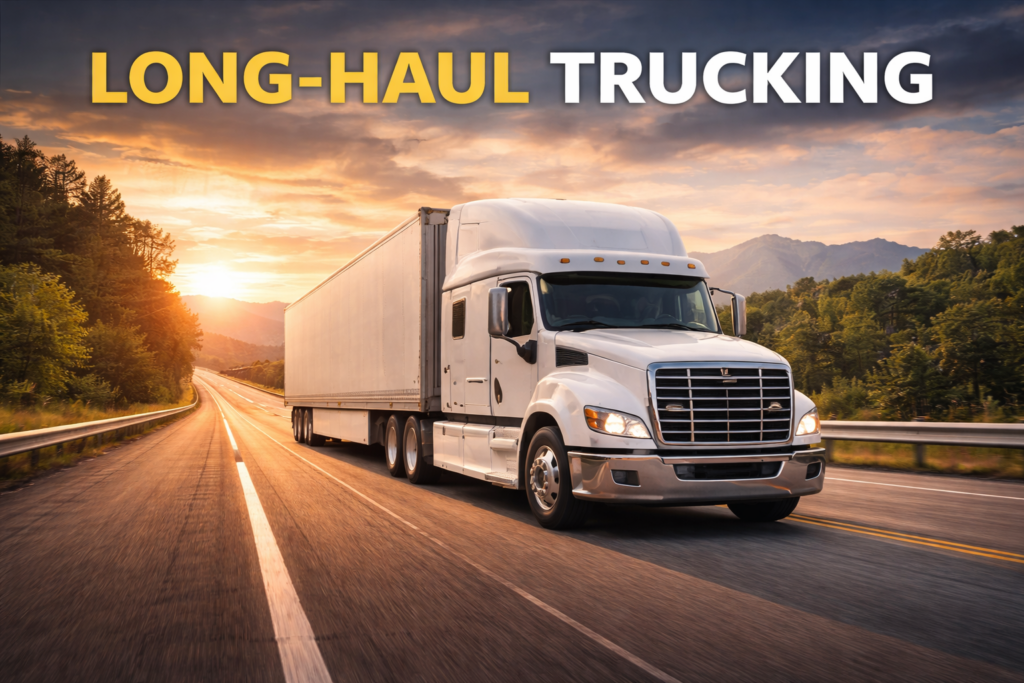
Long-haul trucking (OTR) is what most people picture when they think “trucker” — long miles, multiple states, and days away from home.
It can pay well, but it also comes with real challenges: long waits, changing appointments, fuel costs, and planning loads so your week stays profitable.
In this guide, we’ll break down what long-haul trucking is, how it works, what drivers earn, and what to expect on the road.
What is Long-Haul Trucking?
Long-haul trucking usually means hauling freight long distances (often 250+ miles), typically across multiple states.
Engaging in long-haul truck driving can be physically demanding and challenging, necessitating preparedness on the part of drivers. Some long-haul routes may include cross-border freight, depending on the carrier and lane.
Comparing Long-Haul and Short-Haul Trucking
Short-haul trucking primarily involves navigating familiar locations and driving within city streets. Conversely, long-haul trucking using commercial trucks constitutes a form of transportation that spans state borders and covers extensive distances, often reaching thousands of miles. The two types of trucking exhibit notable distinctions in conditions, with long-haul trucking also presenting specific risks for companies.
Notwithstanding the influence of factors such as route length and cargo weight on various transportation parameters, it is crucial to recognize that these are fundamentally distinct types of transportation services. Despite apparent similarities, certain key aspects set them apart, including:
- Long-haul trucking typically involves covering much greater distances.
- Operating and equipment costs in long-haul trucks are generally higher.
- Regulations and laws play a pivotal role in long-haul trucking, given the necessity to navigate across multiple states.
- Expenses, particularly on-the-road costs, tend to be elevated in long-haul trucking.
Long-haul trucking presents specific nuances that demand careful consideration. Failure to do so may lead to legal violations in certain states or expose one to unforeseen financial risks.
| Factor | Long-Haul (OTR) | Short-Haul (Local/Regional) |
|---|---|---|
| Home time | Usually fewer nights at home | More frequent home time |
| Pay style | Often CPM or percentage (varies by carrier) | Hourly, daily rate, or CPM (varies) |
| Typical freight | Multi-state freight, long-distance lanes | Local deliveries, regional routes, city/metro freight |
| Planning complexity | Higher (fuel, HOS, reload strategy, lane planning) | Medium (traffic, multiple stops, tighter delivery windows) |
| Waiting risk | Higher risk of detention at shippers/receivers | Can still happen, but often shorter routes mean faster resets |
Legal considerations remain paramount in any form of transportation. However, due to the diverse laws across different states in the US, it becomes essential to anticipate and address various issues when crossing state borders. Both the company and the driver bear the responsibility for ensuring smooth border crossings in such instances.
How Does Long-Haul Trucking Operate?
In essence, long-haul trucking involves the transportation of substantial and weighty loads using large trucks across extensive distances. Given that these trucks traverse the entire country, the distances covered can be exceptionally long, reaching thousands of miles annually. Typically, these journeys span over 250 miles from the truck’s starting location, predominantly utilizing highways for transportation.
A noteworthy characteristic of long-haul trucking is its reliance on meticulous planning, logistical coordination, and effective administration. The sustained transportation of heavy loads over extended periods requires intricate organization. Preparedness is paramount, ensuring that everything is in order at the precise moment, and all operations unfold as planned. Thoughtful logistics and strategic travel planning serve as safeguards against potential issues in the course of long-haul trucking.
What a Long-Haul Trip Usually Looks Like (Step-by-Step)
Most long-haul (OTR) runs follow a simple workflow:
- Book the load (from a broker, carrier, or direct shipper)
- Confirm pickup and delivery appointments (time windows, facility rules, and requirements)
- Plan the route and fuel stops to avoid unnecessary detours and expensive fuel areas
- Manage HOS (Hours of Service) to stay compliant and protect your schedule
- Check in with the broker or dispatch if anything changes (delays, rescheduling, detention, weather)
- Complete delivery + send POD, then plan the next reload to reduce deadhead miles
This is why long-haul success isn’t only about miles — it’s about keeping your week running smoothly with fewer surprises.
Moreover, long-haul trucking demands a comprehensive understanding and adherence to the diverse rules and regulations of various states, given that drivers transport cargo across different territories. Financial considerations become critical in this domain, requiring careful scrutiny as equipment costs tend to be substantially higher than those associated with other modes of transportation. Additionally, ongoing vehicle maintenance imposes additional financial investments.
If you’re trying to run long-haul more profitably, planning your week and reloads matters just as much as the miles.
Average Salary of Long-Haul Truck Drivers
The salary of a long-haul truck driver can vary based on several factors, with experience and working conditions playing pivotal roles. Long-haul driver pay depends on factors like experience, equipment type, carrier, lanes, and how consistently you stay loaded. Many long-haul drivers are paid per mile (CPM), by percentage, or through salary-based programs, depending on the company. In general, long-haul trucking can offer strong earning potential — but income varies based on freight availability, time on the road, and how efficiently the week is planned.
In the ever-evolving and uncertain landscape of the business world, long-haul trucking provides an opportunity for long-term commitment and the potential for a lucrative income. It serves as a viable option for individuals seeking employment stability. Therefore, if you possess endurance and approach the job with seriousness, long-haul trucking can yield substantial bonuses.
Benefits of Long-Haul Trucking
Long-haul trucking offers various advantages for both transportation companies and drivers. One of the primary benefits for drivers is the stability that comes with the job. While challenging, long-haul trucking provides a steady source of income, offering a sense of security in a business reality affected by external factors such as the pandemic. The attractive income potential makes this profession a favorable choice, as efforts are rewarded and, over time, experience can lead to increased earnings for performing similar tasks.
Long-haul trucking can offer some flexibility in how you run your week, especially for drivers who manage time well. However, most long-haul schedules still depend on pickup and delivery appointments, customer hours, and available freight, so planning matters. Drivers who stay organized often find it easier to reduce delays and keep their week profitable.
Stable Income and Health Insurance
Another significant advantage for long-haul truck drivers is the consistency and adequacy of income, which naturally increases with experience. Despite the inherent challenges of long-haul trucking, drivers enjoy high salaries that compensate for their hours of work. The job also presents opportunities for additional bonuses, offering financial support during periods of instability. Long-haul trucking emerges as a secure and profitable long-term career option due to its stability, attractive salary, and accessible entry requirements.
Furthermore, long-haul trucking comes with an array of supplementary benefits. The job provides opportunities for extensive travel, allowing drivers to earn money while exploring diverse locations, some renowned for their picturesque natural environments. Additionally, companies may offer health or dental insurance and paid vacations, enhancing the overall attractiveness of the profession. Benefits like health insurance, paid time off, and bonus programs depend on whether you’re a company driver or owner-operator, and on the specific carrier’s policies.
Challenges of Long-Haul Trucking
Common challenges long-haul drivers deal with include:
- Detention and unpaid waiting time at shippers and receivers
- Deadhead miles between loads or after delivery
- Getting stuck in weak reload areas with limited freight options
- Fuel price swings that reduce take-home profit
- Maintenance downtime and unexpected repairs
- Rate drops and inconsistent lane pricing
- Broker issues or payment delays (especially for owner-operators)
- Burnout and home-time pressure from long weeks on the road
For drivers, the demanding nature of work in long-haul trucking presents discomfort and potential risks. The strenuous and tiring conditions, coupled with the constant need for vehicle maintenance, high fuel costs, financial risks, and prolonged working hours, contribute to the job’s challenges. Endurance varies among drivers, making the acceptance of such responsibilities a personal decision not embraced by everyone.
Conclusion
In conclusion, long-haul trucking stands out as a pivotal and influential sector in the field of transportation. While it is commonly associated with the extensive distances covered by drivers, its essence lies in the drivers’ sense of responsibility, extended periods spent on the road, and the diverse range of cargo handled. The significance of such services extends to the crucial role they play in assisting various companies, particularly in situations where no alternative means are available for transporting heavy loads over significant distances.
Bottom line: Long-haul trucking can be a strong career path — but profit and quality of life depend on how well you protect your time and plan your week.
Here are the biggest things that affect long-haul success:
- Waiting time (detention and delays)
- Deadhead miles and weak reload planning
- Inconsistent rates and unpredictable schedules
If you want to run long-haul more efficiently, the next step is learning how to plan loads and lanes in a way that keeps your week stable — not just your truck moving.
How Can You Benefit from Dispatch?
Long-haul trucking is easier when your week is planned, not improvised. Logity Dispatch helps owner-operators stay moving with better load planning, broker communication, and lane strategy — so you waste less time on deadhead miles, weak reload areas, and last-minute appointment changes.
If you want help planning your next week more efficiently, talk to our dispatch team and see how we can support your lanes and schedule.
Want to see what a dispatcher actually does day-to-day and whether it makes sense for your lanes? Learn how dispatch works here.