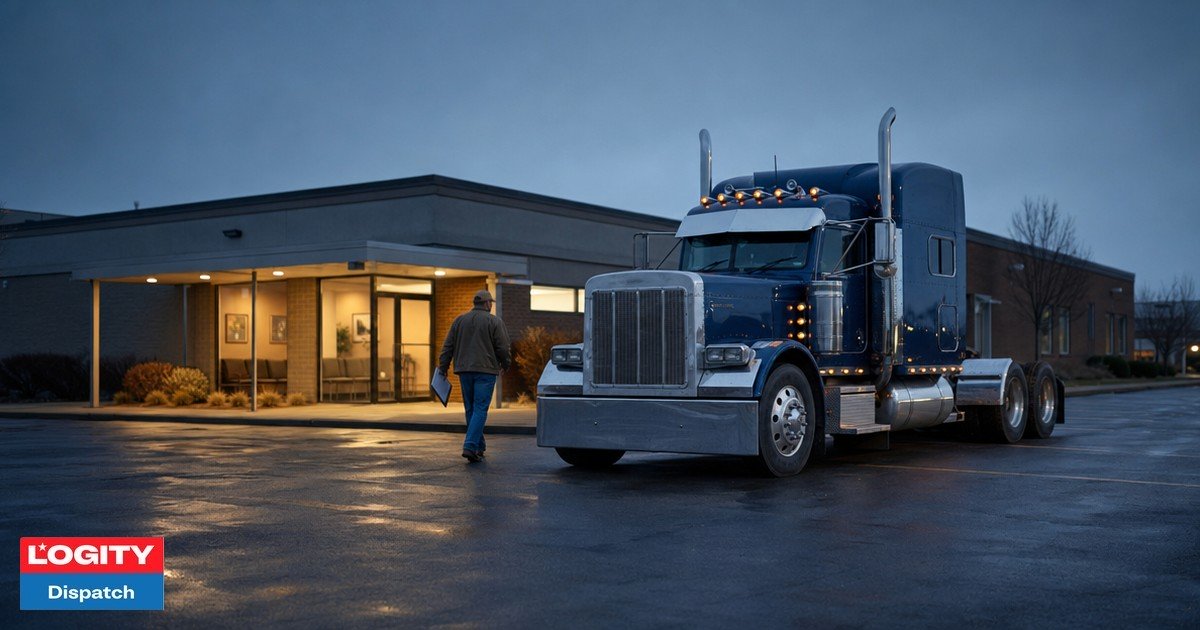
Trip planning isn’t a single decision. It’s a workflow that happens in pieces across the week, some Sunday night, some Monday morning, some inside the cab between deliveries, and operators who run cleanly aren’t smarter, they’re more consistent about when each piece happens.
The piece below is what a working owner-operator’s week looks like when trip planning is treated as a recurring process rather than an ad-hoc activity. It’s not the only configuration that works. Operators who run two-week out-and-back cycles run a different rhythm than operators who run weekly home-based loops. But the pieces are recognizable in either pattern, and operators who skip one or two of them tend to spend Friday afternoon repairing what wasn’t planned earlier.
Sunday evening: the week’s framework
Most operators do their longest planning block Sunday evening, before the week starts. The work is straightforward: confirm the Monday pickup, check the lane forecast for the regions the truck will be moving through, scan the load board for what’s posting in the destination markets the truck will be ending in, and build a rough geographic shape for the week.
| Phase | Time | Inputs | Output |
|---|---|---|---|
| Pre-week | Sunday evening | Lane map, HOS state, household calendar | Anchor lanes, target loads |
| Day-of | Each morning | Load board, weather, current rates | Booked load and route |
| Mid-trip | At each stop | Traffic, fuel, ETA shifts | Adjusted reload window |
The shape doesn’t need to be precise. It needs to be honest about a few things: how many drive hours the week’s commitments will use, what the reset window looks like (Friday evening, Saturday morning, or some other slot), and where the truck is supposed to end Sunday night. Operators who skip this step usually start Monday with the truck moving and the week’s geometry forming itself out of whichever loads happen to be available, which works some weeks and doesn’t others.
Monday morning: the day’s verification
Monday morning the operator confirms the day’s specifics. Pickup time, BOL ready, dock instructions, gate access, weight ticket logistics. The verification takes ten to fifteen minutes if the load is straightforward and longer if the shipper has unusual handling requirements. Operators who do this verification before leaving the home yard rarely arrive at a shipper to discover the appointment was actually moved or the gate code changed. Operators who skip it sometimes do.
Routing for the pickup-to-delivery leg is also a Monday morning task. The route doesn’t need to be optimized to the mile, the operator usually knows the corridors. It does need to account for known restrictions: bridge weights and heights on alternates, hours-of-service limits against the delivery appointment, fuel stop spacing against the truck’s tank state, and the time-of-day pattern the lane runs into when it crosses metros.
Inside the cab: rolling planning
The middle of the week is where trip planning happens in small pieces. The reload search starts before the current load delivers, usually at the last fuel stop before the receiver, or at a rest area roughly halfway through the delivery leg. Operators who wait until the truck is empty at the receiver to start looking sometimes find themselves deadheading because the freight that was on the board an hour ago is gone.
The reload research is mostly fast-pattern recognition: which lanes off the destination market are running at what rates, which brokers have freight posting in that direction, what the pickup windows look like against the hours the truck has left. Operators who run the same regions repeatedly develop a feel for which destinations consistently produce reloads and which don’t, and that feel often shapes which loads they accept earlier in the week.
Daily logging that isn’t paperwork
The ELD covers HOS automatically. The operator’s own tracking, fuel receipts, tolls, scale tickets, broker communications, needs a system. The system can be a folder in the cab, a phone app, a clipboard with daily envelopes, or any other configuration the operator will actually use. The shape of the system matters less than whether it’s used the same way every day.
The reason consistent daily logging matters isn’t compliance, although it does help on that side. It’s reconstruction. When a payment gets disputed three weeks later, when an audit asks for supporting documents, when an insurance adjuster wants the route detail on a claim, the operator who logged consistently has the records assembled. The operator who didn’t is rebuilding from memory, and memory at three weeks’ distance gets noticeably less reliable.
If the planning keeps slipping and the week turns into repair work instead of revenue, write out one full trip the way it actually ran last week and find where the plan broke. The gap is usually in one repeatable spot.
Wednesday or Thursday: the look-forward block
Mid-week most operators benefit from a 20-30 minute block where the rest of the week gets sketched against actual conditions instead of Sunday’s plan. The reset timing for the weekend, the home-yard arrival window, the PM that’s coming due, and any household commitments that need confirmation. The block doesn’t change much most weeks. Some weeks it changes everything.
This is also when the next-week framework starts forming. Pickups that need to be booked before Friday afternoon, customers who need a Monday-morning confirmation by Thursday, brokers who post their better freight earlier in the week and reward carriers who commit early. Operators who treat next-week planning as a Sunday evening task often miss the freight that was bookable Wednesday and gone Friday.
Friday: closeout
Friday closeout is roughly the inverse of Sunday setup. The week’s expenses get tallied, fuel, tolls, repairs, meals, lodging if any, and reconciled against what was projected. Detention claims get filed if any are outstanding. Lumper receipts get submitted. The truck’s mechanical state gets walked: tires, lights, fluids, anything that the operator noticed but didn’t act on during the week. Maintenance that needs the home yard gets scheduled into the weekend window if the truck is going home.
The closeout doesn’t have to be elaborate. It does have to happen, because the next week’s planning runs more cleanly when the previous week is closed than when it’s still open. Operators who close their week cleanly start Sunday’s planning block already knowing what’s been paid, what’s outstanding, what the truck needs, and what the household calendar looks like. Operators who don’t close cleanly start Sunday’s planning block doing the previous week’s accounting first.
Tools the workflow runs on
The toolset is mostly conventional. A load board subscription (DAT, Truckstop, 123Loadboard, or some combination). An ELD platform that shows the operator’s remaining hours cleanly. A weather and routing app. Google Maps or Apple Maps for general routing, a truck-routing app like Trucker Path or Hammer for height/weight restrictions and parking. A bookkeeping system that ingests fuel receipts and tolls, whether spreadsheet, app, or accountant. A communication system that handles brokers (typically a phone with the operator’s contact list, plus email for confirmations).
None of those tools are exotic. The workflow’s value comes from using them on a recurring schedule, not from any individual tool’s capabilities. Operators who add new tools without changing the underlying schedule rarely see the operating result improve. Operators who change the schedule, the Sunday-evening planning block, the mid-week look-forward, the Friday closeout, usually see meaningful changes in how the week runs, with the same tools they were already using.
Where dispatch fits inside the workflow
Dispatch services don’t replace the operator’s planning workflow. They carry pieces of it. A dispatcher running for the operator typically handles the reload search, the broker negotiation, the load confirmation paperwork, and the calendar-keeping for renewals and recurring administrative items. The operator still does the inside-the-cab planning, the route execution, the daily logging, and the household coordination, those don’t outsource cleanly because they require physical presence or operator-level decision-making. That division of labor is what a truck dispatching service is set up to handle.
What changes when a dispatcher is involved isn’t the workflow’s existence. It’s the distribution. The operator does less of the time-on-phone work and more of the in-truck work. The dispatcher does the broker-side scanning. Both roles run against the same weekly rhythm. Sunday framework, Monday verification, mid-week look-forward, Friday closeout, and the workflow holds whether one person or two is running it. The dispatch fee is priced against which pieces of the workflow the operator wants to keep doing themselves.