Bad weather doesn’t just make driving harder – it disrupts schedules, delivery windows, reload timing, and income. For owner-operators and small carriers, rain, snow, ice, and wind often lead to missed appointments, unpaid waiting, and difficult conversations with brokers.
While safe driving is always the priority, weather-related delays quickly become operational problems if they aren’t planned for. Understanding how to drive safely in bad conditions is important – but knowing how to manage the impact of weather on loads and schedules is what protects the week.
Tips to ensure safe driving in bad weather
Plan ahead: Allow extra time for your journey, as driving in challenging weather typically takes longer and can be more stressful. Check the weather forecast before you leave, and if feasible, consider taking an alternate route to avoid the worst of the weather. Postponing your trip until conditions improve might also be a wise choice. It’s beneficial to carry a map with you to stay oriented and have alternative routes in case visibility is compromised.
In commercial trucking, weather delays often affect more than transit time. Late arrivals can trigger detention disputes, missed reloads, or force drivers into weak outbound markets. Planning ahead is not just about safety – it’s about preserving schedule flexibility when conditions change.
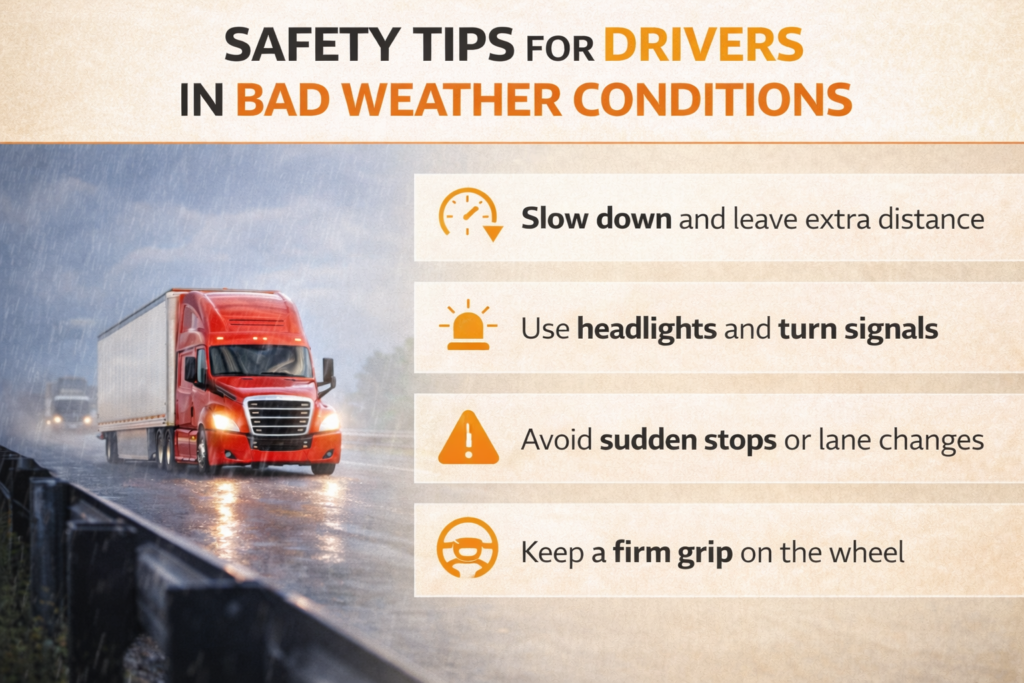
Drive slowly: Adjust your driving speed to accommodate the challenging conditions. Driving at a slower pace than usual reduces the risk of skids and accidents, giving you more control over your vehicle.
Increase the following distance: One of our favorite safety tips for driving in bad weather is eave a larger gap between your vehicle and the one in front of you. It’s often recommended to double the distance in rain, snow, sleet, etc. Braking distance is extended in these conditions, so allowing extra space gives you more time to react and stop safely.
Ensure equipment functionality: When you are driving in bad weather you should regularly check your tires and brakes, especially during winter when road conditions can be more treacherous. Ensure your windshield wipers are in good working order, and keep your headlights clean. Dirty headlights significantly reduce visibility, especially in inclement weather. Before setting off, clear your windshield and mirrors of ice or frost, and use wipers and wiper fluid during the trip to maintain clear visibility. If necessary, pull over in a safe location to scrape off ice or snow.
Use low beams in fog: Turn on your headlights using the low beam setting when driving in fog, regardless of whether it’s day or night. Low beams help you see the road better and make your vehicle more visible to others. Please drive slowly and maintain a following significant distance in fog since objects like other cars or traffic lights might become visible only when they are close.
Stay informed: Tune in to a radio station that provides road condition information during your journey. Keep the volume low to avoid distractions but listen for updates on alternate routes, road closures, and other relevant information. Staying aware of changing road conditions is vital for making informed decisions.
Buckle up: Always ensure that you and your passengers are wearing seatbelts. Seatbelts are legally required in most states and can save lives, particularly during hazardous weather conditions.
Take breaks if needed: When driving in poor weather conditions it is best to find a safe spot away from the road to pull over and rest, if you start feeling tired while driving,. It’s crucial to prioritize your well-being and avoid the risk of accidents. Additionally, if the weather suddenly worsens, consider finding a safe place to pull over and wait until conditions improve. However, ensure you are not pulling over into a deep puddle or snowbank.
Don’ts While Driving in Bad Weather Conditions
- Don’t drive with worn-out tires: Worn-out tires can be hazardous when driving in bad weather conditions. They are more likely to lose their grip on the road, leading to skidding or hydroplaning. Before setting out on a journey, ensure your tires are in good condition, with sufficient tread depth and proper inflation. If your tires are worn out, replace them immediately.
- Don’t tailgate: Tailgating is always dangerous but especially risky in bad weather conditions. When visibility is reduced, it’s essential to maintain a safe distance from the vehicle in front of you. This will give you enough time to react if the vehicle suddenly stops or slows down.
- Don’t use cruise control: Cruise control is a great feature, but it should be avoided when driving in bad weather conditions. It’s important to have full control over your vehicle, especially when conditions are unpredictable. Cruise control can lead to loss of control, skidding, or hydroplaning if the vehicle’s speed is not manually adjusted.
- Don’t slam on the brakes: If you find yourself skidding or losing control of your vehicle, the instinctive response may be to slam on the brakes. However, this can make the situation worse. Instead, gently pump the brakes and steer in the direction you want to go. This will help you regain control of the vehicle.
- Don’t drive distracted: Distracted driving is dangerous in any situation, but it’s even more hazardous when driving in bad weather conditions. It’s essential to keep your eyes, and attention focused on the road. Avoid using your phone, eating, or drinking that may distract you from driving.
In conclusion, driving in bad weather road conditions requires extra caution and attention to safety. By avoiding these don’ts; you can reduce the risk of accidents and ensure a safe journey.
Always prioritize safety on the road, and remember that arriving on time is better than at all.
How Dispatch Support Helps During Weather Disruptions
When bad weather hits, the biggest challenge is rarely the driving itself – it’s the ripple effect on schedules, reloads, and commitments. Dispatch support helps owner-operators manage those disruptions without turning a delay into a lost week.
A dispatching service supports communication when weather interferes with transit, helping coordinate appointment changes, reset expectations with brokers, and plan next steps when original schedules no longer hold. This reduces pressure on drivers to “push through” unsafe conditions just to stay on time.
By treating weather delays as planning events rather than failures, dispatch support helps protect safety, income, and long-term relationships – without forcing drivers to choose between risk and revenue.