Table of Content
- The Board Number and the Paid Number Are Not the Same
- Why the Spot Market Rewards the Operator Who Does the Math
- Where Operators Misread the Spot Rate
- What Pulls a Board Rate Down to the Paid Rate
- What Turning the Board Number Into the Paid Number Looks Like
- Spot Rate Questions Operators Actually Ask
- The Number to Check on Your Last Ten Loads

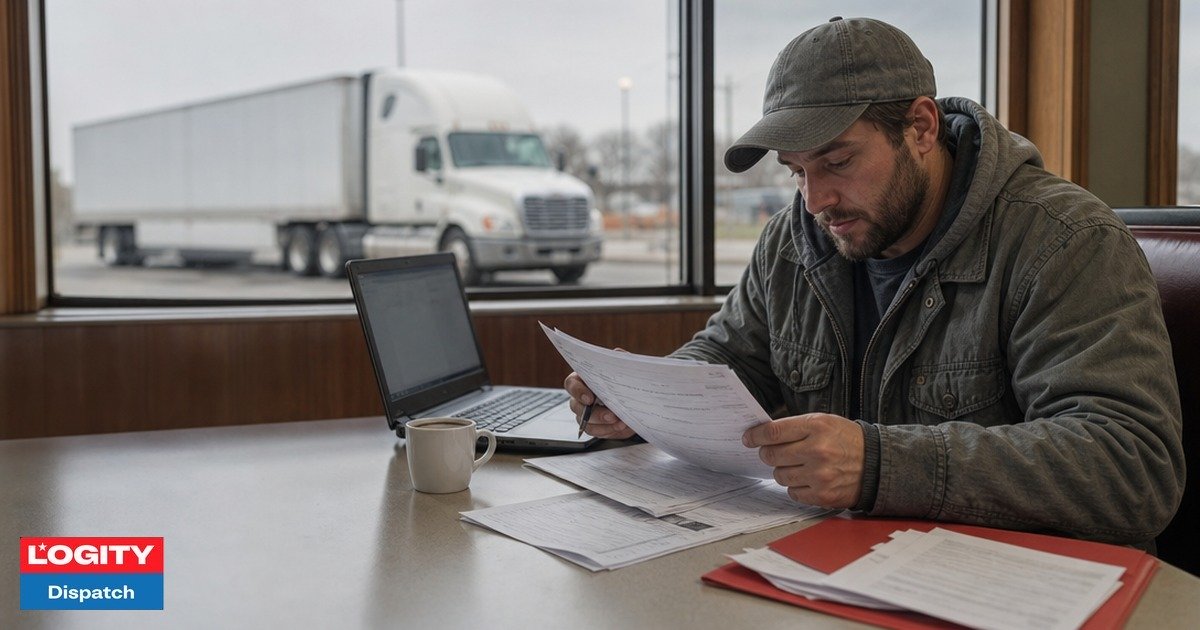
An owner-operator sees a spot rate on the board and reads it as the number he’ll be paid. It isn’t. The board number is an offer, and between that offer and the money that lands in the account sits a stack of things that pull it down: the deadhead to get there, the detention nobody covers, the fuel against the lane, the days until the invoice clears. Two loads can post the same rate and pay completely different money. The board number is where the negotiation starts, not where the pay lands.
The Board Number and the Paid Number Are Not the Same
The posted rate on the board is gross, before anything. The paid number is what’s left after the load’s real costs come out, and the gap between them is where thin weeks are made.
A high rate with a 200-mile deadhead can net less than a lower rate at the door. A strong number into a market with no freight out is a good rate and a bad week. The owner-operator who books on the board number alone is pricing half the load and hoping the other half breaks even.
Picture two loads posted at the same rate. The first is 20 miles away and drops in a strong reload market. The second is 180 miles of deadhead away and delivers into a dead zone with nothing paying back out. Same headline number, and the first nets hundreds more once the deadhead, the fuel, and the back-haul are counted. Book on the board rate alone and you’d flip a coin between them.
Why the Spot Market Rewards the Operator Who Does the Math
Spot freight moves fast and prices on the moment. That speed favors whoever can read the real number quickest, not whoever grabs the biggest one first.
The deadhead, the fuel against the lane, the detention risk at that receiver, the market on the back side: those turn a board number into a paid one. Do that math in seconds and you take the load that actually pays. Skip it and you chase headline freight rates into lanes that quietly lose, load after load.
Where Operators Misread the Spot Rate
- Booking on the posted rate without pricing the deadhead to the pickup.
- Taking a strong number into a market with no paid freight back out.
- Ignoring detention risk at a receiver known to load slow.
- Comparing two loads by rate alone, not by what each one nets.
- Forgetting the days to invoice, so the cash comes slower than the rate suggested.
None of those are negotiation failures. All of them are reading the wrong number, the offer instead of the pay.
What Pulls a Board Rate Down to the Paid Rate
| What eats the board rate | Typical hit | How to price it in |
|---|---|---|
| Deadhead to pickup | Every empty mile at your cost per mile | Add it to the rate before you say yes |
| Fuel against the lane | Varies with distance and terrain | Net it out, don’t read the gross |
| Detention risk | Hours lost at a slow receiver | Weigh the receiver’s reputation before booking |
| Back-haul market | A dead drop market pays little out | Check the reload before you book in |
None of these are fixed numbers, and they change with the lane and the day. The point is that the owner-operator who runs this math books the load that nets, not the one that posts.
What Turning the Board Number Into the Paid Number Looks Like
The whole job is converting every posted rate to a net before booking: subtract the deadhead, the fuel, the detention risk, the back-haul market, then compare. That’s a desk running the math, not a driver taking the biggest number on the screen.
It means pricing the deadhead into the rate before saying yes. It means checking the back side of the lane so a good load doesn’t strand the truck. It means weighing two offers by what each nets, not what each posts. That math is the difference between an owner-operator who books high rates and one who keeps them, and it’s exactly the work that pays for a desk that reads the real number on every load.
For an owner-operator reading the board between loads, that math is easy to shortcut. It’s the real case for owner-operator dispatch: a desk netting every offer so you book the paid number, not the posted one.
Spot Rate Questions Operators Actually Ask
Why does a higher board rate sometimes pay less? Because the board number is gross. Once deadhead, fuel, detention, and a weak reload come out, a lower rate at the door can net more than a big number 200 miles away. The paid number, not the posted one, is what matters.
How much deadhead is too much? There’s no fixed line, it depends on your cost per mile and the load’s rate. The rule is simple: price every empty mile into the rate before you accept, so the deadhead never gets absorbed for free.
How do I run this math fast enough for spot freight? Load to load from the cab, most owner-operators can’t. That’s the case for a desk netting offers in seconds, the same thing dispatching trucking services handle, so you move fast without booking on the wrong number.
Does the highest rate on the board win? Only if it also nets the highest after costs and reloads paid. Compare loads by what each puts in your account, not by what each shows on the screen.
The Number to Check on Your Last Ten Loads
Take your last ten spot loads and write the board rate next to what each actually netted after deadhead, fuel, and any detention you ate. Look at how often the highest board rate wasn’t the highest paid. That gap is the number you’ve been booking on instead of the one that matters, and closing it is margin you keep on every load.