Table of Content
- A Step-Deck Isn’t a Lower Flatbed. It’s a Clearance Tool.
- Why Tall Freight Punishes a Flatbed Plan
- Where Step-Deck Operators Leave Money
- What Tall Freight Actually Adds to a Step-Deck Rate
- What a Dispatcher Prices on a Step-Deck Load
- Step-Deck Rate Questions Operators Actually Ask
- The Check Worth Running This Week
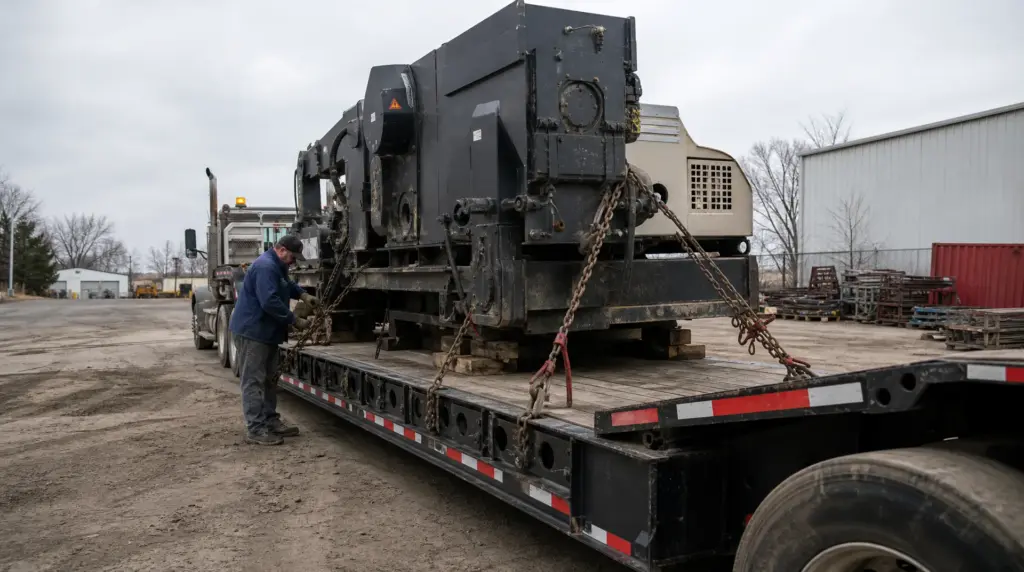
Owner-operators look at a step-deck and see a flatbed that sits lower. Same straps, same tarps, same freight, just a drop in the deck. So they price it like flatbed and move on. But the step-deck exists for one reason: to haul freight too tall to ride legal on a flatbed. That extra height is the whole job, and it brings clearance, routing, and permit work that a flat deck never touches. Price it as flatbed and you give away the part of the rate that actually pays.
A Step-Deck Isn’t a Lower Flatbed. It’s a Clearance Tool.
The drop in the deck buys you height. Freight that would run over legal on a flatbed rides legal on a step, and that single foot of clearance is why the trailer earns more.
But taller freight doesn’t ride free. It pulls in low bridges, route restrictions, and the permit math that comes with anything near the legal line. The owner-operator who books a step at flatbed money keeps the lower deck and throws away the clearance value the load was actually paying for.
Picture a load of tall industrial tanks, a few inches over legal height on a flat deck but fine on a step. The owner-operator books it at the flatbed rate because the freight looks routine. Then the routed lane has a 13-foot-6 overpass, the reroute adds 40 miles, and one state wants an over-height permit. The clearance was the whole reason the load needed a step-deck, and none of it was on the rate.
Why Tall Freight Punishes a Flatbed Plan
A flatbed load rolls almost anywhere a truck fits. A near-legal step-deck load doesn’t. The height decides the route before the miles do.
Pick a lane without checking the overpasses and you find the low one at oversize speed, then backtrack. Assume legal height and skip the permit and you’re parked at a scale until it clears. None of that shows on a flatbed rate sheet, because a flatbed load never had to ask. The step-deck always does, and the freight rate has to carry the answer. It’s the same accessorial gap groups like the Owner-Operator Independent Drivers Association keep pointing to: the extra work is real, and unpriced it comes straight out of the owner-operator’s pay.
Where Step-Deck Operators Leave Money
- Tall freight booked at flatbed rates, with the clearance work unpriced.
- Routes set without checking bridge heights, forcing slow backtracks.
- Near-legal loads run without a permit check, risking a parked truck.
- Tarping, securement, and the drop-deck handling folded into one flat number.
- Detention absorbed at a slow dock because no waiting terms were set.
None of those are driving problems. All of them are planning gaps that price a step-deck like the trailer it only looks like.
What Tall Freight Actually Adds to a Step-Deck Rate
| What the height adds | Typical cost or time | Why it belongs on the rate |
|---|---|---|
| Clearance routing | Planning time, sometimes extra miles | A flat deck never has to route around bridges |
| Over-height permit | Roughly $15 to $100+ per state when needed | A missing one parks the truck at the scale |
| Bridge and overpass check | Done before the load rolls, not at speed | One low overpass means a slow backtrack |
| Drop-deck securement | Added to the linehaul | Taller freight takes more straps and care |
These are typical ranges, not fixed rates, and they move with the load and the states on the route. The point is that none of it is a favor. Each line is real work an owner-operator can price instead of giving away with the deck.
What a Dispatcher Prices on a Step-Deck Load
The whole job is pricing the height, not just the miles: the clearance route, the permit if the load needs one, the securement the freight actually takes. That’s a desk reading the load, not a driver guessing at a flat number.
It means checking the height against the route before the load books, so the bridges are known, not discovered. It means pulling the over-height permit when the freight runs near legal, ahead of the scale. It means charging the clearance work as its own line instead of burying it in a flatbed rate. That’s the difference between a step-deck that earns its premium and one that runs as a flatbed with a lower floor. The same discipline runs under step-deck dispatch services, where the height gets priced before the load rolls.
For an owner-operator running a step-deck solo, that’s the real case for owner-operator dispatch: a desk reading the height and pricing the clearance while you drive, so the rate confirmation reflects the tall load and not just the miles.
Step-Deck Rate Questions Operators Actually Ask
Should a step-deck pay more than a flatbed? When it’s hauling tall freight, yes. You’re being paid for the clearance, the routing, and any permit the height brings, not just for a lower deck. A step-deck load that priced the same as flatbed left that value on the table.
When does a step-deck load need an over-height permit? Once the loaded height crosses a state’s legal limit. It varies by state, so a near-legal load should be checked against every state on the route before booking, not discovered at a scale.
How do I price the clearance work when I’m the one driving? You don’t do it well from the cab. That’s the case for a desk checking heights and pulling permits before the load rolls, the same thing full truck dispatch services handle, so the clearance lands on the rate instead of on your own time.
How do I know a step-deck rate is actually fair? Compare it to a flatbed rate on the same lane and add the clearance routing, any permit, and the extra securement. If the step-deck rate isn’t clearly above flatbed, you’re being paid for the floor, not the height.
The Check Worth Running This Week
Pull your last ten step-deck loads and mark the ones that carried tall freight, a clearance route, or a permit. Now count how many charged more than a comparable flatbed rate. If most didn’t, you were never paid for the step. You were paid for the floor, and that difference is margin you can recover by pricing the height before the load rolls.