Table of Content
- “Reefer pays better than dry van” is the part of the math the rate sheet shows
- The Midwest corridors where reefer actually books
- The temperature discipline that separates reefer that pays from reefer that bleeds
- Where the reefer premium disappears
- Where the corridor still pays
- Where a dispatcher matters more on reefer than on dry van
Reefer rates look like a premium until you price the temperature discipline they require. The premium is real. So is the cost of a single bad load.
Operators who jump from dry van to reefer usually do it on rate. The board shows reefer pulling $0.30-$0.55 a mile more than dry van out of the same origin. That gap looks like found money. It isn’t.
The premium is paying for temperature discipline, FSMA documentation, faster detention bleed, and a claim risk profile that can wipe a quarter on one load. Midwest reefer in particular runs through corridors where the operational tightness is non-negotiable, and the operators making the math work are doing things the dry van version of themselves never had to.
“Reefer pays better than dry van” is the part of the math the rate sheet shows
The rate is one column. The other columns move when the trailer is reefer. Fuel burn for the reefer unit runs $35-$60 a day depending on the temperature setpoint and ambient conditions, off the truck’s settlement, not absorbed in the rate. Pre-cool time at pickup runs 30-90 minutes most loads. Detention starts later because the clock is on the receiver, but detention claims are routinely contested when the broker can argue temperature compliance was off.
| Midwest corridor | Produce season | Protein season |
|---|---|---|
| Chicago hub | Spring-Fall | Year-round |
| Kansas City | Summer | Heavy in winter |
| Indianapolis | Mixed | Mixed |
And one product damage claim, temperature out of range on a 40,000 lb load of frozen produce, runs $20,000-$60,000. Insurance covers a portion, deductibles take a chunk, and the carrier’s premium goes up the next renewal. Reefer math at the load level is good. Reefer math at the quarter level depends on whether any of those claim events landed.
The Midwest corridors where reefer actually books
Three reefer corridors carry most of the Midwest produce, protein, and dairy volume worth running. They behave differently and the operator’s discipline has to match the corridor.
- Chicago / Indianapolis hub. Mixed pickup volume, high broker concentration, heavy produce coming in from West Coast and Mexico for redistribution. Dock appointments tight. Detention pattern is bad. Chicago receivers run two-hour holds routinely, which on reefer means fuel burn climbs through the wait. Claim discipline is high because product moves through cross-docks where temperature checks happen at every transfer.
- Kansas City / St. Louis protein corridor. Beef and pork plants in the KC region pushing east and south. Loads run heavier on weight, lighter on volume. Receivers are usually plant-direct, which means rejection risk on temperature is real. Detention windows are tighter, protein receivers have cold-chain requirements that make holds expensive on both sides. Premium is real but the equipment has to be tight.
- Minnesota / Wisconsin dairy. Class A and Class B dairy products, frequent shorter hauls, heavier seasonal swings. Winter operates fine because ambient temps reduce reefer load. Summer is brutal, fuel burn climbs, claim risk climbs, and dock-side reefer audits become standard. Operators who run this corridor full-year price for the summer load and ride out the winter.
Each corridor has a different reload pattern, a different broker book, and a different equipment-discipline floor. Treating them as one Midwest reefer market is how operators end up running too cold on a dairy load or too warm on a frozen produce load and finding out at the receiver.
The temperature discipline that separates reefer that pays from reefer that bleeds
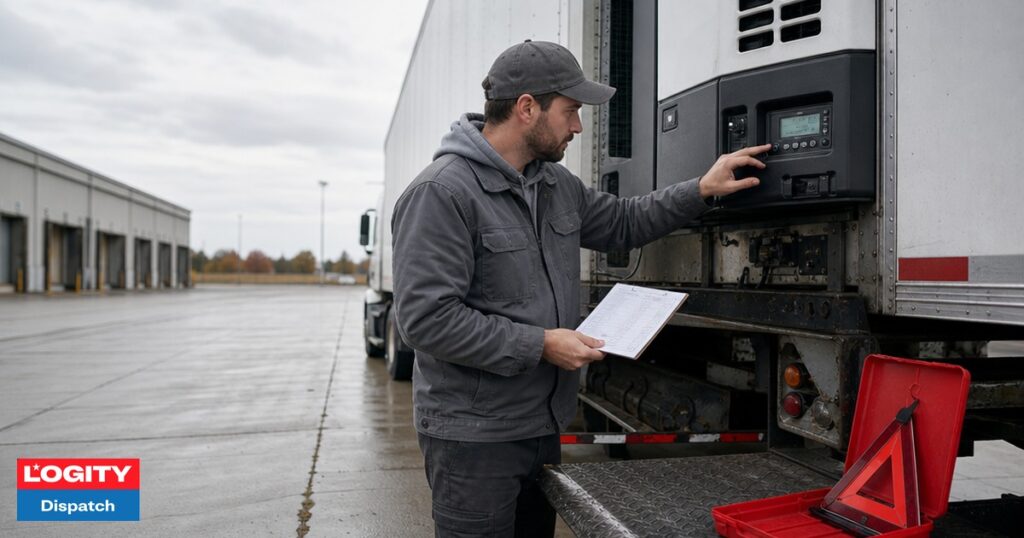
Reefer claim defense lives or dies on the temperature log. Continuous logging, downloadable to PDF, with timestamps that match the BOL. Most reefer units built after 2018 do this natively. The operator’s job is to actually pull the log every load, save it to a folder by load number, and have it ready when a broker calls about a temperature question three weeks later.
Pre-cool discipline matters. Setting the trailer to the load’s required temperature 30-60 minutes before pickup, verifying the box is at temp before the doors open, refusing a load that comes onto a warm trailer. The half-hour at pickup is what saves the claim three weeks later.
The other discipline is door-open time. Every minute the doors are open at a dock with the unit running, fuel burns and ambient air mixes into the box. Operators who minimize door-open time, who push back on receivers running open-door unloads, and who document the conditions when door-open time exceeds dock standard recover claims at the rate that makes reefer worth running.
Reefer detention rarely bleeds evenly across a corridor. Check where it actually happened on your last twenty loads. It’s usually two or three shippers, not the lane.
Where the reefer premium disappears
The reefer premium evaporates fastest on operators who skip the temperature discipline. A board showing $2.85 RPM on a Chicago-Atlanta produce run looks great until a $32,000 claim hits because the operator didn’t pull the temp log and can’t defend on documentation. That single event takes a quarter of clean revenue and turns it negative.
It also disappears on operators running reefer with old equipment. A reefer unit with logging issues, intermittent setpoint drift, or a leaking door seal is a claim waiting to happen. Maintenance on a reefer trailer runs $4,000-$8,000 a year on top of the truck’s maintenance, and skipping that line is how the premium turns into a deficit.
The third place the premium evaporates: detention. Receivers in produce and protein routinely run two-three hour dock holds. On dry van, that’s lost time. On reefer, that’s lost time plus fuel burn plus claim exposure if the load goes into rejection on temperature ambiguity. Detention claims are higher in dollars but harder to collect because the broker has more reasons to contest.
Where the corridor still pays
Operators who run Midwest reefer cleanly, newer trailer, continuous logging, broker book inside the corridor, dock discipline tight, pull RPM blends in the $2.65-$3.10 range across the year, with summer pulling higher and winter softening. Net after the reefer fuel burn, maintenance reserve, and claim risk premium runs $400-$700 a week higher than the dry van equivalent on the same corridor.
That delta is real. It’s also earned. The dry van operator who looks at reefer rates and converts equipment without converting discipline finds a worse net within two quarters.
Where a dispatcher matters more on reefer than on dry van
Reefer dispatch is harder. Reload windows are shorter because cold trailers shouldn’t sit empty long. Detention follow-up is more contested. Claim exposure means the desk has to know which brokers actually pay rejected loads cleanly and which fight every temperature ambiguity into mediation.
A dispatch desk running Midwest reefer should be able to name three brokers per corridor who pay detention reliably, two who fight claims hardest, and one who quietly stiffs new carriers on temp-ambiguous loads. That standing with the broker is the edge, and the reefer corridor fee usually clears its line because the desk’s call on which broker to refuse is worth more than the fee per week.
The standard you should expect from a Midwest reefer week is RPM blended above $2.65, deadhead under 10%, detention claimed on every event regardless of whether the operator thinks the broker will pay, full temperature logs filed by load number, and a desk that knows which dock to schedule first on Monday morning. Anything below that line is a corridor problem the equipment isn’t fixing on its own.