Table of Content
- The Reefer Premium Is Pay for Risk, Not for the Trailer
- Why Cold-Chain Freight Eats the Rate Quietly
- Where Reefer Operators Lose the Premium
- What Eats the Reefer Premium, and Roughly What It Costs
- What a Dispatcher Protects on a Reefer Load
- Reefer Rate Questions Operators Actually Ask
- The Number to Check on Your Last Ten Reefer Loads
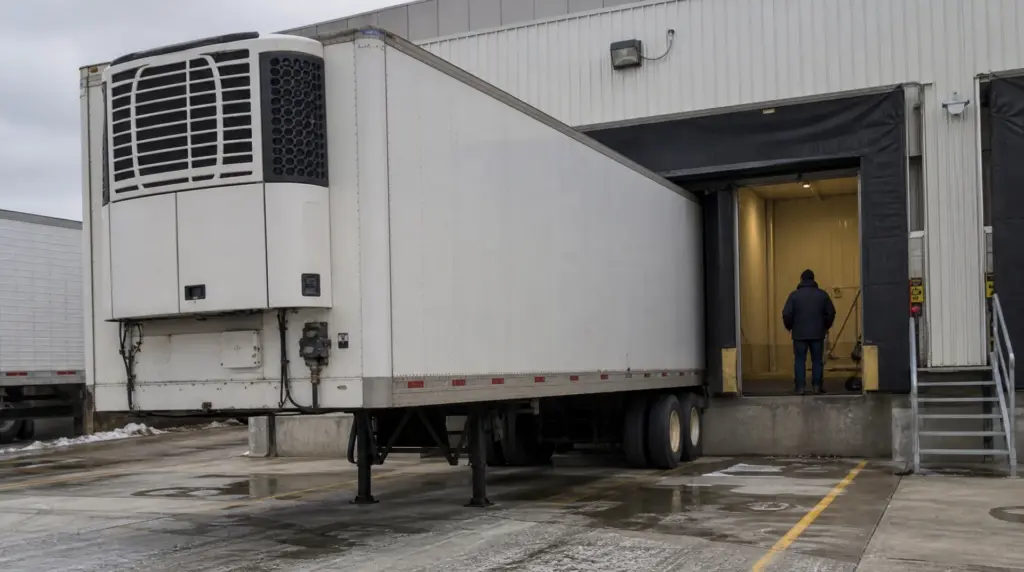
Reefer freight pays a premium, and most owner-operators treat the premium as the reward for buying a more expensive trailer. It isn’t. The premium is hazard pay. A reefer load carries a claims risk a dry van never does, and it sits longer at docks that take their time. Protect the cold chain and the rate holds. Lose the temperature, eat the detention, or skip the washout, and the premium is gone before the load even delivers.
The Reefer Premium Is Pay for Risk, Not for the Trailer
A dry van either delivers or it doesn’t. A reefer load can arrive on time, look perfect, and still get rejected because the temperature drifted somewhere in the middle. That is the risk the cold chain exists around, and it rides on every load you haul.
That rejection isn’t a late fee. It’s the whole load, plus the claim. The premium on reefer freight is the market paying you to carry that risk and not lose it. Treat it as easy money and the first claim erases a month of the extra rate you were proud of.
Picture a produce load booked at a strong reefer rate. It runs the lane, arrives on the appointment, and the receiver pulls the temperature log at the door. One drift outside spec somewhere in the middle of the run, and the load is rejected. Now the owner-operator isn’t collecting a premium. He’s carrying a claim worth more than a week of good rates, on a load that looked flawless from the driver’s seat.
Why Cold-Chain Freight Eats the Rate Quietly
Reefer loads live at grocery DCs and cold-storage docks, and those docks are slow. They check temperature, they check seals, they unload on their own clock.
So detention is the norm, not the exception, and the hours add up against a rate that looked strong on paper. It’s the same accessorial-and-detention gap that groups like the Owner-Operator Independent Drivers Association keep pointing to: the waiting is real time, and unpaid it comes straight out of the reefer freight rate. A reefer week isn’t measured in miles. It’s measured in loads delivered in spec, detention recovered, and time the truck wasn’t stuck at a dock for free.
Where Reefer Operators Lose the Premium
- Detention at slow cold-storage docks, with no detention terms agreed up front.
- Temperature claims from a load run on the wrong setpoint or an unverified reefer.
- Washouts skipped or scheduled off-lane between incompatible products.
- Appointment windows missed, pushing a perishable load past its delivery slot.
- Continuous-versus-cycle setpoint left unconfirmed, so the box runs the load wrong.
None of those are driving problems. All of them are planning gaps that turn a premium reefer rate into a thin one.
What Eats the Reefer Premium, and Roughly What It Costs
| What eats it | Typical hit | How you protect it |
|---|---|---|
| Detention | Hourly, usually after the free hours | Agree terms before backing into a slow dock |
| Temperature claim | Up to the full value of the load | Confirm setpoint and seal, verify the reefer |
| Washout | Often $150 to $250 each | Time it on the lane, not off-route |
| Missed appointment | Reslotted a day or more out | Book windows a perishable load can actually hit |
These are typical figures, not fixed rates, and a single temperature claim can dwarf everything else on the list. The point is that none of it is bad luck. Each line is a risk an owner-operator can price and protect before the load is booked.
What a Dispatcher Protects on a Reefer Load
The whole job is protecting the cold chain and the rate at the same time: the right setpoint, the detention terms, the appointment, the washout. That’s a desk handling the load’s risk, not a driver hoping the dock moves fast.
It means confirming the setpoint and the seal so a claim never starts. It means agreeing detention terms before the truck backs into a slow dock. It means booking appointment windows a perishable load can actually hit, and timing the washout on the lane. That’s the difference between a reefer that keeps its premium and one that gives it back in claims and dock time. The same logic runs under reefer dispatch services, where the cold chain and the rate are protected on the same load.
For an owner-operator running one reefer, that protection is hard to hold from the cab. It’s the real case for owner-operator dispatch: a desk confirming setpoints, agreeing detention terms, and booking appointments while you drive, so the premium survives the whole run instead of dying at the dock.
Reefer Rate Questions Operators Actually Ask
Is the reefer premium really worth it over dry van? Only if you protect it. The extra rate is pay for claims risk and dock time, so a single rejected load or a week of unpaid detention can erase it. Priced and protected, it’s the best-paying freight most owner-operators can run.
Should I push for detention pay on reefer loads? Yes, and agree the terms before you accept the load. Cold-storage docks are slow by nature, so detention isn’t an exception on reefer, it’s the expected cost of the lane. Unpaid, it comes straight out of your rate, and recovering it is part of what full truck dispatch services do on every load.
Who is responsible if the temperature drifts, me or the shipper? Usually the carrier, which is why confirming the setpoint, precool, and seal at pickup matters so much. A claim that starts at the dock is far cheaper to prevent than to fight after the load is rejected.
How do I know a reefer rate is actually good? Subtract the likely detention, washout, and claim risk from the premium over a comparable dry-van rate. If little is left, the rate was paying for the trailer, not for the risk you were carrying.
The Number to Check on Your Last Ten Reefer Loads
Take your last ten reefer loads and add the detention hours, any claim deductions, and the washout time. Subtract that from the premium you earned over a comparable dry-van rate. If there’s little premium left, the trailer was never the cost. The unprotected cold chain was, and that’s margin you can recover by protecting the setpoint, the terms, and the appointment before the load is ever booked.