Table of Content
- Drayage Isn’t a Short Haul. It’s an Appointment You Have to Win.
- Why Container Freight Punishes Bad Timing
- The Chassis Problem Nobody Quotes You
- Where Drayage Operators Lose the Day
- The Drayage Costs the Rate Doesn’t Show
- What a Dispatcher Lines Up Before the Gate
- Drayage Dispatch Questions Operators Actually Ask
- The Number to Check on Your Last Week
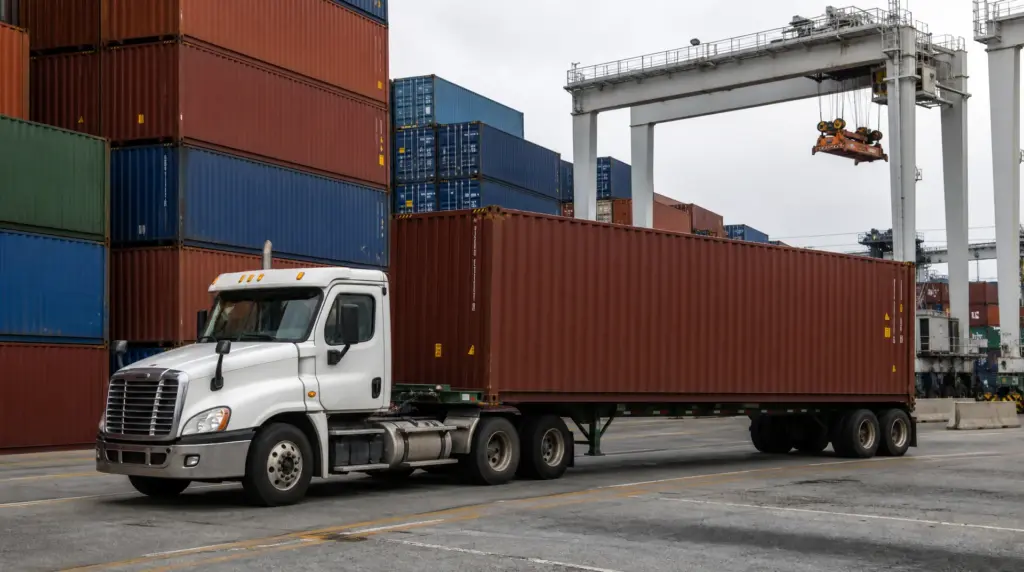
Drayage looks like the simplest work in trucking. Short miles, same port, same rail yard, home every night. No long hauls, no weeks away. So owner-operators treat it like easy money. Then the day disappears in a line at the gate, a container that isn’t ready, and a chassis nobody can find. Intermodal doesn’t pay for miles. It pays for hitting appointments, and the appointment is the part nobody plans.
Drayage Isn’t a Short Haul. It’s an Appointment You Have to Win.
The drive is twenty miles. The job is being at the right window with the right chassis when the box is actually available. Those rarely line up by themselves.
Miss the terminal appointment and you don’t just lose that move. You lose your slot, your place in line, and the next two moves stacked behind it. The short haul is easy. The timing around it is the whole game, and it runs on the terminal’s clock, not yours.
Picture a clean-looking day: three drayage moves booked back to back. The first gate runs an hour long, so the owner-operator misses the second appointment window by ten minutes and gets bounced to rebook. That pushes the third. A day that penciled out at three moves delivers one, and the per diem clock on the held box keeps running the whole time. The miles were nothing. The timing was everything.
Why Container Freight Punishes Bad Timing
Ports and rail yards run on appointment windows. Show up outside yours and you wait, or you’re turned away to rebook.
Then there’s the clock that costs real money. A container sitting past its free time racks up per diem and demurrage, charges that land on whoever held the box too long. A drayage week isn’t measured in miles driven. It’s measured in appointments hit and free days protected. It’s the same unbilled-time gap the Owner-Operator Independent Drivers Association keeps flagging for owner-operators: the waiting and the fees are real cost that the mile-based rate never mentions.
The Chassis Problem Nobody Quotes You
The container isn’t the only piece you need. You need a chassis to carry it, and the chassis has its own supply, its own pool, its own way of going missing.
Show up for a box with no chassis available and the move stops cold. The rate quoted you a clean pickup. It didn’t quote the hour spent hunting a chassis, or the split-move when the box is at one yard and the chassis is at another. That’s unbilled time the load sheet never mentioned.
Where Drayage Operators Lose the Day
- Missing a terminal window and losing the slot for the moves behind it.
- Holding a container past free time and eating per diem that was avoidable.
- Arriving for a box with no chassis staged, so the move stalls.
- Stacking appointments too tight, so one gate delay collapses the rest.
- Taking a move without checking the box is actually released and ready.
None of those show up as driving problems. All of them are scheduling problems that turn a short-haul day into a long one.
The Drayage Costs the Rate Doesn’t Show
| Hidden cost | Typical hit | How a plan protects it |
|---|---|---|
| Per diem / demurrage | Daily charges on a box held too long | Watch free time, move the box before it bills |
| Chassis hunt | Hours lost finding one, or a split move | Confirm chassis before the truck leaves |
| Missed window | Lost slot plus the moves behind it | Book windows a real route can hit |
| Gate wait | Unpaid time in line at the terminal | Space appointments so one delay doesn’t cascade |
None of these are fixed numbers, and they change by port and by day. The point is that each is real cost an owner-operator can plan around, not an unavoidable part of running containers.
What a Dispatcher Lines Up Before the Gate
The whole job is sequencing appointments that hold, confirming the box and chassis are ready, and protecting the free-time clock. That’s a desk handling the moving parts, not a driver improvising at the gate.
It means booking terminal windows that fit a route the truck can actually run. It means confirming chassis availability before the truck leaves, not at the gate. It means watching per diem so a box doesn’t quietly rack up charges in a yard. That planning is the difference between a drayage week of hit appointments and one of missed slots and surprise fees. The same logic runs under structured dispatching trucking services, where the appointment is solved before the truck rolls.
For an owner-operator running drayage solo, juggling windows, chassis, and free time from the cab is where the day slips. It’s the real case for owner-operator dispatch: a desk lining up the moving parts so you hit windows instead of chasing them.
Drayage Dispatch Questions Operators Actually Ask
Why does short-haul drayage still run thin? Because it pays for appointments hit, not miles driven. A missed window, a chassis hunt, and per diem on a held box can cost more than the move paid. The timing, not the distance, decides the drayage day.
Who pays per diem and demurrage? Whoever held the box past its free time, which usually means the carrier if the delay was on the move. Watching the free-time clock is exactly why the box has to move on a plan, not whenever the day allows.
How do I confirm the chassis and box before I drive? Load to load that’s hard to track from the cab. That’s the case for a desk confirming availability ahead of the gate, the same thing full dispatching trucking services handle, so the move doesn’t stall on a missing chassis.
How tight can I stack drayage appointments? Only as tight as one gate delay won’t collapse. Ports run long without warning, so leaving room between windows is what keeps a single delay from taking the rest of the day with it.
The Number to Check on Your Last Week
Take your last ten drayage moves and count the ones that hit their first appointment clean, with the chassis ready and no wait. If that number is low, the miles were never the problem. The timing around them was, and the timing is what a desk is supposed to win for you.