Safety remains a paramount concern for all trucking enterprises, despite meticulous precautions; accidents are an unfortunate reality.
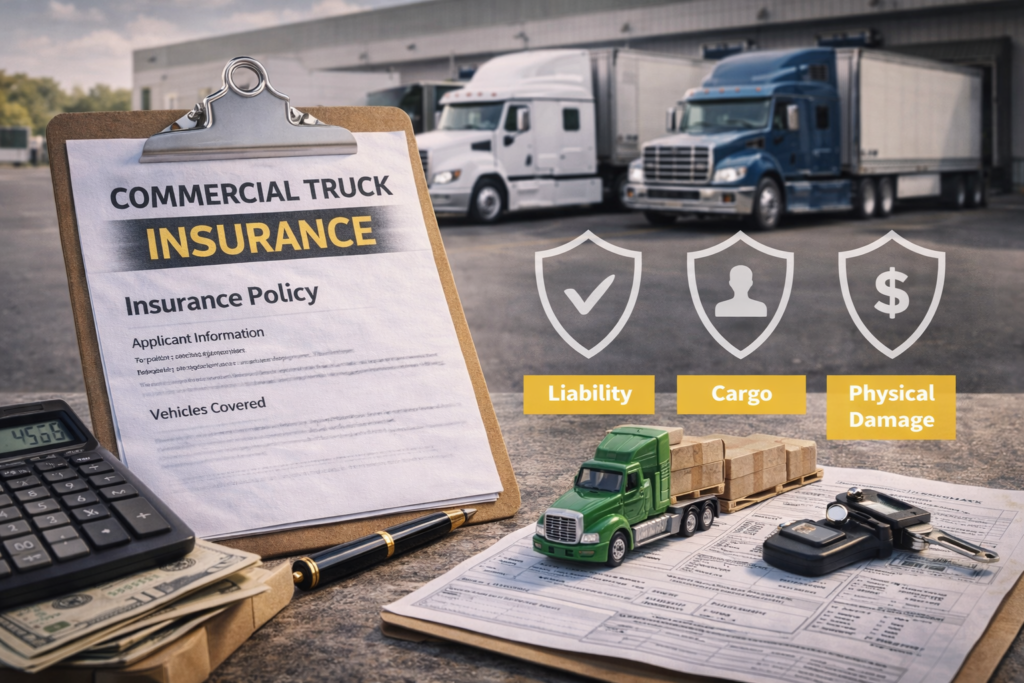
To safeguard your company against potential trucking mishaps, securing adequate trucking insurance, including trucking commercial insurance, and short term truck insurance, is essential. Explore the diverse coverage options outlined below.
Commercial Trucking Insurance Options
Just as prioritizing risk mitigation is crucial for your business, so is securing trucking insurance, which can shield your company from legal liabilities and other risks.
Consider the following common coverage options for trucking operations:
General Liability Coverage
This coverage protects against liabilities arising from actions conducted by drivers while on others’ premises. It encompasses errors made at truck stops, loading docks, and during the delivery process.
Primary Liability Coverage
While not covering owned trucks, this insurance compensates for damages inflicted by employees operating commercial vehicles.
Physical Damage Coverage
Essential for businesses requiring truck repairs or equipment replacement due to accidents or theft.
Non-Trucking Liability Coverage
This policy addresses damages occurring when trucks are not on official dispatch.
Motor Truck Cargo Coverage
Safeguards against various risks including refrigeration breakdown, theft, or damage to cargo.
Medical Payment Coverage
Covers medical expenses for drivers or passengers injured in or by commercial vehicles, albeit varying across states.
Uninsured/Underinsured Motorists Coverage
Crucial in the event of accidents involving uninsured or underinsured drivers.
What Truck Insurance Do You Actually Need to Stay Compliant?
Commercial truck insurance requirements depend on your operation — including your truck type, whether you run under your own authority, and what kind of freight you haul.
In general, compliance comes down to having the right liability coverage in place before you start hauling, and making sure your policy matches your real operations (cargo type, lanes, and risk profile).
If you’re unsure, always confirm requirements with your insurance provider and the broker/shipper before booking the load.
Insurance is only one part of compliance, you’ll also need to stay on top of IFTA requirements if you run interstate.
Cost of Commercial Truck Insurance
Commercial truck insurance pricing varies widely depending on your authority status, driving history, equipment type, cargo, lanes, and coverage limits.
The best approach is to request multiple quotes and confirm the policy details match how you actually run loads — not just the lowest monthly price.
Common Insurance Mistakes That Cause Load Problems
Even when drivers have insurance, issues happen when coverage doesn’t match the load or the dispatch setup. The most common problems include:
- missing or insufficient cargo coverage for the freight type
- wrong operational classification (personal use vs business use)
- gaps between policy dates and load start dates
- not understanding what a broker requires before pickup
- assuming “cheap coverage” is enough for real-world claims
Avoiding these mistakes early saves time, money, and stress later.
The Necessity of Trucking Insurance
Every commercial trucking venture necessitates insurance coverage to mitigate unforeseen risks. These outlined coverage options are indispensable for comprehensive protection.
Procuring suitable insurance for trucking plans ranks among the initial steps when establishing a trucking business. If you’re still setting up your operation, a clear trucking business plan helps you organize your compliance steps, expenses, and startup timeline
Selecting the right provider ensures optimal utilization of insurance investments.
If you’re running under your own authority, insurance isn’t just a checkbox — it’s what keeps you eligible to book loads and stay compliant when things go wrong.
Logity Dispatch helps owner-operators stay organized with dispatch coordination and load support — so paperwork requirements don’t turn into missed pickups or last-minute load cancellations.