Table of Content
- “It’s not worth claiming” is the line that costs $6,000 a year
- What detention actually requires to collect in 2026
- The brokers who actually pay, and the brokers who quietly don’t
- The operational habits that produce a 70%+ recovery rate
- Where detention recovery isn’t worth the work
- What a dispatched truck should be recovering
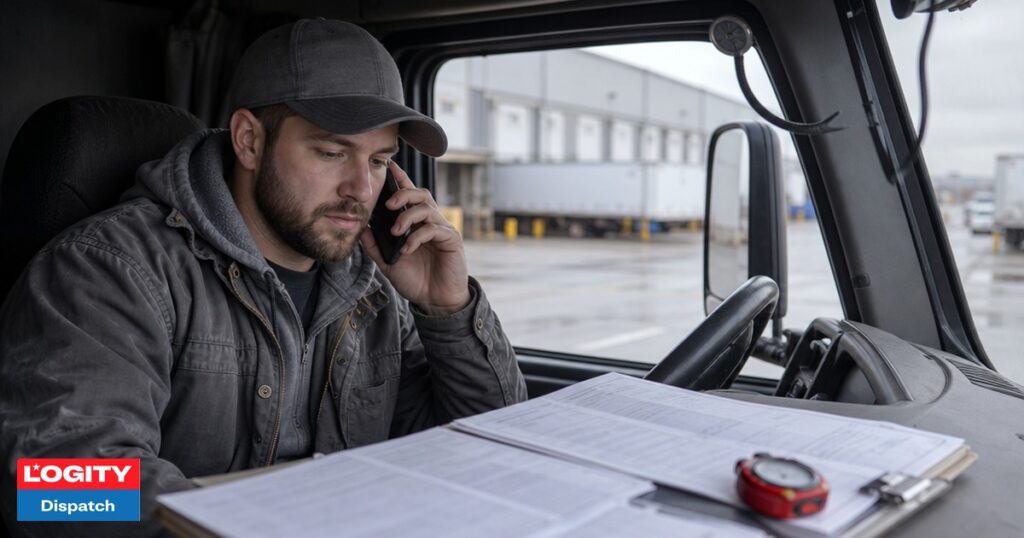
Detention is owed on most loads. It’s collected on a fraction of them. The gap between what’s owed and what gets paid is roughly $4,000-$9,000 per truck per year, and most of it is recoverable.
Detention pay is one of the parts of the freight contract that exists in writing on every rate confirmation and disappears in practice on most loads. The carrier’s contract says detention starts at hour two on the receiver’s clock and runs at $50-$75 per hour. The receiver routinely holds the truck four hours, the broker routinely contests whether detention applied, and the carrier routinely accepts the contested decision because chasing it costs more than collecting it.
That math is wrong on a per-event basis, but it’s right on a single-load basis. The fight to recover one $200 detention claim isn’t worth the operator’s three hours of phone calls. The fight to recover thirty $200 claims a year is the difference between thinking the truck cleared $42,000 net and watching it actually clear $48,000. Detention is only the most frequent of the unpaid-time terms; layover and TONU drain a week the same quiet way.
“It’s not worth claiming” is the line that costs $6,000 a year
The most expensive sentence in owner-op trucking is “it’s not worth claiming.” The detention got close to two hours but might have been one hour fifty. The receiver’s check-in time was different from when the trailer actually got pulled into a door. The broker said no without reading the BOL stamps. Each of those individually is a $150-$300 claim, and each one feels too small to fight.
Across a one-truck operation running 200-260 loads a year, the operator usually has 30-45 detention-eligible events. If half of them get claimed and half of those get paid, the truck recovers roughly $2,500. If all of them get claimed and 70-85% get paid, the truck recovers $7,000-$8,500. The difference is $4,500-$6,000 a year and lives entirely in the discipline of claiming, not in any rate negotiation.
That’s net to the operator, after taxes, after dispatch fee, after fuel. It’s the highest-margin gross any operator can capture because the cost to capture it is mostly time, and most of the time is the desk’s, not the operator’s.
What detention actually requires to collect in 2026
Brokers in 2026 have tightened detention rules in writing and loosened them in practice. The rate confirmation almost always specifies detention terms now — typical $50-$75 per hour, free time 2 hours, max 4-6 hours payable. What the rate confirmation also specifies, and what most operators don’t read, is the documentation required to claim it.
The standard documentation a broker will require in 2026 to honor a detention claim:
- Stamped check-in time on the BOL or check-in slip from the receiver. Phone records and ELD timestamps are usually not enough alone.
- Stamped check-out time, or if no check-out is provided, the door-pull and seal-removal time documented some other way (photo with timestamp, dispatch log).
- Notification to the broker before detention free time runs out. Brokers commonly require a heads-up call inside the second hour, before detention applies, not after the fact. An operator who doesn’t call until hour four is told they failed to alert and the claim is denied.
- The detention claim filed within 5-15 days of the load, depending on broker. Late claims get denied as a matter of policy.
Operators who don’t have this discipline file claims that get denied on documentation grounds, then assume detention is “uncollectable.” It’s not uncollectable. It’s collectable when claimed correctly. The discipline matters more than any negotiation.
The brokers who actually pay, and the brokers who quietly don’t
Inside any regional broker book, there’s a clear pattern. A group of brokers pay detention reliably when documented — not always cheerfully, but consistently. A second group fight every claim and pay the ones the carrier is willing to escalate. A third group basically never pay detention regardless of documentation, and operators who run with them treat detention as zero in their rate math.
That sorting is one of the most valuable things a dispatch desk can have in its book and one of the slowest things to build solo. A desk running fifty trucks across a year sees thousands of detention events and can name the brokers who pay, the ones who fight and pay, and the ones who don’t. The operator running solo learns it five claims at a time, usually after losing money on the wrong brokers.
The way the sorting cashes out is in lane choice, not just claim filing. An operator running a lane with brokers in the third group at $2.40 RPM is netting less than an operator running a parallel lane with brokers in the first group at $2.32 RPM, because the second operator is collecting an additional $0.04-$0.08 per mile in detention recovery the first operator never sees. The rate isn’t the rate; the rate plus reliable detention recovery is the rate.
If you’re running lanes where detention seems to never collect → walk the broker book with a desk that knows who pays.
The operational habits that produce a 70%+ recovery rate
Operators recovering detention reliably do five things, and they do them every time, not when it feels worth it.
One: they call the broker at hour 1:45 on the receiver’s clock to give the heads-up before detention applies. The call is a one-minute call. It’s the documented heads-up the broker requires for the claim to stand, and it’s the leverage point because once the broker has been told, the broker has accepted the meter is running.
Two: they get a stamped check-in slip from the receiver at arrival. Many receivers will give one if asked at the guard shack. The receivers who refuse get noted and the operator photographs the BOL with timestamp visible plus the receiver’s wall clock. The trail has to exist on paper, not in memory.
Three: they file the claim within 48-72 hours of the load completing, not at month-end. Brokers process detention as a separate workflow, and the broker who gets the claim while the load is still fresh in the system processes it faster and questions it less.
Four: they push back on initial denials with documentation, not with frustration. A broker denying a claim usually denies on the grounds that documentation was incomplete or notification was late. If the documentation actually exists and the notification call actually happened, sending the broker the timestamps usually flips the claim. Most operators take the denial as final and walk away. The 70%+ recovery rate operators don’t. The harder question that discipline never settles is what a contested claim costs in broker trust the contract doesn’t price.
Five: they track. A simple spreadsheet of claims filed, claims paid, claims denied, by broker, across the year. After two months, the operator can see which brokers are paying and which aren’t, and can adjust lane selection. After six months, the operator’s detention recovery is structural, not accidental.
Where detention recovery isn’t worth the work
Some lanes don’t have meaningful detention exposure. Drop-and-hook freight at consolidation centers rarely produces detention because the trailer is dropped and the truck moves on. Operators running predominantly drop-and-hook for shippers like UPS-Ground, FedEx-Ground, or established big-box freight see detention events maybe four or five times a year, and the recovery math is small.
Live-load receivers in the Midwest grocery, produce, and protein corridors are where detention exposure peaks. Operators running those corridors who don’t have detention discipline are leaving the most. Operators running drop-and-hook who don’t have detention discipline are leaving very little. The recovery work scales with the lane choice.
And operators with truly small claim volumes — under fifteen detention events a year — may find the time cost of building the discipline higher than the recovery. That’s a small operator who runs predominantly drop-and-hook or runs lanes with very tight broker books that pay automatically. For everyone else, the math points toward systematizing the claim, not toward skipping it.
What a dispatched truck should be recovering
An operator handing dispatch off should expect the desk to handle detention recovery as a default function, not as an extra service. The desk’s job is to call the broker before detention free time runs out, file the claim with documentation, push back on denials, and report to the operator on what was claimed and what was paid each month.
The standard you should expect from a desk in 2026 is detention claimed on every event regardless of broker, recovery rate above 65% on broker books that pay, monthly reporting that shows claims filed and paid, and a record that lets the operator and the desk together adjust lane selection toward brokers who pay and away from brokers who don’t. The fee on detention work often clears its line on detention recovery alone — $5,000-$8,000 of recovered detention a year against a fee that captures a percentage of gross.
Anything below 50% recovery on a desk-managed truck is a desk that’s not running the detention workflow as a system. That gap is the one most worth closing, because it’s the highest-margin gross any operator can capture without changing a single thing about their lanes or rates.