Finding consistent loads is one of the biggest challenges in trucking whether you’re an owner-operator or running a small fleet. Empty miles, low-paying freight, and time wasted searching for loads can quickly eat into your profit.
There are several ways truck drivers find freight today, from load boards and brokers to direct shipper relationships and dispatch services. The right approach depends on your equipment, lanes, and how much time you want to spend searching versus driving.
Below are practical, real-world strategies truck drivers use to stay loaded and how dispatch support fits into that picture.
The Significance of Finding More Loads for Truck Drivers
Staying loaded isn’t just about volume – it’s about consistency. Missed reloads, long waits, and poor lane choices often cost drivers more than low rates. That’s why understanding where and how to find the right loads matters as much as finding loads at all.
Although these innovations have been widely embraced by trucking companies, the fundamental objective remains hauling loads—and the importance of discovering these loads should not be underestimated. Today, technology plays a crucial role in facilitating this process, with online load boards standing out as one of the most efficient means of finding work.
Yet, load boards are not the exclusive method for load acquisition. With a pronounced scarcity of truck drivers throughout the US, numerous avenues exist for sourcing work. Explore our top five tips for securing loads for your company, and delve into why leveraging load boards can enhance and streamline this process.
The best way to find loads often depends on your equipment and license type, which is why it helps to understand the differences between CDL and non-CDL driving.
5 Strategies for Acquiring Loads for Your Trucking Business
Utilize a Freight Broker
Engaging a freight broker is a popular method for connecting your trucking business with shippers. These intermediaries facilitate load-driver matching for a fee, handling tasks such as negotiating rates with shippers and verifying pickup and delivery details. While this approach saves time and effort, it comes with a cost and limits your ability to negotiate rates independently.
Brokers can be useful, but relying on them alone often means more time negotiating and less time driving.
Obtain Government Authorization
Registering as a government contractor offers a reliable avenue for consistently finding loads. Local, state, and federal governments require load matching with authorized carriers for transporting goods across the country. By registering or partnering with an authorized firm, your company becomes eligible for government contracts, providing a dual advantage of guaranteed, trustworthy freight matching and reduced competition for bidding.
This option is usually better suited for established carriers and fleets, not new owner-operators.
Establish a Network
Network building has traditionally been a go-to method for established trucking companies, fostering mutually beneficial relationships with trusted partners. While it may be time-consuming and exclusive for new businesses, building a supportive network enhances other load-searching methods over time. Identify leading associations, attend relevant events, and gradually develop relationships with other companies to expand your opportunities.
Collaborate with a Dispatch Service
A dispatch service helps drivers stay loaded by finding freight, negotiating rates, planning reloads, and managing broker communication. Instead of spending hours searching load boards, drivers can focus on driving while dispatch handles the back-and-forth.
Leverage Load Boards
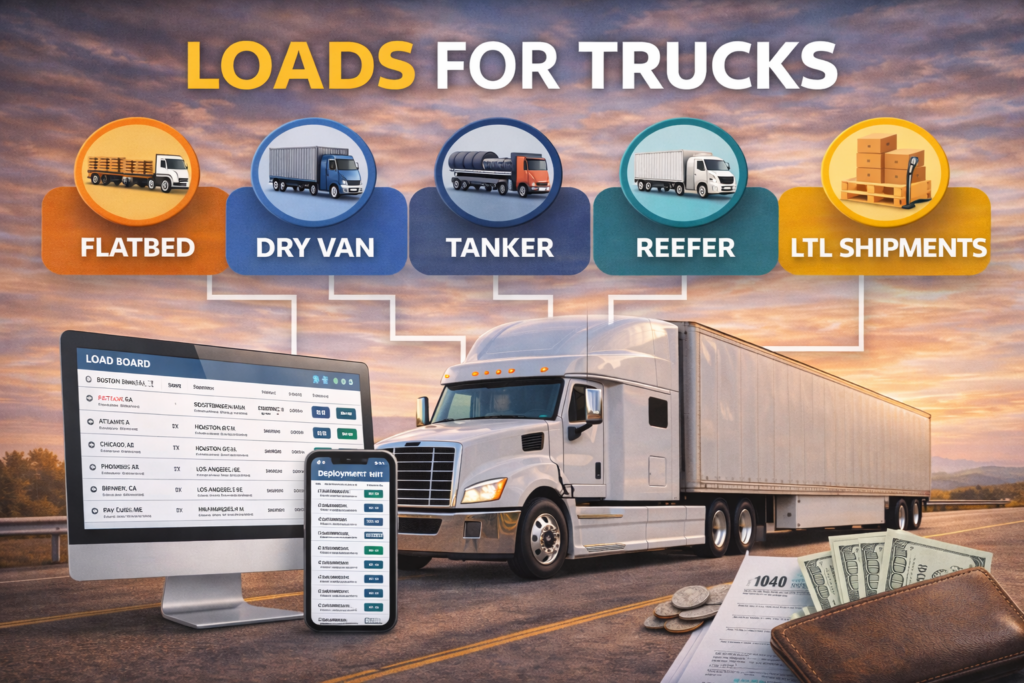
Load boards represent a convenient and efficient method for trucking companies to access a diverse range of loads. Traditionally physical boards at truck stops, modern load boards are digitized, offering an online platform for quick load searching and decision-making. These platforms provide comprehensive information on shipments, including current location, destination, weight, size, and other relevant details. They also allow carriers to submit rates and supporting information directly to the shipper, streamlining the process of load acquisition.
Drivers running box trucks or non-CDL equipment should focus on freight segments that are actually growing, not just whatever is posted on load boards.
What is a Dispatch Service?
A dispatch service helps truck drivers and carriers stay loaded and organized by handling the day-to-day work around finding and managing freight.
At its core, dispatch support focuses on finding loads, negotiating rates, and communicating with brokers so drivers don’t spend hours on load boards or phone calls. Dispatchers coordinate pickup and delivery details, confirm rate confirmations, and keep schedules moving.
Dispatch services also help with reload planning, reducing empty miles by lining up the next load as efficiently as possible. In addition, they assist with administrative coordination, such as organizing paperwork, rate confirmations, and load documents, so drivers can focus on driving instead of paperwork.
Rather than replacing the driver’s decision-making, a dispatch service supports the operation behind the wheel — helping keep weeks predictable and trucks moving.
How Dispatch Support Helps Truck Drivers Stay Loaded
Finding loads consistently is easier when your week is planned – not improvised.
Logity Dispatch works with owner-operators and small fleets to help them stay loaded through active load sourcing, broker communication, rate negotiation, and reload planning. Instead of jumping from load board to load board, drivers get support that focuses on keeping trucks moving and weeks predictable.
Dispatch isn’t about shortcuts, it’s about saving time, avoiding bad freight, and reducing empty miles. When loads, lanes, and schedules are managed together, drivers can focus on driving instead of constantly searching for the next run.
If you’re spending too much time searching for freight, dispatch support can help you stay loaded more consistently.