Table of Content
- A Conestoga Isn’t a Better Flatbed. It’s a Bet on the Freight.
- Why the Wrong Freight Wastes a Conestoga
- Where Conestoga Operators Lose the Advantage
- When a Conestoga Pays, and When It Costs
- What a Dispatcher Matches to a Conestoga
- Conestoga Rate Questions Operators Actually Ask
- The Check Worth Running This Week
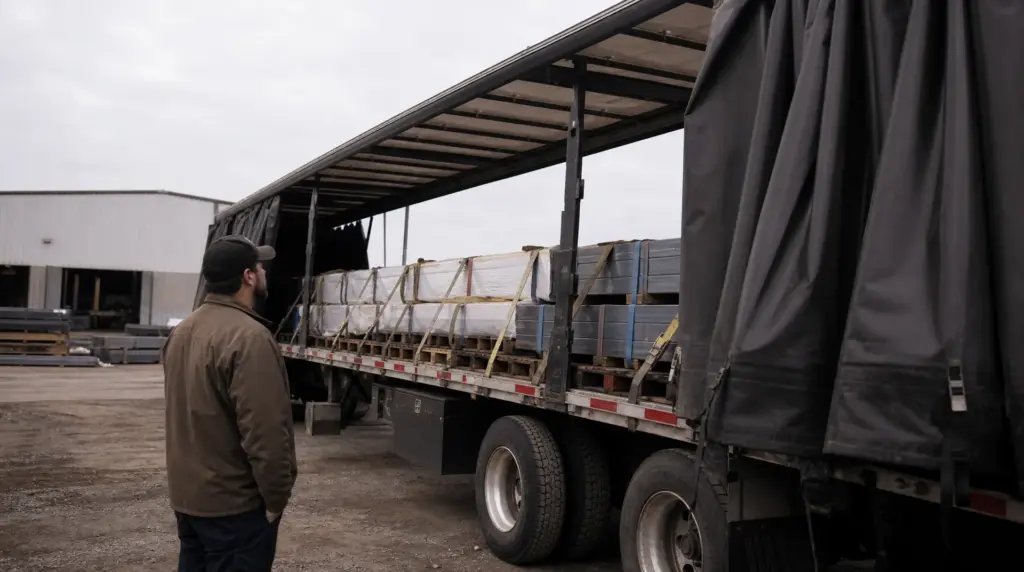
Owner-operators see a Conestoga and think one thing: no more tarping. The rolling curtain slides over the load, the freight is covered, and the back-breaking part of flatbed work disappears. That’s real, and it’s why drivers want one. But the curtain isn’t free. You pay for it in tare weight, in trailer cost, and in the capacity you give up to carry the system around. A Conestoga only earns that back on the freight that actually needs it. Run it on plain flatbed loads and you’re hauling an expensive tarp for nothing.
A Conestoga Isn’t a Better Flatbed. It’s a Bet on the Freight.
The rolling system removes the tarp labor, but it adds a thousand-plus pounds of curtain and frame to the trailer. That weight comes straight off your payload.
On a load that maxes out by weight, that’s freight you can’t carry, on every trip, for the life of the trailer. The Conestoga makes sense when the freight needs frequent tarping, fast covered loading, or protection a flatbed can’t give it cleanly. On freight that would ride fine open, the trailer is pure cost. The trailer doesn’t make the money. The freight you put under it does.
Picture two loads on the same lane. The first is coils that need covering and load in a tight indoor dock where manual tarping would blow the appointment, so the curtain wins the freight and the owner-operator charges for it. The second is a max-weight load of durable pipe that never needed covering at all. On the second, the thousand-plus pounds of curtain just forced the operator to leave payload on the dock, for a rate no better than a plain flatbed. Same trailer, opposite outcomes, decided entirely by the freight.
Why the Wrong Freight Wastes a Conestoga
A Conestoga pays back through the work it saves and the freight it unlocks. Tarp-heavy lanes, weather-sensitive loads, tight dock windows where manual tarping would blow the appointment. That’s where the curtain earns its weight.
Put it on dry, durable freight that never needed covering and none of that value shows up. You still carry the tare weight, still paid the premium for the trailer, and the load pays the same as it would on a plain flatbed. The Conestoga rewards the owner-operator who books it onto the freight it was built for, and it comes down to accessorial logic: charge for the work the equipment does, or give it away. DAT’s rate trendlines show how much specialized freight pays over plain flatbed when it is priced for the equipment.
Where Conestoga Operators Lose the Advantage
- Running weight-sensitive freight that the tare weight forces you to short.
- Booking plain flatbed loads at flatbed rates, with the curtain adding no value.
- Not charging for the covered, fast, no-tarp loading the trailer makes possible.
- Treating the Conestoga as a default trailer instead of a tool matched to the load.
- Skipping the weight check, so a heavy load leaves payload on the dock.
None of those are driving problems. All of them are freight-selection gaps that turn an expensive trailer into an ordinary one.
When a Conestoga Pays, and When It Costs
| Freight type | Conestoga verdict | Why |
|---|---|---|
| Tarp-heavy loads | Pays | The curtain saves hours of tarping every load |
| Weather-sensitive freight | Pays | Covered protection a flatbed can’t match cleanly |
| Tight indoor dock windows | Pays | Fast covered loading hits appointments tarping would miss |
| Max-weight freight | Costs | Tare weight forces you to leave payload behind |
| Dry, durable, open-OK freight | Costs | Pays like a flatbed while you haul the curtain for nothing |
The verdict isn’t about the trailer. It’s about the freight rate the load carries and whether the curtain is the reason you won it.
What a Dispatcher Matches to a Conestoga
The whole job is pointing the trailer at the freight that pays for it: the tarp-heavy lanes, the weather-sensitive loads, the shippers who value covered loading and will pay for the speed. That’s a desk choosing freight, not a driver taking the next flatbed load on the board.
It means steering the truck toward freight that needs protection, where the curtain is the reason you win the load. It means pricing the no-tarp, fast-cycle loading as the advantage it is, not giving it away. It means keeping weight-max freight off a trailer the tare weight punishes. That’s the difference between a Conestoga that earns its premium and one that just hauls flatbed freight heavier. The same logic runs under Conestoga dispatch services, where the freight is matched to the trailer before it’s booked.
For an owner-operator running a Conestoga solo, matching freight to trailer load after load is hard from the cab. It’s the real case for owner-operator dispatch: a desk steering the curtain toward the freight that pays for it while you drive.
Conestoga Rate Questions Operators Actually Ask
Should a Conestoga always pay more than a flatbed? Only when the freight uses the curtain. On tarp-heavy, weather-sensitive, or tight-dock loads, yes, charge for the covered, no-tarp advantage. On plain freight that would ride open fine, the trailer adds cost, not value.
Is the tare weight really that big a deal? On weight-max freight, yes. A thousand-plus pounds of curtain and frame is payload you can’t carry every single trip, so a heavy load can pay less on a Conestoga than on a plain flatbed once you count what you left on the dock.
How do I make sure I’m running the right freight? Match every load to the trailer before booking, not after. Load to load that’s hard from the cab, which is the case for a desk steering freight, the same thing full truck dispatch services handle.
How do I charge for the no-tarp advantage? Price it as the value it is on the loads that need it: faster loading, hit appointments, covered protection. Shippers with tight docks or weather-sensitive freight will pay for it when it’s presented as a capability, not folded into a flat rate.
The Check Worth Running This Week
Pull your last ten Conestoga loads and mark the ones that actually used the curtain: tarp-heavy, weather-sensitive, or a tight covered-loading window. Now count how many were plain freight a flatbed would have hauled the same. If most were plain, the trailer wasn’t working for you. You were just carrying it, and matching the freight to it is where the premium comes back.