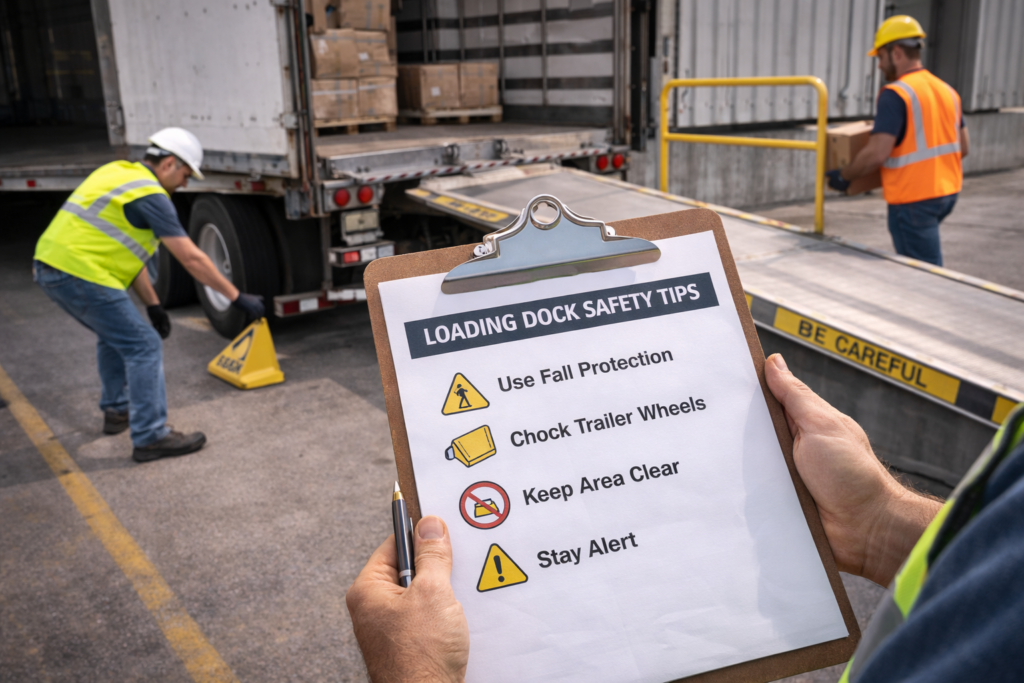
For many drivers, the loading dock is where risk increases. Tight backing conditions. Unclear communication. Forklift traffic. Unsecured trailers.
Loading dock safety is not just about OSHA compliance – it directly affects detention time, liability exposure, CSA scores, and delivery reliability.
For owner-operators, one preventable dock incident can erase an entire week’s profit.
Control Dock Traffic and Movement
- Restrict pedestrian access
- Separate forklift and driver zones
- Use visible signals before trailer movement
- Confirm dock lock engagement before unloading
Congested docks increase accident probability and detention time.
Train Personnel and Educate Visitors
Prevent accidents that arise out of human error by ensuring that all personnel and visitors know and abide by the rules of your loading dock.
- Require employees to take a course about loading dock protocols and guidelines so they are aware of risks and hazards.
- Tell personnel to watch out for each other, keep track of visitors, and report breaches of safety protocol.
- Where practicable, provide verbal reminders or instructional notices/pamphlets to visitors so they also follow safety protocol.
Respond Quickly
- Clean spills immediately.
- Repair damages — such as to equipment and the premises — as soon as practicable.
- If you see that any product is loose, secure it promptly.
Dock Incidents and Their Financial Impact
Dock accidents don’t just cause injury — they create:
- Insurance claims
- CSA score impact
- Equipment damage
- Missed appointments
- Unpaid detention
- Rate reductions from brokers
For owner-operators, even minor dock damage can result in:
- Trailer repairs
- Claim disputes
- Temporary downtime
- Loss of broker trust
Safe dock behavior protects more than people – it protects revenue.
Communicate Clearly
Good communication doesn’t just make operations run more smoothly – it can also prevent accidents and arguments.
- Use well-known visual cues – for example, red/green “traffic lights” so vehicles know when to enter or whether they need to stay where they are.
- Parties should communicate any delays, unforeseen issues, or changes to a plan to each other in a timely manner so people aren’t waiting around in the loading dock unnecessarily and interactions remain calm and productive.
- Make sure people who are moving – forklift drivers and people moving loads, for example – call out to people in their path (or about to move into their path).
Unclear communication at the dock often leads to unnecessary detention and missed appointment windows.
Get Regular Maintenance
Preventative measures will not only save you money on potential repairs and avoid unnecessary downtime in operations. They can also reduce the risk of accidents.
- Keep floors in good condition and fix cracks and breaks promptly to prevent trips and falls.
- Schedule regular equipment – especially your dock plates – maintenance checks to detect potential problems early on. Dock equipment failure can delay unloading and extend driver wait times.
Other Loading and Unloading Dock Safety Tips
Apart from the broader categories of loading and unloading dock safety tips, there are a number of miscellaneous precautions:
- Stay alert. Pay attention to not only what you are doing but also to your surroundings and activity around you.
- Mitigate where there are sharp edges. Protective padding on sharp edges and protruding corners on-site can help prevent injury to people moving product around the facility.
- Enforce OSHA and other safety protocols. Make sure personnel and visitors are aware of the consequences of not following safety rules and procedures in place. This includes always having the required documentation for heavy machine operators. Ensure everyone wears the required safety equipment.
- Erect physical barriers where feasible. Bridge the spaces between the ground and loading dock using ramps or dock boards. Put up scissor gates, railings, or other barriers to keep unauthorized people out.
- Make sure everyone knows proper lifting techniques. Many physical injuries occur because workers are not lifting heavy items in a safe manner.
- Use locking devices to ensure trailers don’t accidentally separate from the dock – and ask contractors and deliverers to do the same.
Safety Protects Revenue
Loading dock safety is not just a warehouse concern.
For truck drivers and carriers, it directly affects:
- On-time performance
- Detention exposure
- Insurance premiums
- Broker relationships
- Long-term profitability
Structured operations reduce unnecessary risk.
At Logity Dispatch, we work with drivers who understand that safety, planning, and communication are part of professional freight execution – not optional extras.
Reliable operations create consistent revenue.