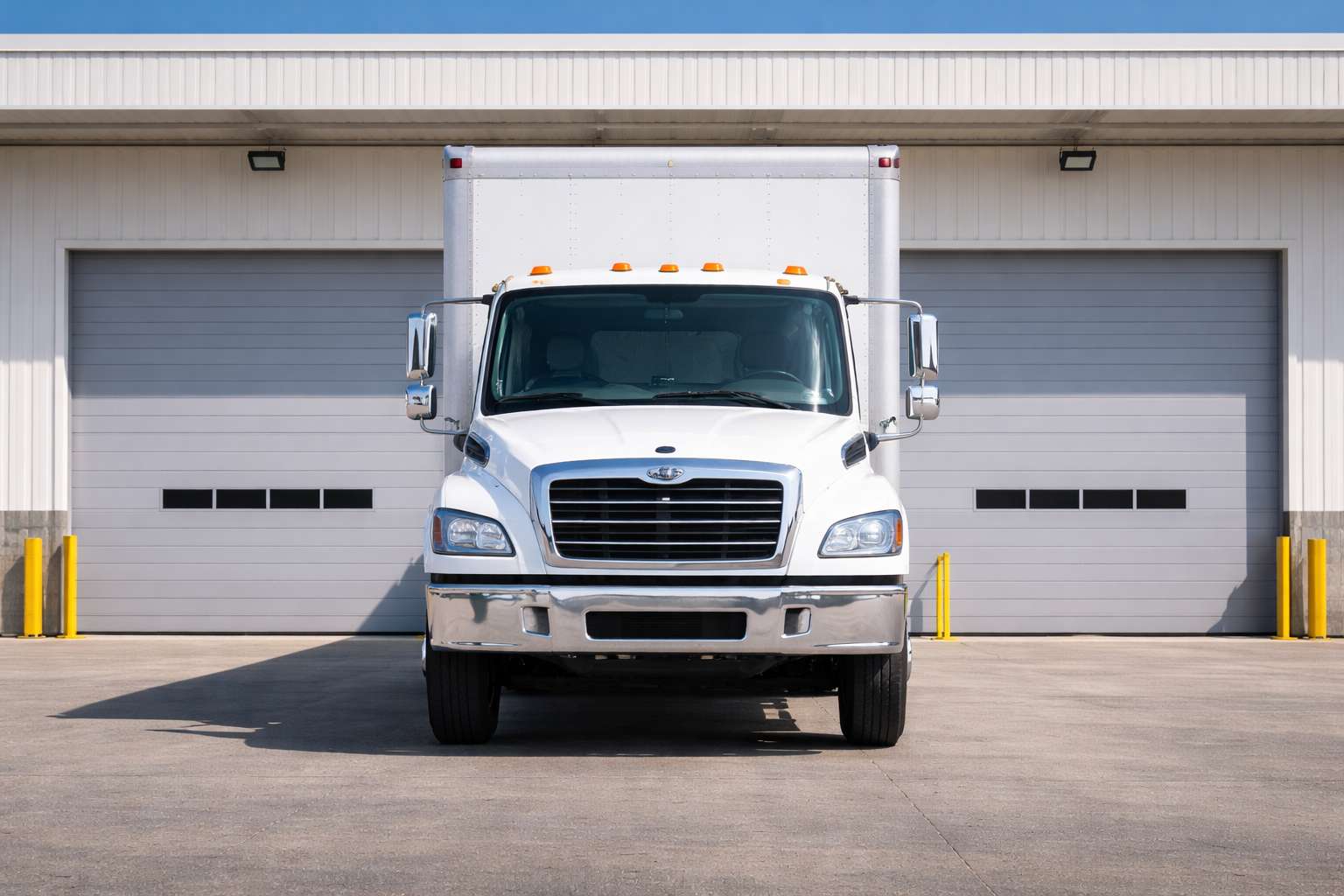
OTR (Over-the-Road) trucking refers to long-haul freight operations that move cargo across multiple states, often covering 1,000-3,000+ miles per load. Unlike regional or local routes, OTR drivers spend extended periods on the road – typically one to three weeks at a time – before returning home.
OTR freight plays a critical role in the U.S. supply chain, moving everything from port imports and refrigerated goods to dry van and flatbed shipments across interstate corridors. Understanding what OTR means in trucking is essential for drivers deciding between long-haul, regional, or local career paths.
This branch of trucking handles various freight types, from fresh produce to goods arriving at U.S. ports. Typically, these shipments span extensive distances, sometimes exceeding 3,000 miles, with the average OTR load ranging from 1,200 to 1,400 miles.
OTR drivers primarily operate in two modes: solo or as part of a team. Solo drivers take approximately six to seven days to transport cargo coast to coast, whereas teams can accomplish the same journey in roughly three and a half days. If you’re wondering what does OTR mean in trucking, it stands for “over the road,” indicating long-haul trucking that covers extensive distances. Let’s dive in OTR meaning deeply.
The primary difference between OTR, regional, and local trucking lies in route distance, home time, and freight structure. These operational factors directly affect earnings potential, scheduling, and lifestyle.
Difference Between OTR, Regional, and Local
| OTR | Regional | Local |
|---|---|---|
| OTR truck driver embarks on lengthy journeys, spanning weeks to months. | Regional drivers typically spend 1 to 2 weeks on the road. | Local drivers usually return home daily. |
| They traverse across nearly all states, including Mexico and Canada. | Primarily operate solo. | Mostly work solo. |
| Operations include both solo and team driving. | Specialize in transporting specific cargo types within designated regions like the Northeast, Southeast, Southwest, or Midwest. | Often follow dedicated routes, transporting the same cargo to consistent locations on a daily basis. |
| Focus on transporting fewer loads but over extensive distances. | Handle a higher volume of loads over shorter distances compared to OTR drivers. | Frequently involved in transporting LTL (less than truckload) shipments. |
Salary Ranges for OTR Truckers
How does OTR trucker salary compare with those of their regional and local counterparts? Well, it varies based on several factors. Due to the longer routes and extended time spent on the road, OTR drivers typically earn more than their counterparts.
OTR earnings also depend heavily on lane selection, reload timing, detention management, and broker relationships – factors that can significantly increase or compress weekly gross revenue. Regional drivers, operating on shorter routes with more regular hometime, generally earn less than OTR drivers.
However, strong weekly earnings depend on more than miles alone – factors like reload timing and cost per mile discipline determine real profitability.
Local drivers commonly receive hourly pay, which, depending on the company, may result in significantly lower earnings compared to OTR and regional drivers. However, drivers handling specialized cargo like hazardous materials such as gasoline might earn more than both OTR and regional drivers.
Challenges Faced by OTR Truckers
Transitioning to life as an OTR driver after obtaining all the necessary licenses may seem like the next logical step. However, it’s essential to acknowledge the hurdles that come with this career path. Being an OTR trucker demands sacrificing time at home to spend several days navigating the country’s highways, often encountering adverse weather conditions, congested traffic, and limited dining options along the way. Here are some of the notable challenges faced by OTR truckers:
- Hours of Service (HOS) Rules: Governed by regulations dating back to the 1930s, HOS rules dictate strict limits on driving hours to ensure driver safety and mitigate fatigue. Compliance requires adhering to guidelines such as maximum consecutive driving hours, mandatory rest breaks, and weekly driving hour caps, enforced through electronic logging devices (ELDs) mandated by the U.S. federal government since December 2019.
- Lengthy Detentions: OTR drivers frequently encounter delays during load pickups or deliveries, disrupting schedules and potentially causing setbacks of two to two-and-a-half hours or more. Understanding how detention pay works is essential to protect long-haul revenue.
- Poor Infrastructure: The deteriorating condition of U.S. infrastructure poses challenges for OTR drivers, with a significant portion of roads and bridges exhibiting signs of wear and structural deficiencies, affecting travel efficiency and safety.
- High Levels of Stress: Balancing the demands of an OTR trucking career with personal life can be mentally taxing, compounded by factors like adverse weather, tight deadlines, traffic congestion, and prolonged periods away from family.
- Physical Health Issues: OTR trucking’s sedentary nature and reliance on fast food during long hauls contribute to health concerns such as obesity and diabetes, with truckers experiencing higher rates of these conditions compared to the national working population.
How Logity Dispatch Supports OTR Owner-Operators
Over-the-road trucking requires more than endurance – it requires structured planning.
Logity Dispatch helps OTR drivers:
- Secure consistent long-haul lanes
- Reduce unpaid detention and layover losses
- Plan reload timing to minimize empty miles
- Align routes with Hours of Service limits
- Maintain steady weekly revenue instead of random spot booking
Instead of chasing loads daily, OTR drivers benefit from disciplined freight selection and operational coordination.
If you’re running long-haul freight and your weeks feel unpredictable, it may be time to operate with structure – not guesswork.
Contact Logity Dispatch to build a more stable OTR strategy.