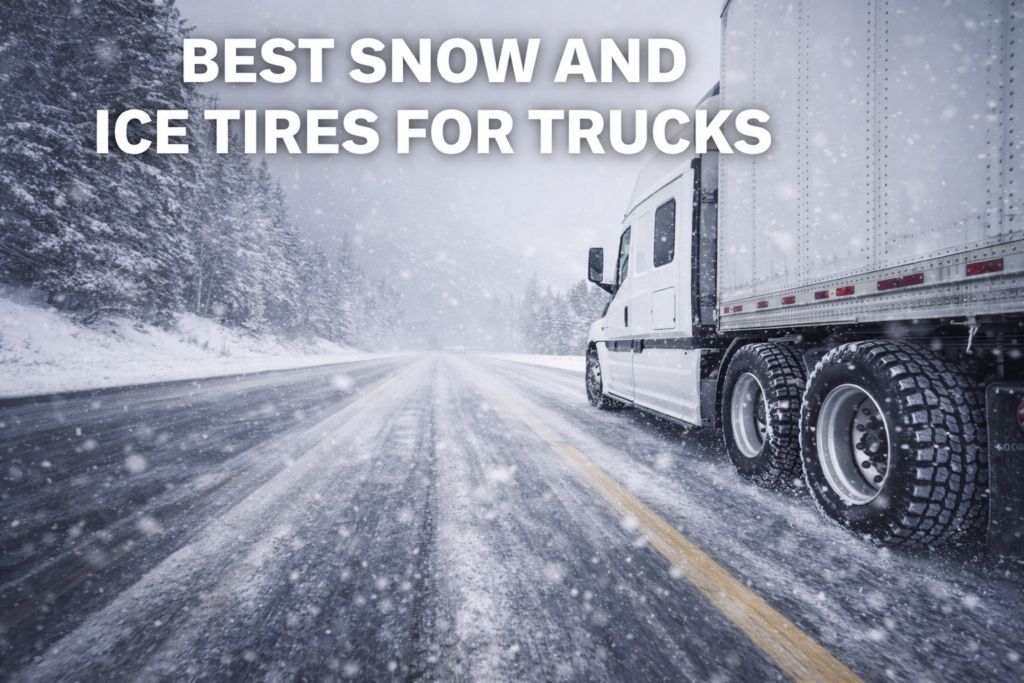
Why Winter Tires Matter for Commercial Trucks
Winter driving is not just a traction issue – it’s a liability issue.
For owner-operators and carriers, snow and ice increase:
- Accident risk
- Insurance exposure
- Downtime probability
- Delivery delays
Choosing the right winter truck tires isn’t about comfort. It’s about maintaining control in low-traction conditions while protecting your revenue and safety profile.
Why Winter Tires Matter for Commercial Trucks
Before we dive into our main content, let’s talk about why you even need a separate truck tire for snow and ice. After all, tires are created equal, right? Not quite.
Driving on a cold and snowy road is much different from driving on traditional blacktop, and that means that your wheels interact with the road differently. Winter tires are designed to have better traction, grip, and braking power than other options, thus allowing them to operate better under winter conditions and keep you safe while driving. Here’s how they do it:
- Composition. The main difference between winter and regular tires is what they’re made of. While traditional options will grow brittle and hard in the cold, truck tires for snow and ice are made from a special rubber compound that remains soft and pliable even in cold temperatures. A more pliable composition means better grip, better traction, and increased safety.
- Tread. Dedicated winter wheels have a deeper and more aggressive tread than traditional alternatives. These unique tread patterns help improve traction when the tire digs into snow, and they can also increase braking power.
- Siping and grooving. The best snow and ice truck tires feature siping — small slits and grooves in the wheel and along the tread — which offer more resistance and grip on slick or slippery roads and may help improve braking and stopping distances.
Top Winter Tire Options for Different Use Cases
Nokian Hakkapeliitta Truck D
Nokian is a Finland-based tire manufacturer specializing in winter and all-weather tires, and it’s obvious they know their stuff when it comes to cold weather. Credited with making the first (and best) winter wheels, Nokian has introduced the Hakkapeliitta Truck D tire, which is designed for heavy-duty winter use with a patented tread block and lateral siping for increased traction.
| Pros | Cons |
| Great tread resistance for regular wear | Higher prices |
| Low rolling resistance | Hard to find in the USA |
| Quiet operation | |
| Suitable for both snow and ice |
Michelin Agilis CrossClimate C-Metric
For truckers who don’t expect to see extreme temperatures, Michelin makes excellent all-season light truck tires for snow and ice. The Agilis CrossClimate C-Metric is one great example. Designed for both urban and regional journeys and rated for winter weather, this option is a great commercial choice that boasts shorter stopping distances and better traction than alternative brands.
| Pros | Cons |
| Siping technology for improved traction | One of the more expensive brands |
| Sidewall protectors for urban driving | Acceptable on light snow but not a complete replacement for a dedicated snow tire |
| Acceptable for dry, wet, and snowy roads | Shorter treadwear life |
| Impressive braking distance on wet and dry roads | |
| Comfortable and quiet ride | |
| One of the best-known companies; readily available |
Bridgestone Blizzak LT
Coming in as a close second to Michelin is the Bridgestone Blizzak LT tire. This winter option is one of the best for heavy-duty trucks that haul frequently in snowy conditions, and it’s got everything you could ever want in a winter tire.
| Pros | Cons |
| Special compound for water wicking | Another expensive brand |
| Ideal for ice and snow | Acceptable on light snow but not a complete replacement for a snow/ice-grade wheel |
| Great traction in various depths of snow | Poor tread life |
| Short stopping distances | |
| Good traction, handling, and braking on ice |
Goodyear WinterCommand (Light Truck)
Goodyear has a reputation for durable products, wide selections, and rigorous safety standards, making them one of the most popular choices on the market. The Goodyear WinterCommand tire is no exception.
| Pros | Cons |
| Multiple tread patterns for all terrains | Not ideal for heavy winter conditions |
| Made from an ultra-flexible compound | Limited sizes |
| Zig-zag sipes for better handling and cornering | No mileage warranty |
| Optional studs for greater traction | |
| More affordable prices |
All-Season vs Dedicated Winter (Operational Decision)
While you may be tempted to purchase an all-season truck tire for snow and ice driving, think twice before you do. These wheels may hold up okay to a bit of slush or some cold temperatures now and then, but they’re nowhere near as effective as dedicated winter alternatives.
All-season options are most suitable for mild winter conditions. Using improper equipment in severe weather increases liability risk for carriers, making operational safety planning an important task. If you’ll be driving through extremely cold and harsh snow, it’s always better to invest in dedicated winter wheels. You can usually tell the difference between the two, as truck tires for snow and ice will display a small picture of a mountain and snowflake. If you do use an all-season truck tire for snow and ice, use extreme caution in extreme snow conditions.
Winter Driving Risk Management Tips
Choosing the right wheels is an important step to safer driving; using them correctly is the next step. Once you have the best snow and ice truck tires, implement these tips to maximize their effectiveness.
- Use extra caution when driving in cold, snowy, or wet weather.
- Give yourself extra room between vehicles whenever possible. Winter stopping distances pre-trip brake inspection increase dramatically, especially for loaded trailer
- Remain alert to how other drivers are driving.
- Don’t overcorrect if you find yourself sliding.
- Check your tire pressure and tread often.
- Remove winter tires once it gets too warm for them and store them properly.
Maintaining legal tread depth isn’t just about performance – it’s a federal requirement during inspections.
How Winter Tires Protect Revenue
A winter-related incident rarely stops at vehicle damage. It can lead to:
- Missed appointments
- Unpaid detention
- Load rescheduling
- Insurance claims
- CSA impact
- Increased maintenance costs
For owner-operators, a single preventable winter accident can eliminate weeks of profit. Proper tire selection reduces that exposure.
Winter Preparation Is Operational Strategy
Winter conditions are predictable. Accidents are not.
The difference is preparation.
The right tires, proper inspections, and structured planning reduce risk — and keep revenue consistent even during severe weather.
At Logity Dispatch, we work with drivers who treat winter operations as part of a broader strategy: load planning, compliance, equipment readiness, and smart routing.