Table of Content
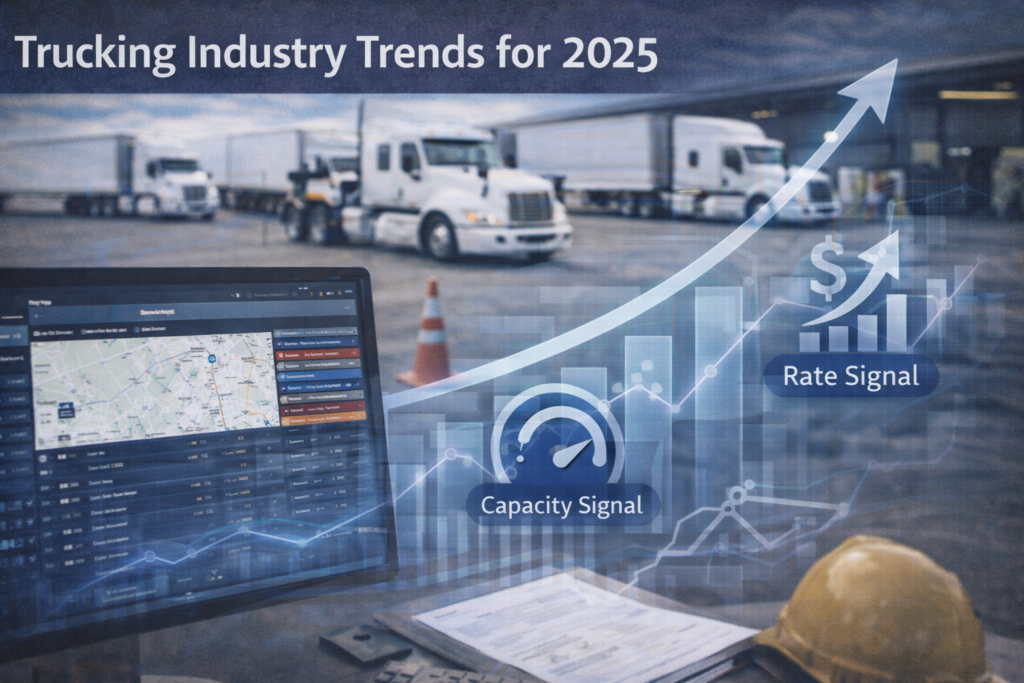
The trucking industry is constantly evolving, but the trends shaping 2025 are not just abstract industry shifts. They will influence how carriers plan lanes, invest in equipment, manage costs, and decide which freight actually makes sense to run. Understanding these trends is becoming part of day-to-day operational planning, not just long-term forecasting.
For owner-operators and small fleets, those changes often show up first through rate pressure, new technology requirements, or shifting lane profitability.
Let’s explore the most significant trends expected to shake the industry in the coming year. The article can provide valuable insights into the changes and their economic and societal implications.
Top Trucking Trends to Expect in 2026
The trucking sector is undergoing change driven by the integration of cutting-edge technologies. These changes can reshape business operations, lead to innovations, and require more adaptability.
Understanding potential key trends in the trucking market in 2026 ensures that we are well-prepared to stay competitive and succeed in the coming year.
Rise of Autonomous and Semi-Autonomous Trucking
One of the most anticipated trends is the growth of autonomous vehicles. This technology is projected to revolutionize freight transportation by reducing reliance on human intervention, improving efficiency, and lowering costs.
Fully autonomous trucks are a few years away from widespread usage, while semi-autonomous technologies are becoming more common across the market. They offer features like lane-keeping assistance and automatic braking. The projected impact of autonomous vehicles can lead to a range of consequences. For instance, it could reduce the problem of truck drivers lack, improve safety, and increase freight capacity.
At the same time, businesses must ensure the safety of their drivers, the public, and the freight they transport. This requires maintaining human control of the vehicle when necessary. Despite the progress, the sector faces challenges, including regulatory approval and the pressure to integrate these advanced technologies into existing systems.
Increased Use of Electric and Alternative-Fuel Vehicles
Sustainability is becoming a global focus across different sectors, including the trucking industry. Thus, electric vehicles (EVs) and alternative fuel vehicles are gaining momentum. These trucks are expected to contribute to carbon footprint reduction. This is especially important for companies’ competitiveness, as retailers and customers are pushing for greener transportation options.
The rise of electric trucks is anticipated to continue as technology improves, offering a more economical and sustainable solution to traditional models. For instance, alternative vehicles like models powered by hydrogen and compressed natural gas are expected to gain traction. However, businesses may face various challenges, such as the need for charging infrastructure and longer fuel ranges for long-haul trips.
Addressing the Driver Shortage
Nowadays, the truck driver shortage is one of the most serious challenges facing the intruder. With demand for cargo transportation expected to increase, the need for experienced and reliable drivers is becoming more significant. Businesses are facing pressure to find ways to attract and retain drivers.
This can include offering better compensation packages, improving working conditions, and providing additional opportunities for drivers. The growing demand for and adoption of autonomous vehicles may also help reduce this problem, reducing the number of drivers required. Still, human drivers will remain essential for the foreseeable time.
Data-Driven Decision Making and Predictive Analytics
With the increased use of technologies in the trucking industry, data-driven decision-making and predictive analytics are expected to become more prevalent. Many businesses seek to optimize their operations, from improving routing efficiency to anticipating maintenance needs and monitoring fuel consumption.
Technology can highlight opportunities, but profitability still depends on understanding your real operating cost before accepting freight.
Artificial intelligence (AI) and machine learning are growing as they allow companies to predict market trends and make more informed decisions. With these data, trucking businesses can gain a competitive edge, reduce expenses, and increase operational efficiency.
Real-Time Monitoring and Enhanced Transparency
As requests for supply chain transparency increase, real-time shipments are essential. Telematics and IoT-based systems allow companies to monitor their trucks and freight in real-time. This helps ensure timely deliveries and improved customer satisfaction. With real-time data, you can make faster, more accurate decisions, helping to mitigate delays and reduce costs.
Greater visibility also allows carriers to reduce wasted repositioning and plan reloads more intentionally.
For retailers and businesses, monitoring shipments in real-time is crucial. This improves customer satisfaction and helps identify potential disruptions. And ensures meeting delivery deadlines.
Globalization and Cross-Border Logistics
The increasing globalization of the economy is reshaping the trucking sector. Nowadays, freight moves across borders more frequently, which often requires intermodal transportation and accurate documentation for customs clearance. The growth of e-commerce and the demand for faster and more efficient delivery are driving the need for innovative solutions.
Businesses must navigate varying regulations and compliance standards across different jurisdictions, requiring advanced systems to ensure smooth and efficient operations. Technology will play a key role in simplifying the customs and regulatory process, streamlining the flow of goods across borders.
Customer-Centric and Agile Supply Chains
The trucking industry’s future is increasingly focused on customer needs. As the retail industry and trucking businesses strive to meet customer expectations for faster and more reliable deliveries, supply chains will become more agile and responsive. The rise of e-commerce has led to growing demand for quicker delivery times, and businesses must adapt to this by improving their logistics and offering more flexible delivery solutions.
In 2025, we can expect to see greater integration of technology that allows for agile supply chains. This includes optimization of last-mile delivery and providing more personalized services. Flexibility, transparency, and the ability to provide real-time updates will be key to staying competitive in the market.
Conclusion
The trucking industry is constantly changing amid technological advancements. From the growth of autonomous vehicles to the adoption of electric trucks, 2025 can introduce new trends to the industry.
While there are many opportunities, the challenges of balancing innovation with safety, addressing the driver shortage, and adapting to a rapidly changing global economy will require careful planning and agility.
As these trends reshape freight markets, carriers that treat technology, regulation, and data as operational tools – not just headlines – will be better positioned to stay stable through market cycles. The focus in 2026 will not simply be moving more freight, but moving it with better planning, clearer cost control, and stronger visibility into each mile.