Table of Content
- Oversize Freight Pays for Planning, Not Just for the Pull
- Why Heavy-Haul Punishes a Thin Plan
- Where Heavy-Haul Operators Lose the Margin
- What Heavy-Haul Planning Actually Involves
- What a Dispatcher Solves Before the Load Moves
- Heavy-Haul Rate Questions Operators Actually Ask
- The Number to Check on Your Last Oversize Move
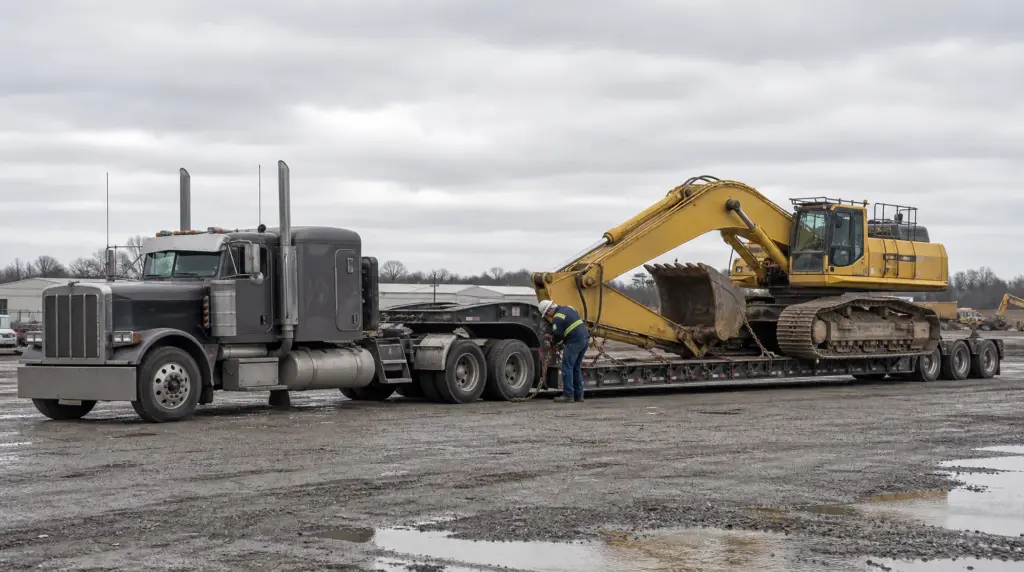
Heavy-haul looks like the top of the trade. Big trailer, big freight, big rate. The numbers on an oversize load make every other haul look small, and that is exactly why so many owner-operators chase it on the rate alone. But the ones who do learn the same lesson fast: the money isn’t in pulling the load. It’s in the days of planning that happen before the load ever moves. Get those wrong and the biggest heavy-haul rate on the board still runs a losing week.
Oversize Freight Pays for Planning, Not Just for the Pull
Anyone can chain an excavator to an RGN. The job is everything that has to be solved before you do: the permits for every state, the route, the escorts, the curfews, the bridges you can’t cross.
An oversize load that rolls without that work doesn’t just risk a fine. It risks a turnaround at a low bridge, a day lost to a missing permit, a route that dead-ends at a weight-restricted span. The pull is a few hours. The planning is days, and the rate has to pay for both.
Picture a transformer moving three states over. The heavy-haul rate looks huge, so an owner-operator takes it on the number alone. Then one state’s permit lands a day late, the routed bridge turns out posted, and a weekend curfew parks the load until Monday. The pull was six hours. The move took five days. Divided across those days, the biggest rate of the month paid like a middling dry-van week.
Why Heavy-Haul Punishes a Thin Plan
Every state has its own permit, its own legal dimensions, its own travel rules. An oversize load crossing three states is three sets of rules stacked on one route.
Miss a permit and you’re parked until it clears. Pick a route without checking the bridges and you backtrack at oversize speed, which is slow. Ignore the curfews and you’re holding a load through a window you can’t legally move in. None of that shows on the rate sheet. All of it shows on the days the load actually takes. oversize permits are their own discipline, and they have to be solved before the wheels turn.
Where Heavy-Haul Operators Lose the Margin
- Permits filed late, parking the load until they clear.
- Routes set without checking bridges, weights, and clearances, forcing backtracks.
- Escorts and curfews unplanned, stretching a two-day move to four.
- A big rate accepted without pricing the planning days behind it.
- Detention at the shipper or receiver absorbed because no waiting terms were set.
None of those are driving failures. All of them are planning failures that eat the very heavy-haul rate that made the load look good in the first place.
What Heavy-Haul Planning Actually Involves
| Planning item | Typical cost or time | Why it has to be on the rate |
|---|---|---|
| State permits | Roughly $15 to $150+ each, one per state | A missing one parks the load until it clears |
| Pilot cars / escorts | Often $1.50 to $3.50 per mile, per car | Wide or tall loads legally require them |
| Route survey | Hours to days on a superload | Bridges, weights, and clearances decide the route |
| Curfews and travel windows | Lost hours at rush, night, or weekend bans | You can only move when the state lets you |
These are typical figures, not fixed rates, and they move with the load and the states on the route. The point is the same one groups like the Owner-Operator Independent Drivers Association make about accessorial and detention pay: the extra work is real cost, and the owner-operator who prices it gets paid for it.
What a Dispatcher Solves Before the Load Moves
The whole job is turning a big number into a clean move: permits filed, route cleared, escorts and curfews planned, before the truck rolls. That’s a planning desk, not a driver sorting state rules from the cab.
It means pulling the permits for every state on the route ahead of time. It means routing around the bridges and weight limits instead of discovering them. It means pricing the planning days into the freight rate so the move pays for the work it actually takes. That’s the difference between heavy-haul that earns its rate and heavy-haul that spends it sitting. The same logic runs under structured truck dispatch services, where the route is solved before the load is chained.
For an owner-operator running a step-deck or an RGN solo, that’s the real case for owner-operator dispatch: a desk pulling permits and clearing the route while you focus on the pull, so the days of planning land on the rate confirmation instead of on your own week.
Heavy-Haul Rate Questions Operators Actually Ask
Should permits and escorts be billed separately or built into the rate? Price them as line items on the quote. Rolled into one number they vanish, and the next broker treats your all-in figure as the new baseline for a load that carried real permit and escort cost.
Why does an oversize load with a huge rate still lose money? Because the rate pays for hours under power, but the move takes days of permits, routing, and curfews. Divide the rate by total days from booking to delivery, not just the driving hours, and the real number shows up.
Who arranges the permits and pilot cars, me or the broker? On most heavy-haul loads it falls to the carrier, which is why solo owner-operators lose time to it. A dispatch desk pulling permits and booking escorts ahead of time keeps the planning off the driver’s plate.
How do I know a heavy-haul rate is actually good? Add up the permits, escorts, planning days, and any curfew delays before you accept. A rate that looks huge can turn average once the days of oversize planning are priced into it.
The Number to Check on Your Last Oversize Move
Take your last heavy-haul load and count the days from booking to delivery, not just the hours under power. Divide the rate by those days. That’s what the move actually paid per day of your time. If it’s lower than you thought, the planning days were the part nobody priced. That gap isn’t bad luck. It’s margin you can recover by pricing the whole move, permits to delivery, before the load is ever chained.