Table of Content
- Auto Transport Doesn’t Pay for a Full Trailer. It Pays for the Right Sequence.
- Why the Load Order Decides the Week
- Where Car-Hauler Margin Actually Leaks
- How a Wrong Load Order Costs the Week
- The Appointment Trap
- What a Dispatcher Solves Before the First Car Loads
- Car Hauler Dispatch Questions Operators Actually Ask
- The Check Worth Running on Your Last Run
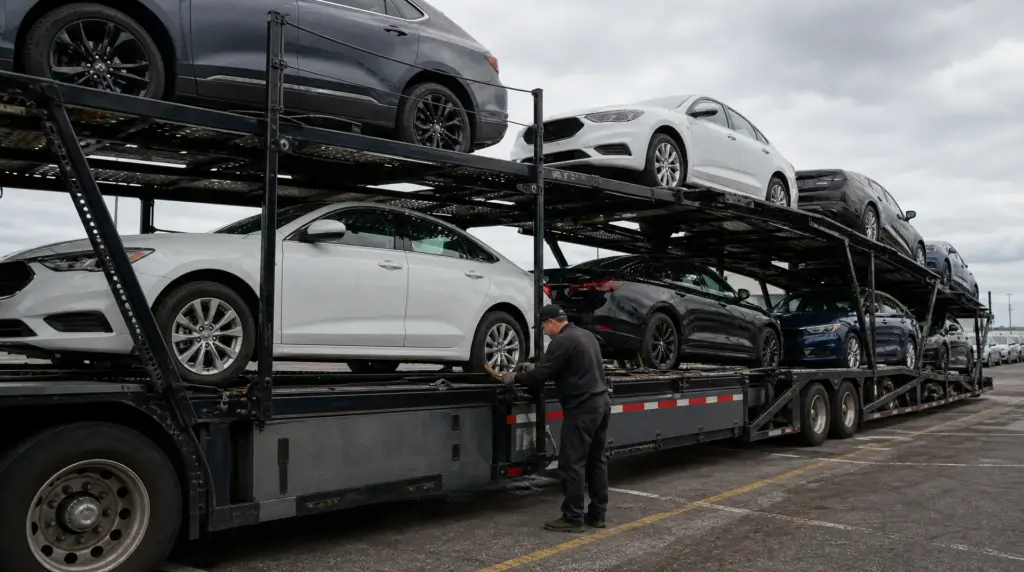
Car hauling looks like a math problem. Fit nine cars, get paid for nine cars, drive the route. But the owner-operators who struggle aren’t bad at loading. They’re losing the week to the part the load count doesn’t show: the order cars get picked up, the order they get dropped, and the gaps that open when those two don’t line up. A full trailer can still run a thin week.
Auto Transport Doesn’t Pay for a Full Trailer. It Pays for the Right Sequence.
Loading nine cars is the easy part. Loading them in the order they come off is the job.
Every car on the trailer has a different drop point. If the first delivery is buried on the top deck behind three other cars, you’re unloading and reloading on the side of a road to reach it. The route looked clean on the map. On the trailer it’s a puzzle you built wrong at pickup, and you pay for it in hours every stop.
Picture a nine-car run booked on a route that looks tight and clean. But the cars got loaded in pickup order, not delivery order, so the first drop is buried behind three others. Now every stop means unloading and reshuffling on the shoulder to reach the next car. The owner-operator did nothing wrong on the road. The trailer was built wrong at the first pickup, and the whole week pays for it in lost hours and handling risk.
Why the Load Order Decides the Week
The cars come from different dealers and auctions. They deliver to different cities on different days. The trailer can only unload from the outside in.
So the sequence has to be solved before the first car rolls on. Pick up in the wrong order and you’ve locked a delivery you can’t reach without shuffling the whole deck. Multiply that across a nine-car run and the lost time isn’t one bad stop. It’s the shape of the entire week. It’s the kind of unbilled handling time the Owner-Operator Independent Drivers Association keeps flagging for owner-operators: the reshuffles and delays are real cost the per-car rate never counted.
Where Car-Hauler Margin Actually Leaks
- Pickups scheduled in an order that doesn’t match the delivery route.
- Auctions that release a car late, holding the whole trailer hostage.
- Dead miles between a scattered pickup and the next loading point.
- Damage claims from rushed reloads done to reach a buried car.
- Gate passes not confirmed ahead, so a ready truck still sits at the lot.
None of those are driving problems. All of them are planning problems that landed on the driver because nobody solved them first.
How a Wrong Load Order Costs the Week
| The problem | Typical hit | How a plan avoids it |
|---|---|---|
| Buried delivery | Reshuffle the deck at every stop | Load in route order, first drop on last |
| Late auction release | The whole trailer waits on one car | Confirm releases before you roll |
| Scattered pickups | Dead miles between loading points | Tighten the pickup route before booking |
| Rushed reshuffle | Damage claims from roadside handling | Sequence so cars come off cleanly |
None of these are fixed numbers, and they change with the run. The point is that each is planning an owner-operator can solve up front, not a cost of hauling cars.
The Appointment Trap
Auctions and dealers run on their clock, not yours. A car released a day late doesn’t just delay that car. It delays every delivery stacked behind it on the trailer.
You can be ready, fueled, and on time and still sit because the lot hasn’t cut the gate pass. That wait isn’t yours to fix from the cab. It’s a coordination job that has to happen off the truck, before you ever pull in.
What a Dispatcher Solves Before the First Car Loads
The whole game is building the trailer so it unloads in route order, and keeping the pickups from slipping. That’s a desk job, not a driving one.
It means sequencing the loads so the first delivery is the first car off. It means confirming releases before you roll, so a late auction doesn’t strand the deck. It means keeping the pickups tight enough that the dead miles between them don’t eat the run. That planning is the difference between a nine-car week that pays and a nine-car week that just looked full. The same logic runs under structured dispatching trucking services, where the load order is solved before the trailer fills.
For an owner-operator hauling cars solo, sequencing pickups and chasing releases from the cab is where the run slips. It’s the real case for owner-operator dispatch: a desk building the trailer in route order so every car comes off clean.
Car Hauler Dispatch Questions Operators Actually Ask
Why does a full nine-car trailer still run thin? Because it pays for the right sequence, not just a full deck. Cars loaded out of delivery order force a reshuffle at every stop, and those lost hours can cost more than the rate on the cars themselves.
What’s the biggest hidden cost in car hauling? The reshuffle. When the first delivery is buried behind three cars, you unload and reload roadside to reach it, which burns hours and invites damage claims. Loading in route order removes it entirely.
How do I keep auction releases from stranding the trailer? Confirm them before you roll, not at the gate. A late release delays every car behind it, so verifying ahead is exactly the off-truck coordination a desk, the same kind full dispatching trucking services handle, is meant to run.
How do I load in route order across scattered pickups? Plan the pickup sequence against the delivery route before the first car loads. It’s a puzzle better solved on a desk than at the auction lot, so the trailer comes off outside-in without a roadside shuffle.
The Check Worth Running on Your Last Run
Take your last full trailer and count how many times you had to unload a car to reach another one. Add the hours those shuffles cost. If the number is more than zero, the trailer was loaded in the wrong order, and that order is the part worth fixing before the next pickup.