Nowadays, the trucking sector offers a wide range of opportunities amid the varieties of jobs and constantly evolving environment. In particular, an owner operator position can be a great option to increase earnings for both truck drivers and newcomers to the industry. If you want to run the business, increase your earnings and set your schedule, it can be a suitable job for you. However, this path requires planning, initial investment, and an understanding of the sector. Our guide reviews what does an owner- operator mean, responsibilities, and the possible challenges of this role. Whether you’re a truck driver seeking to leap up in the career or a newcomer, here you can find the information for your first steps of becoming an owner-op in the fall of 2026.
What Is an Owner operator?
An owner-operator is an independent driver who owns and operates their own truck and isn’t employed by a company. The position involves tasks of a truck driver and a business owner. In particular, an owner operator truck driver secures the freight, manages the shipping schedule, maintains the truck, and handles managing and financial aspects. The main advantage is the autonomy and the potential for higher income. However, it requires initial investments and a deep understanding of the sector rules.
What Does an Owner Operator Do?
The job includes the tasks of a driver, business owner, and logistics coordinator. These are the responsibilities of an owner operator trucking:
- Drive and deliver goods, as the main responsibility. Owner operators may be also involved in loading and unloading activities.
- Business management. Owner operators handle financial aspects, such as budget management or taxes. They also conduct records of mileage, expenses, and maintenance to comply with the authority regulations.
- Vehicle maintenance. Truck inspection is a significant element of providing safe shipments. The owner operator addresses any mechanical issues to reduce downtime and unexpected repair costs.
- Regulatory compliance. If you want to run a trucking business, you have to obtain the required licenses, permits, and registrations.
- Customer relations. Efficient and good communications with clients will help to ensure the profitability and the success of the business. It involves clear communication, reliability, and professionalism.
- Load management. To maximize earnings and minimize empty miles, choosing the right roads and routes is essential, especially when building consistent lanes.
- Operational logistics. One of the main advantages and responsibilities of an owner operator truck driver is coordinating their schedule. Still, they need to meet expectations of the clients and optimize workload.
- Marketing and networking. This part is essential for business promotion and building a network to find brokers, shippers, and clients.
How Much Do Owner Operators Make?
Owner-operator gross revenue can range widely – often between $150,000 and $400,000 annually – depending on lanes, equipment, and operating costs. These elements may include:
- Gross revenue. Owner operators usually charge per mile or load. The revenue will be based on the cargo type, distance, and the number of completed loads.
- Operating costs. The expenses include fuel costs, regular maintenance and repairs, permits and licensing costs, and other ongoing operating expenses.
- Economic environment. The market conditions and demand can impact rates and load availability.
- Geographic location. The income may vary by region, with higher demand in different areas.
- Experience and reputation. Owner operators with a good reputation may secure higher-paying contracts and more consistent work.
- Freight type. Such cargo types as hazardous or oversized goods, required special shipment conditions that foresees extra income.
What Is the Difference Between an Owner operator and a Company Truck Driver
The main difference is the employment and operational structure. An owner operator – is a truck driver who operates own vehicle. They are independent and control the work schedule, routes, and the cargo types. Still, they are responsible for all expenses, maintenance, insurance, and compliance with the legislation. The potential of more earnings combines with the entire financial risk amid low freight demand periods or unexpected repair costs.
A company truck driver works for a specific company. The drivers run company-owned tracks and follow already set routes and schedules. They receive a salary and benefits, including insurance, or retirement plans. This job has more stability and fewer financial risks but less flexibility and lower income.
What Do I Need to Become an Owner Operator?
Firstly, you need to conduct a thorough preparation. An owner operator requirement includes Commercial Driver’s License (CDL) and financial preparation, as you need to cover initial expenses. You also have to comply with federal and state regulations, such as hours of driving or vehicle inspections.
For efficient operations, it’s important to choose a suitable and reliable truck model and equip it with essential tools. You must also have insurance and necessary permits and licenses.
To help you on the path to a new role, we create a step-by-step guide that includes main responsibilities and challenges of this role.
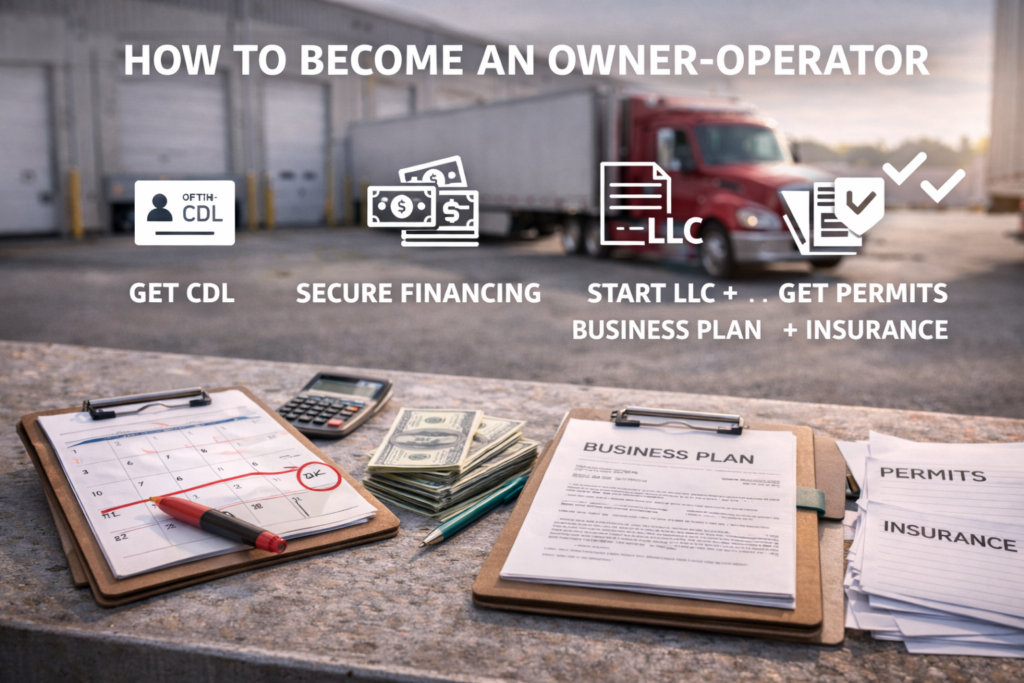
How to Become an Owner Operator
Step 1. Obtain experience and a CDL.
Whether you’re an owner operator or work for a company, a CDL is essential for a truck driver role. Understanding the differences between license classes is critical before investing in equipment. You also may obtain endorsements depending on the cargo type you plan to haul.
Experience. Working as a company driver will help you understand the industry, build driving skills, and learn about different cargo types and requirements for shipping. Experience in management of business aspects will be beneficial, helping you manage operational and financial aspects.
Step 2. Financial preparation
Prepare an initial investment. It’s needed to obtain a truck and cover operating costs, such as fuel, maintenance, insurance, and permits. Establish a financial cushion in case of unexpected costs. Also, check your credit to secure a loan if you need it.
Step 3. Business plan
Register your business according to federal and state regulations. Open a business bank account, bookkeeping system, and launch an accounting software. It’ll help to manage your finances and taxes.
Step 4. Truck and equipment acquisition
- Choose a model suitable for the cargo you plan to transport. You can purchase or lease a truck.
- Equip your truck with a GPS, electronic logging device (ELD), safety gear and other necessary installations.
- Ensure your truck meets all requirements and can provide safe shipping.
Step 5. Obtain insurance and permits
Secure insurance coverage (liability, cargo, physical damage, and health insurance) to ensure safety of shipments.
The trucking business requires permits and licenses. Such documents include the USDOT number, Motor Carrier Authority (MC number), International Registration Plan (IRP), and International Fuel Tax Agreement.
Step 6. Ensure compliance with the rules
Before starting a trucking business, research federal and state regulations for the industry, including compliance with federal driving limits and rest requirements. Conduct regular vehicle inspections and record keeping, to ensure ongoing compliance with rules.
Step 7. Building the network
Create a network to connect with freight brokers, possible clients, and other industry representatives. Join associations like the Owner Operator Independent Drivers Association (OOIDA).
Step 8. Manage your trucking
Use route planning tools to minimize fuel costs and driving hours. Plan a load schedule to maximize your income.
Step 9. Continue to improve your business
Be informed with industry trends to develop and implement best practices. Regularly overview business performance and finances to implement adjustments, if needed.
Conclusion
Becoming an owner-operator is not just a career shift – it’s a transition into business ownership. Success depends on financial discipline, regulatory compliance, cost control, and strong lane strategy. With proper preparation, the move from company driver to independent operator can significantly increase both income potential and operational freedom.
Strategic dispatch support can also accelerate your transition from driver to profitable business operator.