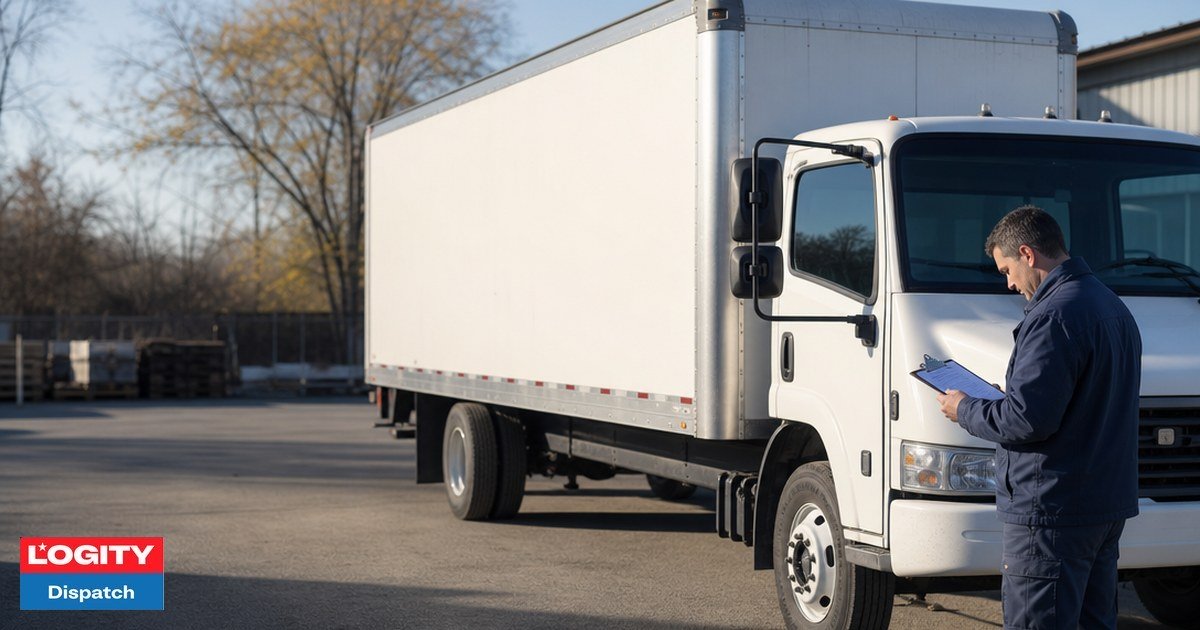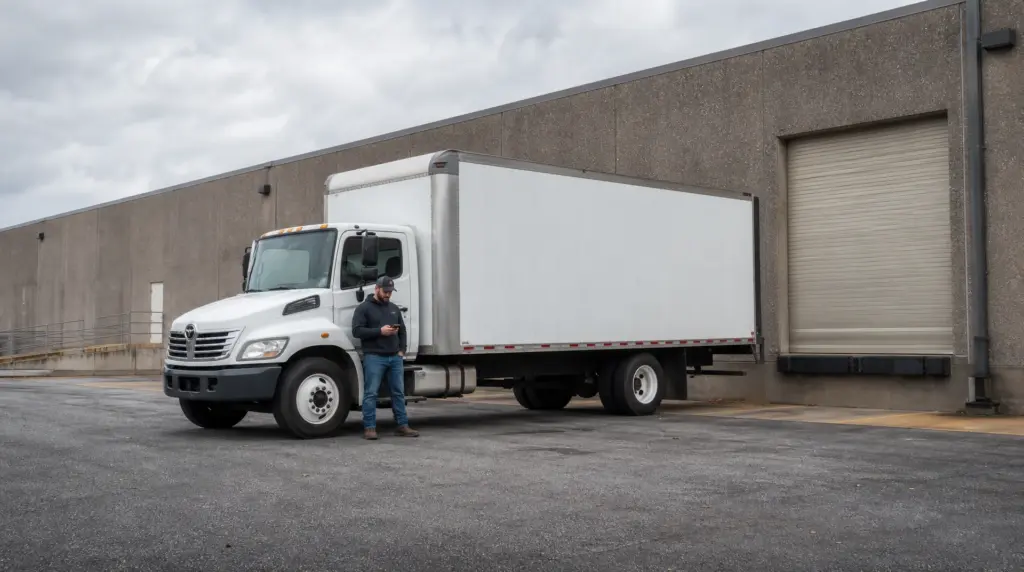
A box truck operator will tell you the problem is finding loads. It usually isn’t. The loads are there. The money leaks in the hours between them, when the truck is parked, the door is down, and the week is quietly running on the clock with no revenue behind it. A box truck rarely loses money on the load. It loses it in the gap before the next one.
A Box Truck Loses Money Between Loads, Not On Them
The load pays. That part works. The problem is what happens after the last delivery, when there’s nothing booked and the day starts burning.
Sitting still costs the same whether you booked the next load or not. The payment runs. Insurance runs. The week is finite. Every parked hour is a slice of that week you can’t sell twice. A driver who books well but sits between every run is working hard for a calendar full of gaps.
Why Box-Truck Gaps Hit Harder
Box trucks live on shorter hauls and faster turns. That sounds efficient. It also means more loads per week, which means more gaps per week to mismanage.
A long-haul truck might reload twice a week. A box truck might reload eight times. Every one of those handoffs is a chance to sit, and the short hauls don’t leave fat margin to absorb the dead time. Miss the timing on a 300-mile day and the gap can be bigger than the run.
The Reload Timing Most Operators Miss
The mistake is booking the next load after you deliver the last one. By then you’re already parked, already searching, already late to the day you wanted.
The reload should be lined up before the wheels stop. Where you deliver decides what you can pick up next, so the next load has to be in view while you’re still rolling toward this drop. Book it after, and you take whatever’s left near a dock you didn’t plan to be sitting at.
What Dispatch Does That DIY Booking Can’t
One person can drive the truck or work the next three moves. Doing both at once is where the gaps come from.
A desk is booking the reload while you’re still under the current load, reading where the delivery puts you, and keeping you in lanes where box-truck freight actually repeats. That’s the difference between a week built two loads ahead and a week reacting one delivery at a time. The same planning logic runs under box truck dispatch services, where the job is closing the gap before it opens.
The Number That Tells the Truth
Take your last ten box-truck loads and count the empty hours between delivery and the next pickup. Add them up. That total, times what an hour of your truck is worth, is what the gaps cost you. If the number surprises you, the loads were never the problem.