Table of Content
Short answer
For most hotshot freight the best trailer is a 36 to 40 ft gooseneck flatbed with a GVWR well above 10,000 lb. In the lineup we checked, no bumper pull reaches 35 ft, and the goosenecks carry far more weight. A bumper pull makes sense only if you plan to stay under the CDL line, and then you give up both deck length and payload. The 10,001 lb line decides which rules you run under, so pick the trailer and the license together.
Most new hotshot drivers buy the truck first and then look for a trailer that fits it. It works better the other way around. Start with the freight you plan to haul, find the deck length and payload that freight needs, and only then decide on the coupler and the license. This guide walks through that order using real trailer spec sheets and the federal weight lines.
If you are still deciding whether hotshot is the right business at all, start with our overview of what hot shot trucking is and how it works. This post assumes you are past that and are pricing trailers.
Start with the load, not the trailer
Three numbers decide the trailer for you: the length of the longest piece you expect to haul, the heaviest load you expect to carry, and how you plan to load it.
- Length. Pipe, lumber, steel and machinery are posted by length. A short deck turns those loads into overhang problems or rejections. A longer deck also lets you carry two partials on one trip.
- Weight. What matters is payload: the trailer’s GVWR minus its own empty weight. Two trailers with the same deck length can differ by several thousand pounds of payload.
- Loading. Forklift freight loads from the side and needs a flat deck. Equipment and vehicles roll on, so they need ramps or a dovetail, and a low deck makes the angle easier.
Your dispatch or lease program adds its own floor. Ours, for example, asks for a trailer of at least 35 ft and a load capacity of at least 10,000 lb, whether the truck is CDL or non CDL. Check those requirements before you buy, because they rule out a lot of trailers on the lot.
Gooseneck vs bumper pull: what the spec sheets show
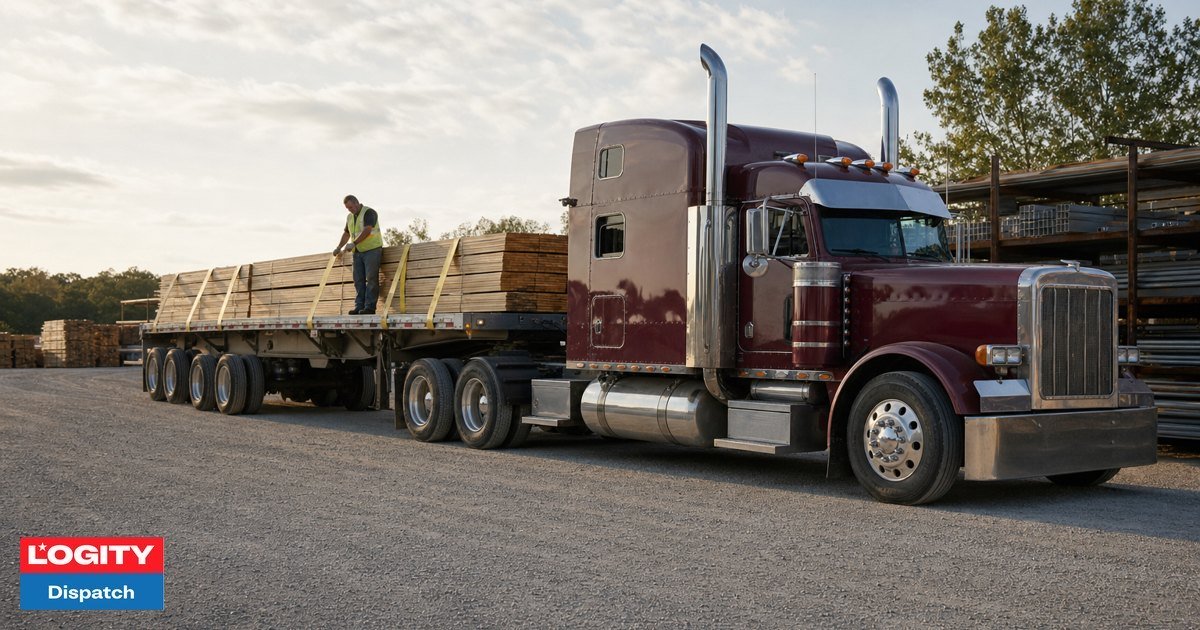
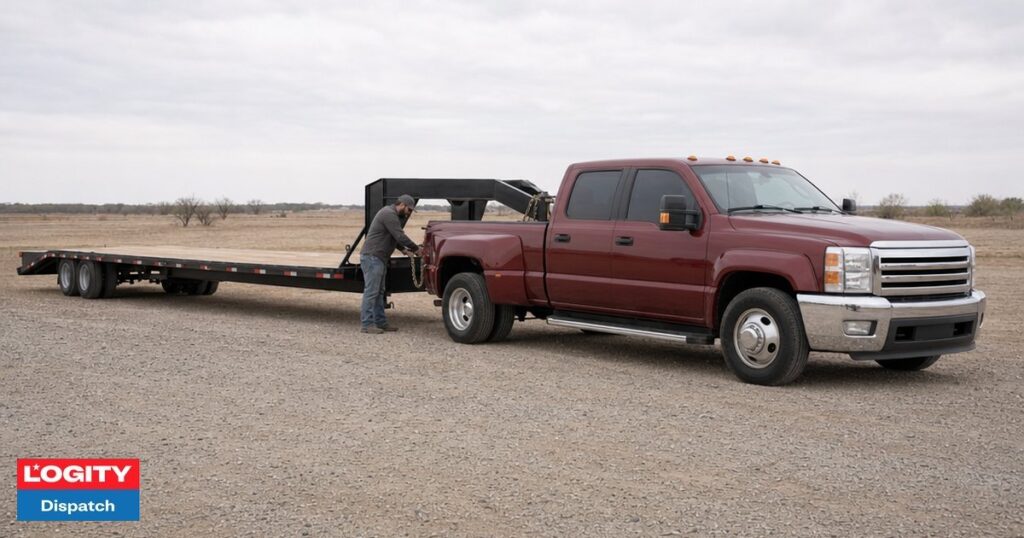
A bumper pull trailer (also called a tag or tagalong) hitches to a receiver behind the rear bumper. A gooseneck hitches to a ball in the bed of the pickup, over or just ahead of the rear axle. That placement is the main difference: a gooseneck puts its pin weight on the truck’s rear axle instead of behind the bumper, and manufacturers build their heavier and longer decks around it. PJ, for example, describes its gooseneck line as designed for strength and stability to haul large, heavy duty equipment and cargo.
To keep this concrete, we pulled the current lineup from PJ Trailers, one of the larger US flatbed manufacturers. Other brands will differ in the details, but the pattern holds.
| Model | Hitch and deck | GVWR, lb |
|---|---|---|
| L6 deckover | Bumper pull, 16 to 24 ft | 9,990 |
| F8 I-beam deckover | Bumper pull, 16 to 30 ft | 14,000 |
| LS flatdeck, 7k axles | Gooseneck, 20 to 40 ft | 15,680 |
| LX flatdeck, 8k axles | Gooseneck, 20 to 40 ft | 17,500 |
| LD flatdeck, duals | Gooseneck, 20 to 44 ft | 25,000 |
| LY hydraulic dovetail | Gooseneck, 32 to 40 ft | 25,000 |
Two things stand out. First, the longest bumper pull in this lineup stops at 30 ft, so it cannot meet a 35 ft requirement. Second, the gooseneck models go to 40 and 44 ft and carry GVWRs from 15,680 to 25,000 lb. If your plan is general hotshot freight at full length, the decision is mostly made for you: it is a gooseneck.
Bumper pulls still have a place. They leave the pickup bed free, and a short deckover is handy for local equipment moves. They just do not fit long, heavy loads or a 35 ft program minimum.
Length and payload: the numbers that decide your loads
Deck length gets the attention, but payload decides which loads you can legally take. Here is what the same manufacturer lists for the lengths that matter most in hotshot.
| Trailer | GVWR / empty, lb | Payload, lb |
|---|---|---|
| LS 36 ft | 15,680 / 6,324 | 9,356 |
| LS 40 ft | 15,680 / 6,760 | 8,920 |
| LX 36 ft | 17,500 / 6,524 | 10,976 |
| LX 40 ft | 17,500 / 6,960 | 10,540 |
| LD 36 ft | 25,000 / 7,710 | 17,290 |
| LD 40 ft | 25,000 / 8,230 | 16,770 |
| F8 30 ft | 14,000 / 4,600 | 9,400 |
Notice what length costs you. Every extra foot of deck adds empty weight, so a 40 ft LS carries about 400 lb less than a 36 ft LS. Notice also that the LS at 36 and 40 ft lists less than 10,000 lb of payload. If a program or a regular shipper expects 10,000 lb or more on the deck, a heavier axle package like the LX or the LD with duals is the safer buy.
Remember that the trailer is only half of it. Your pickup has its own GVWR, rear axle rating and towing limits, printed on the door jamb label and in the owner’s manual. The lowest of those ratings is your real limit, whatever the trailer can carry.
The 10,001 lb line and the CDL question
Two federal thresholds shape every hotshot setup, and the trailer you choose decides where you land.
10,001 lb: you are a commercial motor vehicle. Under 49 CFR 390.5, a vehicle used in interstate commerce is a CMV when its GVWR, GCWR or actual weight is 10,001 lb or more. A hotshot setup that meets a 10,000 lb load capacity minimum is over that line once it is loaded. Once it does, you need a DOT medical card under 49 CFR 391.41, and each vehicle in the combination, trailer included, needs a periodic inspection at least once every 12 months under 49 CFR 396.17, with the proof carried on the vehicle. Our guide to the DOT physical and medical card covers what the exam involves.
26,001 lb with a trailer over 10,000 lb: you need a Class A CDL. Under 49 CFR 383.91, a combination with a GCWR of 26,001 lb or more is Group A when the towed vehicle’s GVWR is over 10,000 lb. The GCWR is the greater of the value on the truck’s certification label or the sum of the truck’s and trailer’s GVWRs (49 CFR 390.5T). It is based on ratings, not on what you actually load that day.
Run the numbers on the trailers above and the pattern is clear:
- A 25,000 lb LD gooseneck pushes any truck and trailer combination past 26,001 lb by itself. That is a Class A setup.
- A 15,680 lb LS gooseneck reaches 26,001 lb with any pickup rated 10,321 lb GVWR or more. That is also a Class A setup on most one ton trucks.
- To stay out of Class A, the trailer’s GVWR has to be 10,000 lb or less. PJ’s L6 is rated at 9,990 lb, and the F8 can be ordered with a 9,900 lb rating. Both are bumper pulls, both stop at 24 to 30 ft, and the lower rating cuts the weight you can carry.
So the trailer choice and the license choice are really one choice. A non CDL hotshot means a short, light, derated trailer and smaller loads. A 36 to 40 ft gooseneck that meets program minimums means a Class A. If you are weighing the license, our explainer on CDL classes A, B and C compares them side by side.
A buying checklist before you sign
- Write down the longest and heaviest load you want to haul, and check the deck length and listed payload against both.
- Check your dispatch or lease program’s minimums for trailer length and capacity.
- Read the GVWR on the trailer’s VIN label, not just the brochure, and ask whether a derate or uprate option was ordered. On PJ goosenecks the label sits on the riser by the jack handle.
- Match the coupler to the truck: a bed ball for a gooseneck, a receiver and ball size rated for the trailer for a bumper pull.
- Add the truck’s GVWR to the trailer’s GVWR and compare the result to 26,001 lb. That tells you which license you need.
- Look at loading: ramps, a dovetail or a hydraulic dovetail if you plan to haul equipment or vehicles.
- Budget for the annual inspection, straps, chains and binders on top of the trailer price.
Once the trailer is on the truck, the next job is keeping it loaded. Our breakdown of hotshot load boards shows where those loads are posted. If you would rather have someone else search and book them, see how our hotshot dispatch service works.
Frequently asked questions
Is a gooseneck or bumper pull better for hotshot?
For long, heavy hotshot freight, a gooseneck. It puts the pin weight over the pickup’s rear axle, and in the lineup we checked, gooseneck decks run to 40 and 44 ft with GVWRs up to 25,000 lb, while bumper pulls stop at 30 ft.
What length trailer do I need for hotshot?
Check your program first, because some set a minimum. Logity Dispatch asks for at least 35 ft. A 36 to 40 ft gooseneck meets that, but every extra foot adds empty weight and cuts payload.
Can I run hotshot without a CDL?
Yes, if the trailer’s GVWR is 10,000 lb or less, or if the combined rating stays under 26,001 lb. In practice that means a shorter bumper pull rated at about 10,000 lb or less, with less deck and less payload.
What does the 10,001 lb rule mean for hotshot?
At 10,001 lb GVWR, GCWR or actual weight, your interstate truck and trailer are a commercial motor vehicle under 49 CFR 390.5. You then need a DOT medical card, an annual inspection for each vehicle in the combination, and the rest of the FMCSA safety rules.
How much payload does a 40 ft gooseneck carry?
It depends on the axles. PJ lists 8,920 lb for its 40 ft LS with 7,000 lb axles, 10,540 lb for the LX with 8,000 lb axles and 16,770 lb for the LD with duals. Your truck’s own ratings may limit you further.