Table of Content
- Why no one publishes a box truck rate per mile
- What a 26 ft load is priced on
- Your floor: every mile and every hour the load takes
- 26ft Box Truck Dispatch With No Upfront Payments
- A worked example with made-up numbers
- Short runs: price the time, not the miles
- Loads to refuse, or to counter before you accept
- Frequently asked questions
Short answer
We could not find a public index that publishes a rate per mile for box trucks, so any single number you see quoted has no method you can check. What you can check is your own floor: your cost per mile times every mile the load makes you drive, loaded and empty, plus the cost of the time it takes, divided by what is left after your dispatch fee. Below that floor, refuse or counter. On short local runs, judge the load by its total pay against that floor, not by the per mile figure, which can look high and still lose money.
Box truck owners search for “rates per mile” hoping for one number to hold a broker to. This guide explains why that number is not available in public, what a 26 ft load is actually priced on, and how to turn your own costs into a floor you can say out loud on the phone. Every number in the worked examples is made up for illustration and labelled that way. The sources below were checked on November 9, 2026.
Why no one publishes a box truck rate per mile
The best known public rate source in trucking is DAT’s Trendlines page. On November 9, 2026 it showed national spot averages for three equipment types only: van at $3.10, flatbed at $3.62 and reefer at $3.68 a mile for November 2026. There is no separate line for box trucks.
DAT’s own box truck loads page says its paid load board lets you “see lane rates from the last 15 days.” That is lane level data inside a subscription, not a public national figure, and we did not check what it shows for box trucks. Our guide to box truck load boards and apps covers where these loads are posted.
So treat any “average box truck rate” as a claim, and ask what loads, what period and what truck it was built from. If the source cannot answer, the number tells you nothing about your next load.
What a 26 ft load is priced on
A broker’s offer on a box truck load moves with things you can see on the load details and the rate confirmation. Each one changes what the load costs you, so each one belongs in your answer:
- Loaded miles. The base of the per mile figure. Longer runs spread the time you spend loading and unloading over more miles.
- Deadhead to the pickup. Empty miles cost fuel, wear and time and pay nothing. A rate that clears your floor on loaded miles alone can fall below it once you add the drive to the shipper.
- Weight. A 26 ft box truck has a fixed payload: its gross vehicle weight rating minus what the truck weighs empty. The load has to fit inside that, not just inside the box.
- Stops. Each extra pickup or delivery adds time and an appointment you have to hit. Ask whether the rate covers each stop.
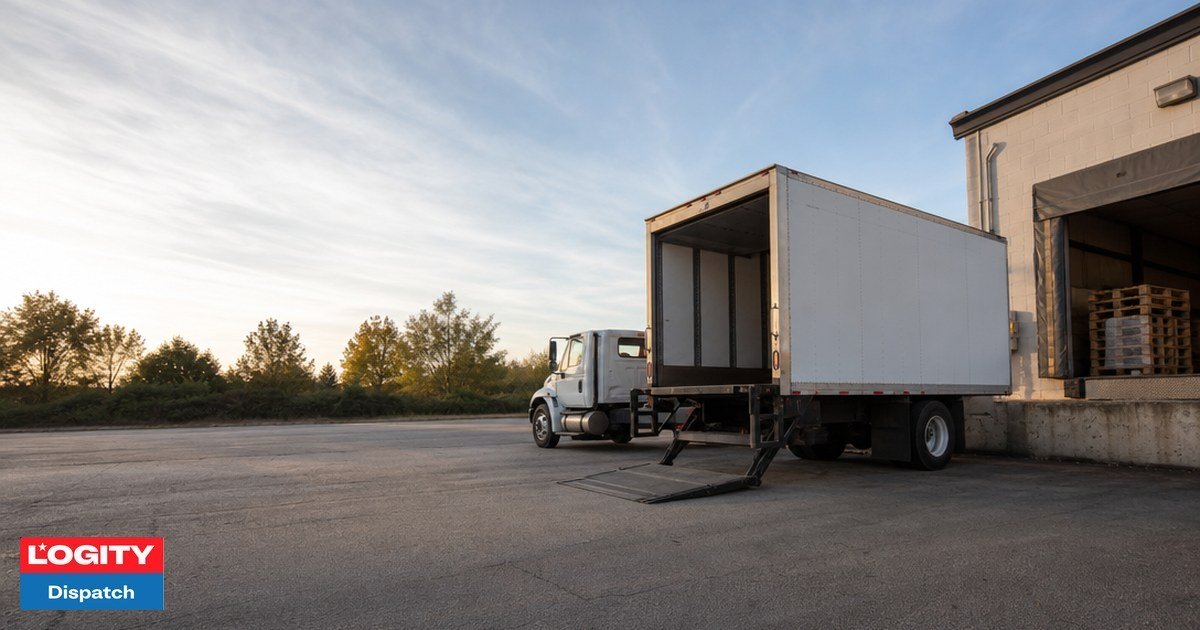
- Liftgate, pallet jack and driver assist. If a delivery has no dock, the load needs a liftgate or hand unloading. That should be on the rate confirmation, with pay, before you accept.
- Appointment windows and waiting. A tight window or a long wait can take the rest of your day. Detention terms should be written before you roll.
Your floor: every mile and every hour the load takes
A floor is the lowest total pay at which a load still covers your costs and your own pay for the time it uses. It is built from your numbers, not the market’s. You need three inputs:
- Your running cost per mile. Fuel, maintenance and tires, everything that grows with the miles. Our cost per mile guide walks through what to include.
- Your cost per working day. Truck payment, insurance and the pay you want for yourself, divided by the days you actually work. For insurance, our guide to box truck insurance cost shows the one published median we could trace.
- Your dispatch fee. If a dispatcher takes a share of gross, the rate has to cover your costs after that share comes off. Logity Dispatch charges 10% of gross for box trucks.
The floor for one load is then: (running cost per mile × loaded and empty miles + day cost × days the load takes) ÷ (1 minus the fee). Divide the result by loaded miles if you want it as a per mile number to compare with the offer.
A worked example with made-up numbers
The inputs below are hypothetical. They show the method, not what your truck costs or what any lane pays. Assume a running cost of $1.30 a mile, a day cost of $350 and a 10% dispatch fee.
| Line | Load A: regional run | Load B: local run |
|---|---|---|
| Loaded miles (example) | 380 | 45 |
| Empty miles to pickup (example) | 70 | 15 |
| Time the load takes (example) | 1 day | Half a day |
| Running cost at $1.30 a mile | $585.00 | $78.00 |
| Day cost at $350 a day | $350.00 | $175.00 |
| Floor = costs ÷ 0.90 | $1,038.89 | $281.11 |
| Broker offer (example) | $1,000 | $300 |
| Offer per loaded mile | $2.63 | $6.67 |
| Offer minus floor | minus $38.89 | plus $18.89 |
Load A looks like an ordinary regional rate and sits $38.89 under the floor. The 70 empty miles alone add $101.11 to it ($91 of running cost, grossed up for the fee). Without them the floor would be $937.78 and the same $1,000 would clear it. That is the case for counter offering on deadhead or asking for a closer pickup, rather than refusing outright.
Load B shows $6.67 a loaded mile, more than twice Load A, and clears the floor by only $18.89. The per mile number is high because the miles are few, not because the load pays well for your time. On short runs, compare total pay with the floor and ignore the per mile figure.
Short runs: price the time, not the miles
On a local load, most of your cost is the time at the dock, at stops and in traffic, not the miles. A short run has to pay for hours of dock and stop time over very few miles, so its per mile figure looks high even when the total barely covers your day. That is why it cannot tell you whether to take the load. Ask instead how many hours the load will take from leaving your last stop to being empty again, put that share of your day cost into the floor, and see whether the offer clears it. If the delivery needs a liftgate or hand unloading, add that time too.
Loads to refuse, or to counter before you accept
Some loads are not a price question at all. Others are fixable if the rate confirmation changes. Read the rate confirmation line by line before you agree to anything.
| Signal on the load | Why it matters | What to do |
|---|---|---|
| Weight that would take the truck to 26,001 lb or more | Federal rules define a straight truck as a heavy commercial motor vehicle, which takes a CDL to drive, when its rating or its actual gross weight is 26,001 lb or more, whichever is greater (49 CFR 383.5) | Refuse unless you and the truck are set up for it |
| Weight above your payload | The load would put the truck over the rating its maker set for it | Refuse, or ask for a partial |
| Hazardous materials that need placards | Placarded hazmat makes any size vehicle a commercial vehicle under the same rule, and the driver needs the hazmat endorsement (49 CFR 383.93) | Refuse without a CDL and the endorsement |
| Liftgate, pallet jack or hand unloading not on the rate confirmation | Unpaid time and equipment you may not have | Get it written in with pay, or refuse |
| Extra stops without pay per stop | Each stop adds time the offer does not cover | Counter per stop |
| Total pay below your floor once empty miles are added | The load loses money before anything goes wrong | Counter on the deadhead, or pass |
| No detention terms | A long wait takes the rest of the day for free | Ask for terms in writing first |
Waiting time can push a load that cleared your floor back under it. Our piece on detention pay covers how to get it written in and collected.
Frequently asked questions
What is the average box truck rate per mile?
We could not find a public source that publishes one with a method you can check. DAT’s public national averages cover van, flatbed and reefer, not box trucks. Build your own floor from your costs instead and judge each offer against it.
How do I calculate my minimum rate for a box truck load?
Multiply your running cost per mile by all the miles the load makes you drive, loaded and empty. Add your day cost times the days the load takes. Divide by one minus your dispatch fee. That total is your floor for the load.
Should I count deadhead miles in a box truck rate?
Yes. Empty miles cost fuel, wear and time like loaded miles and pay nothing. In our made-up example, 70 empty miles raised the floor of one load by $101.11.
Why does a short local load show such a high rate per mile?
Because the miles are few and the time at docks and stops is the real cost. A load can show several dollars a mile and still barely cover your time. Compare total pay with your floor.
Can a non-CDL box truck take any load that fits in the box?
No. Under 49 CFR 383.5 a straight truck counts as a commercial motor vehicle that takes a CDL to drive when its rating or actual gross weight is 26,001 lb or more, whichever is greater, and placarded hazardous materials need a CDL with the hazmat endorsement at any size.