Table of Content
- What is a straight truck?
- Is a box truck a straight truck?
- Let a Dispatcher Plan the Route and Book the Loads
- Types of straight trucks
- When do you need a CDL for a straight truck?
- Which DOT rules apply to a straight truck?
- What a straight truck can carry
- Straight truck work for owner-operators
- Frequently asked questions
Short answer
A straight truck is a truck with the cab and the cargo body mounted on the same chassis, so the whole vehicle is one rigid unit with no trailer to unhook. A box truck is the most common type, but flatbeds, reefers, dump trucks, tankers and tow trucks can all be straight trucks. For the rules, the number that matters is the GVWR on the door sticker: at 10,001 pounds or more in interstate commerce the truck is a commercial motor vehicle, and at 26,001 pounds or more the driver needs a Class B CDL.
What is a straight truck?
In a straight truck the engine, cab and cargo area sit on one frame. The body is built onto the truck, and it does not bend at a hitch the way a tractor and semi-trailer do. That is the whole definition in practice: one vehicle, one set of axles under one chassis, cargo carried on the truck itself rather than pulled behind it.
Federal rules draw the same line in their own words. The definitions in 49 CFR 390.5 separate a truck, “any self-propelled commercial motor vehicle except a truck tractor, designed and/or used for the transportation of property”, from a truck tractor, which is designed or used “primarily for drawing other vehicles”. The CDL rules in 49 CFR 383.91 then name the heavy version outright: a Heavy Straight Vehicle, Group B.
Is a box truck a straight truck?
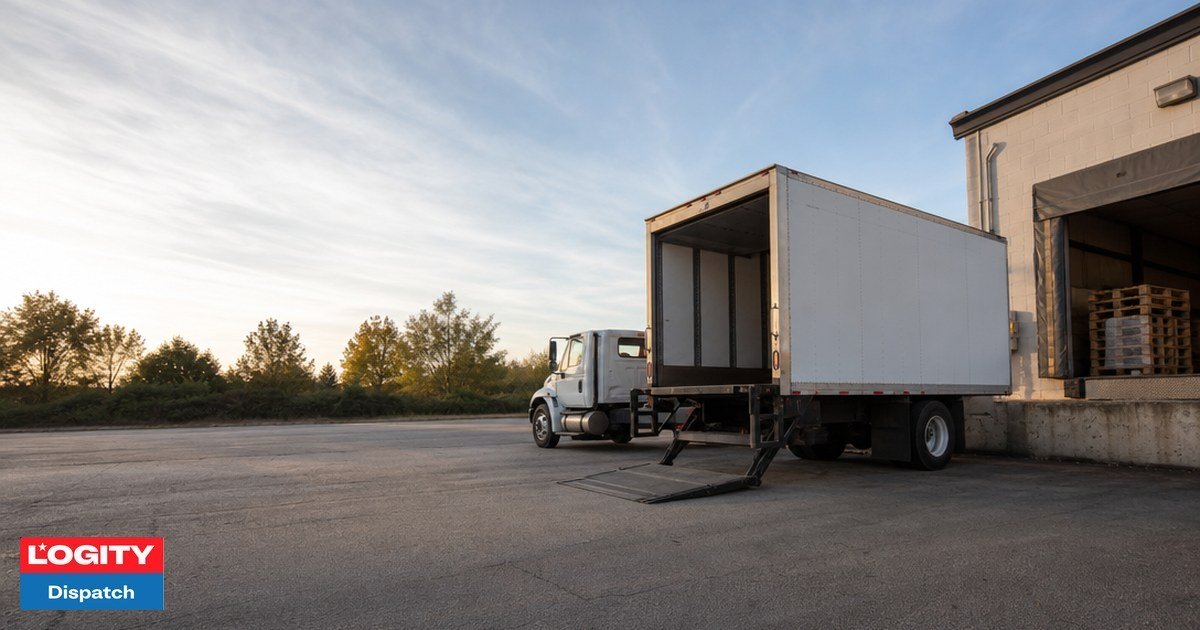
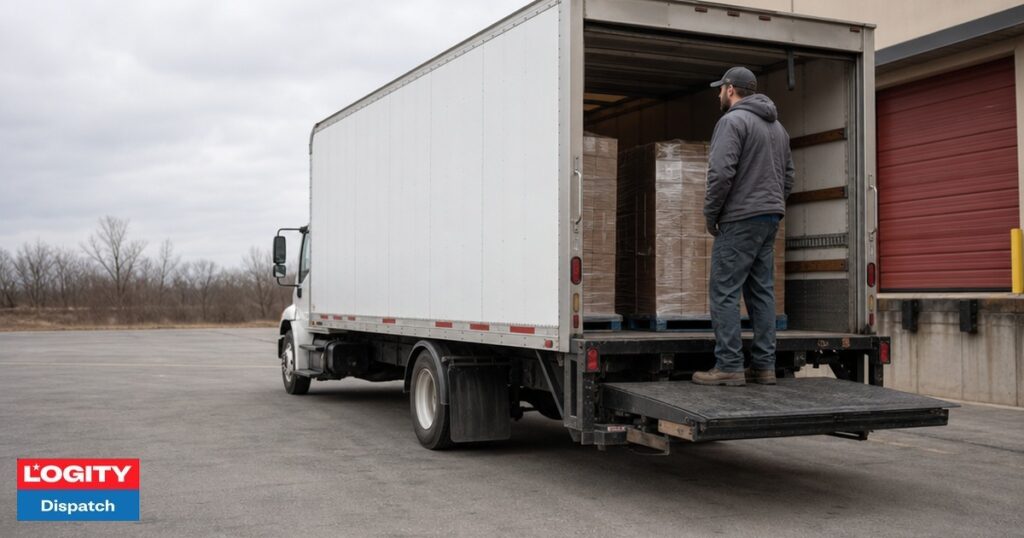
Yes. A box truck is a straight truck with an enclosed cargo box on the chassis. Every box truck is a straight truck, but not every straight truck is a box truck: a flatbed or a dump truck on a single chassis is a straight truck too. When a load board or a shipper asks for a “straight truck”, they usually mean a box truck or a straight truck van, so ask about the body and the liftgate before you book.
| Straight truck | Tractor-trailer | |
|---|---|---|
| Build | Cab and cargo body on one chassis | Truck tractor pulling a separate trailer |
| Bends at a hitch | No | Yes, at the fifth wheel |
| Swap the cargo unit | No, the body stays with the truck | Yes, drop one trailer and hook another |
| CDL group if a CDL is needed | Group B (Heavy Straight Vehicle) | Group A (Combination Vehicle) |
| Typical work | Local and regional deliveries, LTL and partial loads, final mile | Full truckload, long haul |
Types of straight trucks
Straight trucks are usually named by the body built on the chassis. These are the ones you will see most:
Box truck (dry van body)
An enclosed box for dry freight: palletized goods, retail, furniture, appliances, parcels. Many have a liftgate or a ramp, which matters for deliveries to stores and homes without a dock. It is the straight truck most owner-operators start with, and the one most loads posted for “straight trucks” are written for.
Refrigerated straight truck
A box truck with an insulated body and a reefer unit, for food, flowers, pharmaceuticals and other loads that need temperature control. Reefer straight trucks are common in local grocery and restaurant delivery.
Flatbed and stake bed
An open deck on the chassis, sometimes with removable stakes or side rails. It carries building materials, lumber, landscaping supplies and equipment that loads from the side or by crane.
Dump truck
A hydraulic bed that tips to unload sand, gravel, dirt and demolition debris. Almost all dump trucks are straight trucks.
Tank truck
A tank mounted on the chassis for fuel, water, milk or chemicals. Hazmat rules can change the license picture for these trucks, as shown below.
Tow truck and rollback
A wrecker boom or a tilting flat bed that carries a disabled or repossessed vehicle on the truck itself.
Vocational trucks
Garbage trucks, concrete mixers, bucket trucks and utility bodies are all straight trucks built for one job. They are usually owned by the business that uses them, not hired to haul freight for others.
When do you need a CDL for a straight truck?
The rating that decides it is the gross vehicle weight rating (GVWR), the maximum loaded weight the manufacturer rates the truck for. It is printed on the label inside the driver door. Under 49 CFR 383.91, Group B is “Any single vehicle with a GVWR of 11,794 kilograms or more (26,001 pounds or more)”, or such a vehicle towing a trailer of 10,000 pounds GVWR or less. So:
- GVWR of 26,000 pounds or less: no CDL is needed for the weight alone. These are the non-CDL box trucks that most new owner-operators run.
- GVWR of 26,001 pounds or more: a Class B CDL, because the truck is a Heavy Straight Vehicle.
- Towing a trailer over 10,000 pounds GVWR with a combined rating of 26,001 pounds or more: that is Group A, a combination vehicle.
- Hazmat that needs placards: a CDL is required at any size. The CMV definition in 49 CFR 383.5 brings in any vehicle used to carry hazardous materials that require placarding.
The rating counts, not what you load. A truck rated at 26,001 pounds needs a Class B driver even when it runs empty.
Which DOT rules apply to a straight truck?
A CDL is only one threshold. Under 49 CFR 390.5, a vehicle used on a highway in interstate commerce to carry property is a commercial motor vehicle when its GVWR or gross weight is 10,001 pounds or more. That pulls a mid-size box truck into the federal safety rules long before it needs a CDL:
- USDOT registration. Motor carriers subject to these rules register with FMCSA under 49 CFR 390.201, and for-hire carriers also obtain operating authority.
- Medical card. Under 49 CFR 391.41 a driver subject to part 391 must be medically certified and carry a current medical examiner’s certificate while on duty.
- Hours of service. Part 395 applies.
- Inspections. The pre-trip and annual inspection rules in part 396 apply.
Two differences favor non-CDL straight trucks. Drug and alcohol testing under 49 CFR 382.103 applies to drivers subject to the CDL requirements, so it starts with Group B. And 49 CFR 395.1(e)(2) exempts drivers of property-carrying CMVs that do not require a CDL from the 14-hour limit and the log requirements, if they stay within a 150 air-mile radius of their normal work reporting location and meet the other conditions in that paragraph.
What a straight truck can carry
Payload is GVWR minus the weight of the empty truck with fuel and driver. A truck with a heavy liftgate or a reefer unit carries less than the same chassis with a plain box.
On a non-CDL box truck, loading close to the rating is where weight trouble starts. Balance across the axles and keep the load inside what the truck is rated for, not what fits in the box.
Straight truck work for owner-operators
Straight trucks carry freight that a 53-foot trailer is too big or too slow for: LTL and partial loads, expedited freight, store and residential deliveries, and final mile work. Loads often come with appointment windows and liftgate or no-dock requirements, so the specs of your truck decide which loads you can take.
If you run a box truck, Logity Dispatch has dedicated box truck dispatchers: a personal dispatcher with 24/7 support who handles load sourcing and rate negotiation and takes care of details like axle weight balancing and lift gate requirements. There is no forced dispatch, you always choose the loads and routes, there are no upfront payments, and setup is free.
Frequently asked questions
What is a straight truck in DOT terms?
The federal rules do not have a separate “straight truck” category for safety purposes. A straight truck is a truck under 49 CFR 390.5, a self-propelled commercial motor vehicle other than a truck tractor, used to carry property. For CDL purposes, 49 CFR 383.91 calls a single vehicle with a GVWR of 26,001 pounds or more a Heavy Straight Vehicle, Group B.
Is a straight truck the same as a box truck?
A box truck is one type of straight truck, with an enclosed box on the chassis. Flatbeds, reefers, dump trucks and tank trucks built on a single chassis are straight trucks too.
Do you need a CDL to drive a straight truck?
Only if the truck has a GVWR of 26,001 pounds or more, if it tows a trailer that puts it in Group A, or if it carries hazardous materials that require placards. A straight truck with a GVWR of 26,000 pounds or less needs no CDL for its weight.
What does a straight truck driver do?
Most straight truck drivers run local and regional routes: store and residential deliveries, LTL and partial loads, expedited and final mile freight. Many loads come with appointments and need a liftgate, and the driver often helps load and unload.
Does a non-CDL straight truck need a USDOT number?
If it has a GVWR of 10,001 pounds or more and is used in interstate commerce, it is a commercial motor vehicle under 49 CFR 390.5, and the carrier that operates it registers with FMCSA under 49 CFR 390.201.